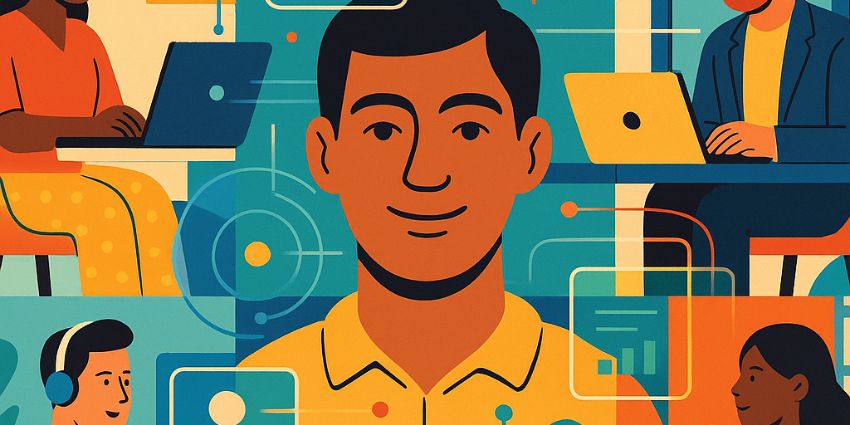

For HR teams, digital transformation is a business-wide shift in how organisations operate, compete, and grow. In that shift, human capital management (HCM) sits at the centre. As work becomes more distributed, skills become more perishable, and employee expectations rise, HCM platforms are evolving from record-keeping systems into workforce intelligence layers built for the future of work.
The old model assumed a centralised workforce, office-first routines, and linear careers. Today looks different: hybrid teams, project-based work, global hiring, and constant rebalancing of capacity. As a result, many organisations now treat digital transformation strategy as a reason to modernise HCM—so workforce planning, performance, learning, and mobility can adapt faster.
Related Articles
- How to Successfully Implement a Workforce Management Platform
- The Workforce Metric Gap That’s Costing You Millions: How Predictive People Analytics Turns HR Data Into Action
Hybrid Work and the Rise of Outcome-Based Workforce Management
Hybrid workforce management has become a core performance issue. When employees move between home, office, co-working spaces, and client sites, an HCM platform must support more than payroll and scheduling. It needs to track performance without surveillance, enable learning without classrooms, and build belonging without physical proximity.
That shift also changes how organisations measure contribution. Time and presence matter less than outcomes, collaboration, and skill progression. As a result, modern human capital management software increasingly supports:
- Continuous performance and feedback loops that replace annual reviews
- Skills-based internal mobility that matches people to shifting priorities
- Experience-centric onboarding tools and workflows that reduce friction from day one
In other words, hybrid work pushes HCM to help employees thrive, not just comply. For more on the people side of this shift, see culture, capability, and change in modern HCM.
Global Teams and the Decentralisation of People Operations
The workforce is increasingly borderless. Companies now hire wherever talent exists, not just where HQ sits. That means HCM platforms must support a global workforce strategy: multiple currencies, labour laws, tax rules, languages, and benefit expectations—while still providing one unified view of the talent lifecycle.
At the same time, people decisions are decentralising. Managers and regional leaders need autonomy, yet the organisation still needs consistent standards. The strongest HCM platform strategies balance both: local flexibility with shared governance. This helps teams move fast without fragmenting people data or creating policy chaos.
This is also where digital collaboration trends intersect with HCM. Work happens across time zones and tools, so enterprises increasingly expect HRIS integration with communication suites, project platforms, and productivity systems. The goal is simple: understand how work gets done in reality, not just what the org chart says.
Where HCM Meets Employee Experience and Customer Experience
Employee experience (EX) and customer experience (CX) are converging. When people feel overloaded, disengaged, or unsupported, customers notice. That’s why digital transformation in HR increasingly focuses on creating the conditions for great work—making employee experience technology a core part of the HCM conversation.
Many modern HCM platforms now support:
- Personalised learning paths tied to role, goals, and aspiration
- Wellbeing and workload insights that flag burnout risk early
- Engagement analytics linked to retention, performance, and mobility
In practice, the future of work is about enabling people to do their best work consistently—and linking those human outcomes to business outcomes like delivery capacity and resilience.
How to Future-Proof Your HCM Investment
Future-proofing means choosing an HCM platform that can evolve as work changes. These principles help buyers and stakeholders make better calls at the discovery stage:
- Prioritise adaptability over feature checklists. Future of work trends will keep shifting. AI copilots, new compliance regimes, and new collaboration norms will continue to emerge. Choose systems that are modular, integrable, and updated often.
- Build a skills-first data strategy. Jobs change faster than titles. Skills are the durable unit of workforce planning. Look for human capital management tools that can map, measure, and mobilise skills across the organisation.
- Connect HCM to the digital ecosystem. HCM should sit in the flow of work, not outside it. Prioritise clean HRIS integration with communication, learning, finance, and productivity tools so people data reflects real work patterns.
- Treat governance as an enabler, not a brake. Ethical AI, privacy, and transparency build trust. Strong governance makes automation safe to scale and helps adoption stick.
Digital transformation is turning human capital management into a strategic nerve centre for the enterprise. The organisations that win use HCM to keep aligning people, skills, and experience to the future of work as it unfolds.