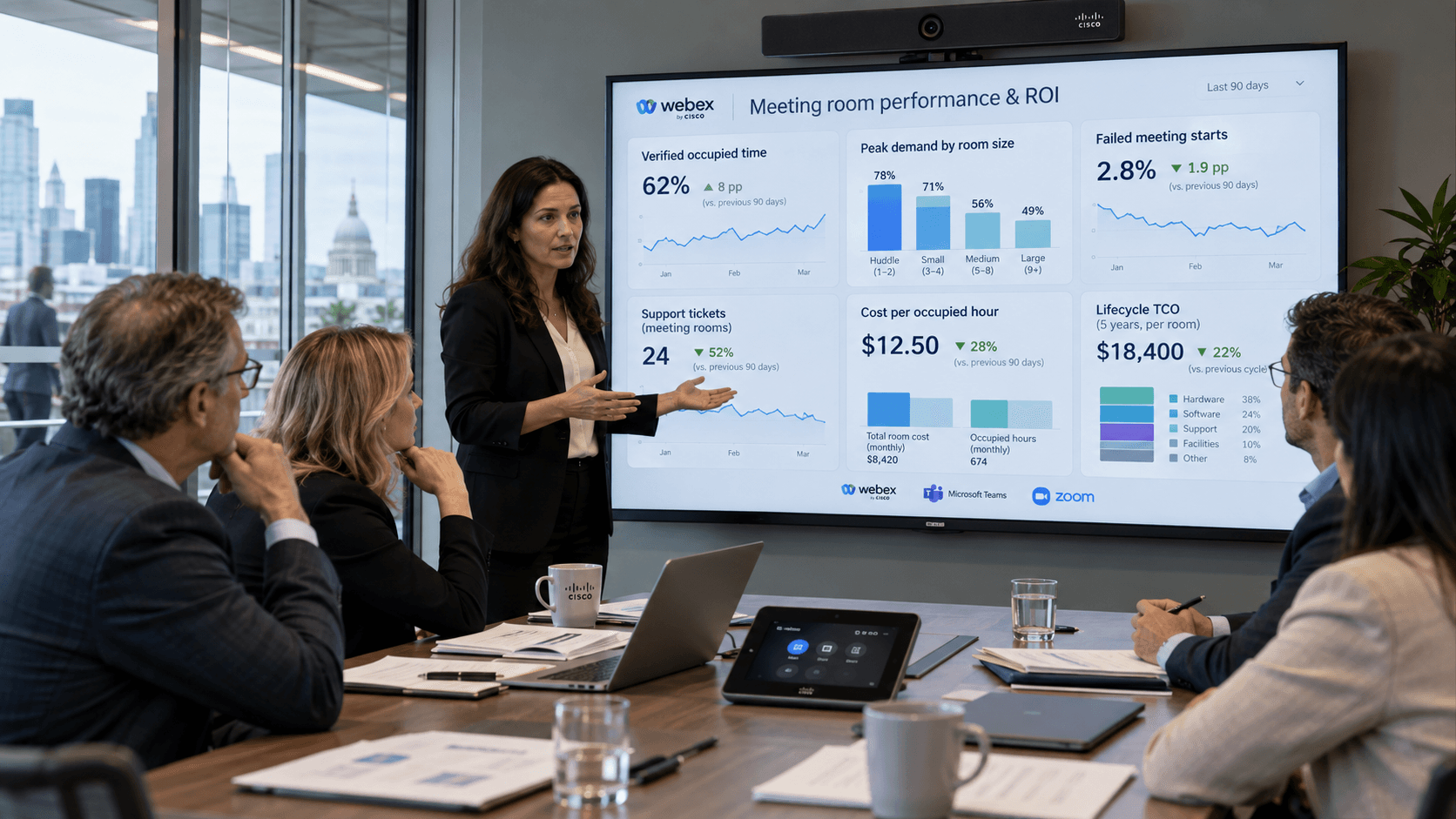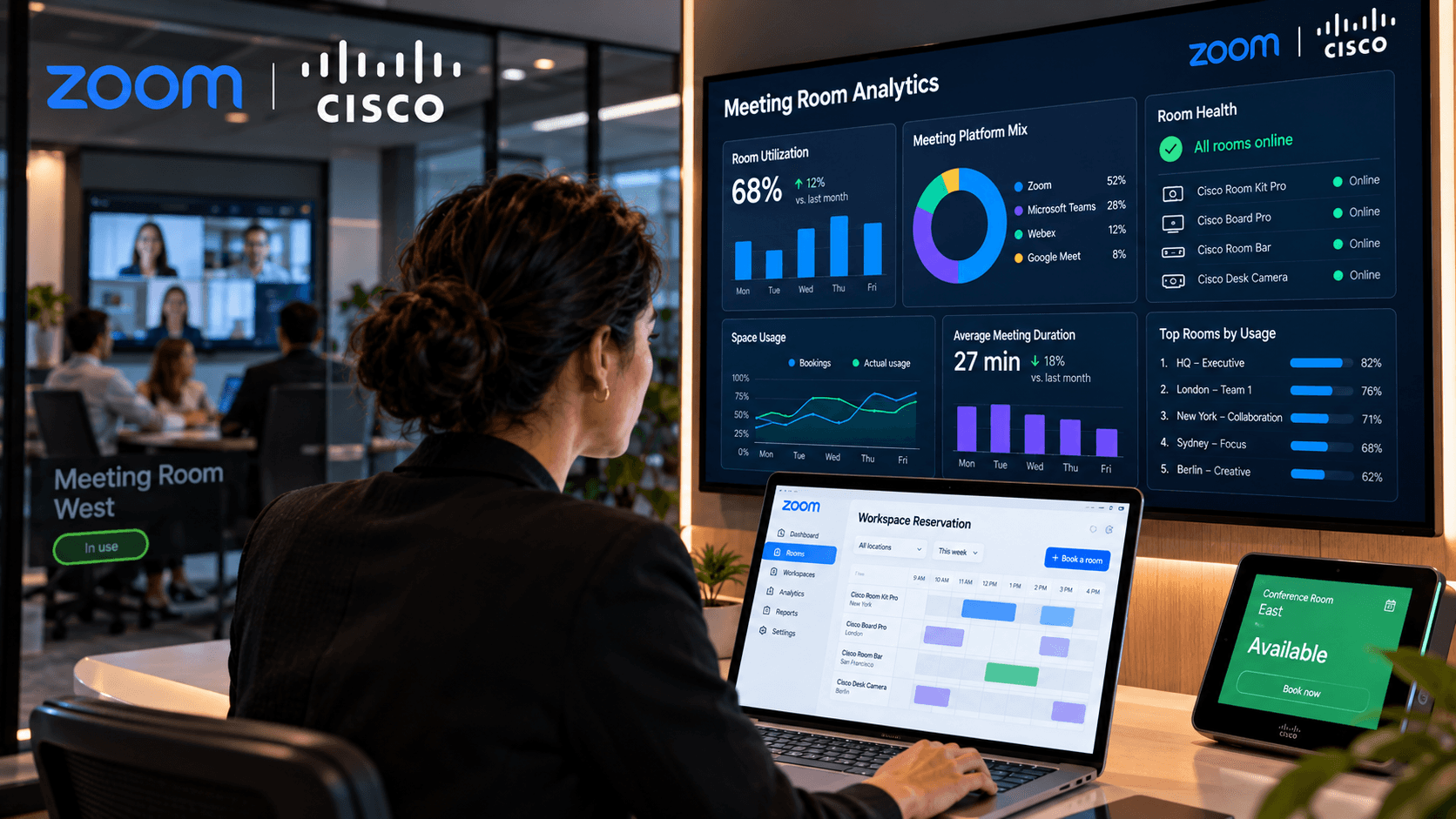
Enterprise investment in workplace data analytics platforms and workforce management platforms is accelerating, but scrutiny around workplace analytics ROI is intensifying just as quickly. Leaders are no longer satisfied with dashboards. They want measurable cost reduction, defensible space strategy, and provable gains from employee productivity analytics and integrated workforce analytics software.
In hybrid environments where utilization fluctuates and coordination costs compound, analytics must move beyond reporting into operational impact. The only question that matters now is simple: can your workplace analytics platform prove value at scale?
Read More
- The Workplace Management Gap Is Widening – Here Are 5 Stats That Prove It
- Are Your Offices Underused? What Workplace Data Reveals Now
- How Workplace Analytics Programs Turn Data Into Decisions
How Do Workplace Analytics Platforms Work?
Workplace analytics platforms function by connecting operational systems that were historically isolated.
At scale, that typically includes desk booking tools, meeting room scheduling systems, badge access logs, Wi-Fi presence data, occupancy sensors, workforce scheduling platforms, and facilities management systems.
Individually, these systems generate activity logs. When unified through enterprise-grade workplace data analytics platforms, they generate decision logic.
For example, Forrester’s Total Economic Impact study of Cisco Spaces modeled a 95,000-employee organization and found a 172% three-year ROI with payback in under six months. That return was driven by eliminating ghost bookings, improving room-finding efficiency, and aligning occupancy data with real estate decisions.
The technology did not create ROI on its own. The integration of occupancy, booking, and workforce signals enabled leaders to redesign underperforming spaces and recover wasted time.
What Data Do Workforce Analytics Tools Collect?
Enterprise workforce analytics software captures structured operational signals rather than abstract productivity indicators.
These signals typically include:
- Reserved versus occupied desks
- Meeting room no-show rates
- Peak-day congestion by floor
- Workforce scheduling coverage compared with actual attendance
- Service ticket frequency by location
- AV system reliability in hybrid rooms
OfficeSpace’s Built World Market Report found that across 954 organizations, average peak utilization was just 25%. In other words, even during the busiest hours, three out of four seats were unused.
Without verified occupancy data, that inefficiency remains hidden behind anecdotal complaints about crowding.
Workplace data analytics platforms reconcile booking intent with real presence data. That reconciliation is where financial clarity begins.
Which Metrics Prove Workplace Analytics ROI?
Workplace analytics ROI becomes credible when metrics map directly to financial or operational outcomes.
Utilization efficiency
Organizations dedicating 10 to 20% of P&L to workplace spend cannot afford 25% peak utilization without consequence. Occupancy validation allows consolidation or redesign decisions based on evidence rather than perception.
Meeting reliability and booking waste
Forrester identified that 25% of scheduled meetings in its composite organization were zombie bookings. Eliminating those reservations and improving room-finding efficiency reclaimed 171,000 productive hours over three years.
Operational resilience
Johnson Controls’ 2026 AI & Digitalization in Facilities Management Report found that 72% of facilities managers report labor shortages impacting performance. Predictive maintenance powered by AI is now the top planned investment. Preventing equipment failure during peak demand directly protects productivity.
Workforce alignment
When workforce management platforms align scheduling coverage with hybrid attendance peaks, congestion drops and service reliability improves.
These metrics withstand executive review because they tie directly to tools and decisions.
For ongoing analysis of workplace analytics ROI, hybrid performance metrics, and workforce strategy shifts, follow UC Today on LinkedIn.
How Workplace Analytics Improves Workforce Productivity
Productivity gains in hybrid environments come from removing repeatable friction.
Gallup’s global engagement research continues to show the economic cost of disengagement. In hybrid workplaces, disengagement is often driven by coordination breakdowns rather than workload volume.
Common structural inefficiencies include: