
For 25 years, using Salesforce meant logging into Salesforce. A customer service rep opened a console, found a case, and manually updated it. A sales manager pulled up an account to check renewal dates. This week, Salesforce formally declared that model obsolete.
The company launched Headless 360, which exposes its entire platform including data, workflows, and business logic as APIs, MCP tools, and CLI commands. AI agents handle the routine CRM work without a human in the loop. The worker only sees the output: a structured card, an approval request, or a decision prompt, surfaced inside Slack, Teams, or WhatsApp. The CRM becomes background infrastructure. The messaging tool becomes the front end.
Salesforce co-founder Parker Harris raised the question publicly last month: “Why should you ever log into Salesforce again?” If an agent can update a case status, trigger an approval workflow, or surface renewal data on request, those manual steps simply disappear from the working day.
Read more:
- Salesforce Q4 Earnings: Record Quarter Puts Slack at the Heart of the Agentic Enterprise
- Salesforce Launches Slackbot as Personal AI Agent to Eliminate Context Switching
How Salesforce Headless 360 changes day-to-day workflows in Slack and Teams
The part workers will actually notice is the Experience Layer, a new service that separates what an agent does from how it appears to the end user. Rather than a plain text notification that a case was updated, a worker in Slack gets an interactive card: a rebooking workflow, a refund approval, or a structured data layout they can act on without leaving the conversation.
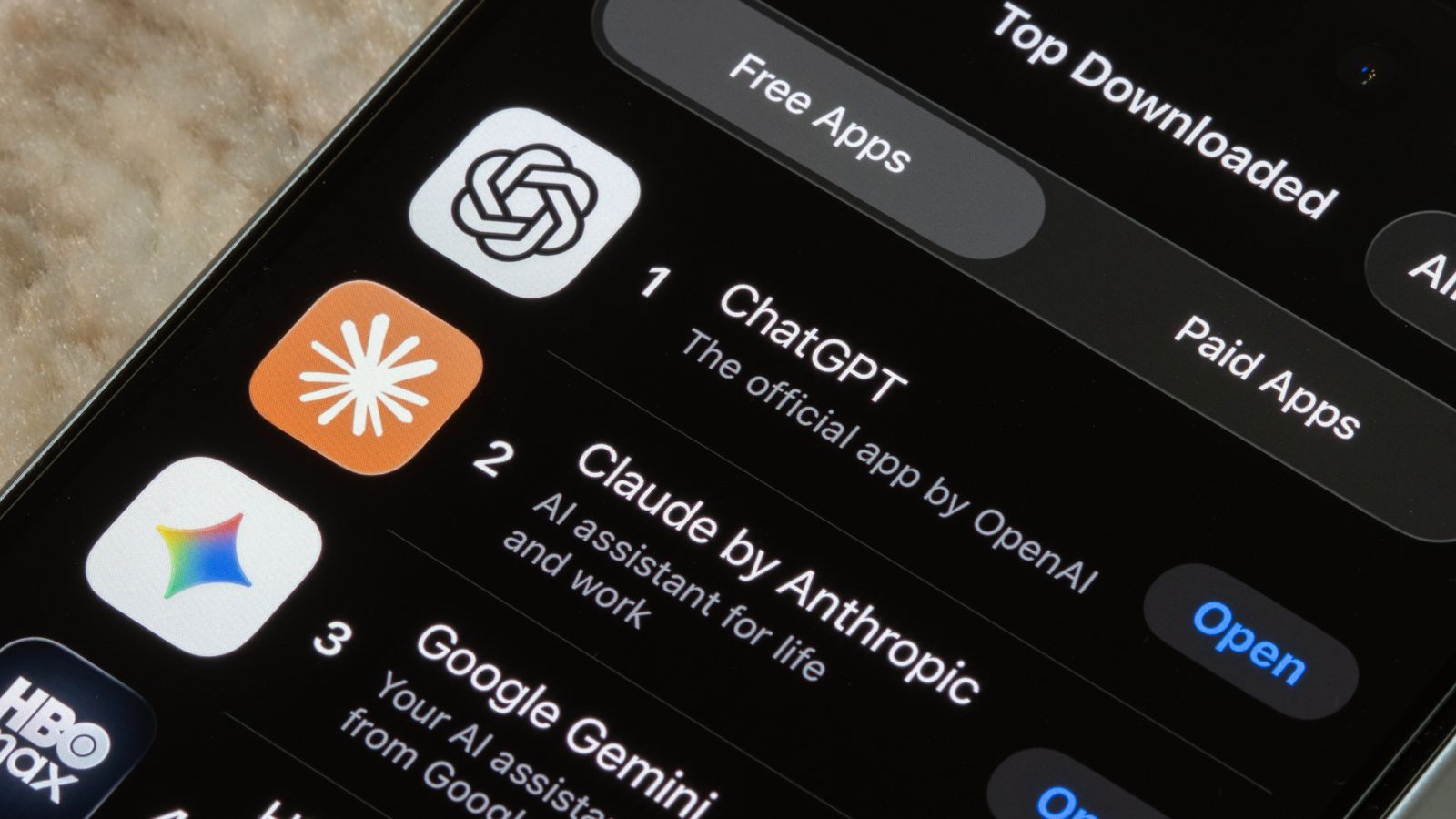
Salesforce says these components render natively across Slack, Teams, WhatsApp, ChatGPT, Claude, Gemini, and any client that supports MCP. For IT teams managing environments where staff are split across tools, the promise is one build, multiple surfaces.
Custom AI agents on Slack have grown 300% since January, and Salesforce’s own Q4 figures showed Agentforce in Slack saved employees more than 500,000 hours over the past year. Slackbot was relaunched earlier this year as an orchestration layer that routes requests to the right agent automatically, removing the need for staff to know which tool handles which task. Headless 360 extends that further: now the agent does the CRM work too, not just the routing.
AI agent governance and enterprise deployment controls
A consistent problem with enterprise agent rollouts has been what happens after go-live. Agents behave differently from traditional software: the same input does not always produce the same output, which makes production behaviour hard to predict and harder to audit. Most early deployments have lacked the tooling to manage this, keeping a lot of pilots from reaching production.
Before launch, a Testing Center checks for logic gaps and policy violations. Custom Scoring Evals assess whether an agent made the right call for a given use case, not just whether it ran. Teams define what a good response looks like, and every output is scored against that standard.
After launch, Session Tracing logs the reasoning behind each agent decision. When behaviour drifts, teams can identify the cause quickly rather than working backwards through opaque outputs. A/B testing lets teams run agent versions against live traffic simultaneously before deciding what to promote to production.
Agentforce 3, launched last year, introduced a Command Center for monitoring and control, and Headless 360 builds on that foundation. Salesforce knows customers will not industrialise agent deployments without meaningful oversight tools in place.
Salesforce Agentforce developer tools: MCP, CI/CD, and build time
Headless 360 ships with more than 60 new MCP tools and 30 preconfigured coding skills, giving development teams live access to the full Salesforce platform from within coding environments including Claude Code, Cursor, Codex, and Windsurf, without touching the UI. The DevOps Center MCP brings the build pipeline into a single workflow, removing context-switching between tools. Salesforce claims this cuts cycle times by up to 40%.
Agentforce Vibes 2.0, Salesforce’s in-platform development assistant, has been rebuilt with full org awareness and multi-model support including Claude Sonnet and GPT-5. It handles repetitive tasks such as metadata updates, boilerplate code generation, and pre-deployment checks.
Engine, a Salesforce customer, deployed production-ready agents in 12 days. As Elia Wallen, CEO, Engine explained:
“With Agentforce, we’ve been able to deploy sophisticated, production-ready AI agents in just 12 days, driving millions in savings while significantly increasing our technical velocity.”
AgentExchange, the company’s marketplace, now lists 10,000 Salesforce apps, 2,600 Slack apps, and more than 1,000 Agentforce agents and MCP servers from partners including Google, Docusign, and Notion. Notion says its average sales cycle dropped from four months to three weeks after listing. Docusign processed more than 200 private offers in Q4 2025 with 60% faster time to signature.
The vendor consolidation question IT leaders need to answer
Salesforce’s core argument is that its platform holds something a generic API cannot replicate quickly: years of accumulated business context. Open escalations, renewal timelines, SLA breaches, relationship data. An agent connected to a raw database has none of that. One connected to Salesforce via Headless 360 does, and it inherits existing permissions and compliance controls without a rebuild.
That argument carries more weight for organisations already deep in the Salesforce ecosystem. For those still evaluating options, the decision of whether to consolidate automation around a single vendor is increasingly a strategic call rather than a purely technical one. Salesforce has also been reworking its Agentforce pricing model to give enterprises more predictability, which removes one of the more practical objections to scaling up.
Headless 360 is available now, with further capabilities rolling out through 2026.