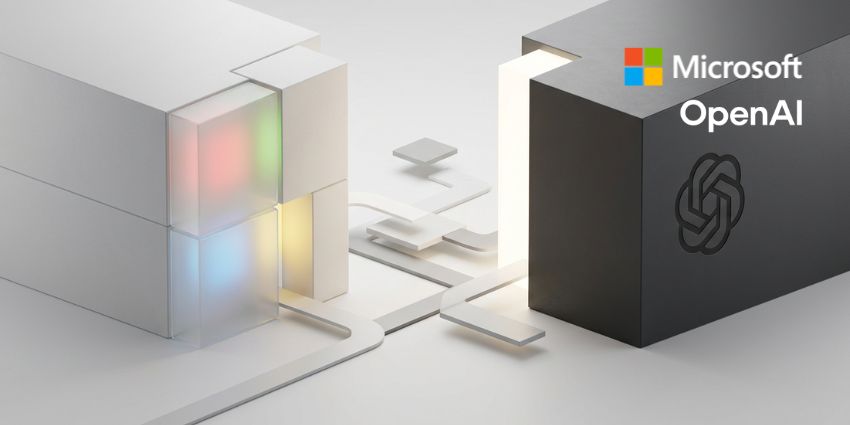

For years, if you wanted OpenAI technology in your business, you went through Microsoft. That changed on April 27.
The two companies announced an amended partnership that removes the exclusivity arrangements binding their relationship since 2019. OpenAI can now sell its products across any cloud provider. Microsoft keeps its licence over OpenAI’s models and products through 2032, but that licence is no longer exclusive. Microsoft stops paying revenue share to OpenAI. OpenAI’s payments to Microsoft continue through 2030 at the same rate, now subject to a cap.
The renegotiation was driven by OpenAI’s February deal with Amazon, a $50 billion investment that made AWS the exclusive third-party distribution channel for Frontier, OpenAI’s new enterprise agent platform. TechCrunch reported that arrangement conflicted with OpenAI’s existing contract with Microsoft. The April amendment removed those restrictions.
Multi-Cloud AI Access Opens Up for Enterprise
The most immediate change for IT leaders is more choice. Organisations that had held back from deepening Azure commitments now have a direct route to OpenAI models through AWS. Google Cloud is expected to follow. Amazon CEO Andy Jassy confirmed on April 27 that OpenAI models will be available on AWS Bedrock within weeks.
Alastair Woolcock, VP Analyst at Gartner, told CIO Dive:
“The next phase of AI competition will be fought through flexible alliances, compute access, silicon, power and enterprise distribution, not traditional ownership.”
Tony Olvet, Group VP at IDC, said the deal is unlikely to affect most near-term deployments but changes planning assumptions:
“CIOs and CTOs should expect more choice in where OpenAI capabilities appear, greater commercial leverage and increased need to govern AI across multiple channels.”
More cloud options do not necessarily mean less dependency. As one analyst told Computerworld, lock-in shifts rather than disappears. It moves “from cloud infrastructure to AI ecosystem alignment, agent orchestration, workflow control and data governance.”
OpenAI Frontier Brings AI Agents Into Enterprise Workflows
The amended deal also allows OpenAI to distribute Frontier more widely. The platform launched in February and is where OpenAI is focusing much of its enterprise effort this year.
Frontier is designed around AI agents that handle work tasks rather than answer questions. It connects to data warehouses, CRM systems, ticketing tools and internal applications. Agents can run workflows, execute code, manage files and retain context over time. It supports agents from OpenAI, Microsoft, Anthropic, Google and custom builds.
OpenAI Chief Revenue Officer Denise Dresser described the problem it is trying to solve at the Frontier launch:
“What’s really missing still, for most companies, is just a simple way to unleash the power of agents as teammates that can operate inside the business without the need to rework everything underneath. That’s exactly why we’ve built Frontier.”
OpenAI has shared results from early pilots. One manufacturer cut production optimisation work from six weeks to one day. One investment firm said agents freed up over 90% more time for salespeople. One energy producer reported output gains of up to 5%. Early customers include Uber, Intuit, State Farm and Thermo Fisher Scientific.
Microsoft 365 Copilot Cowork Takes AI from Chat to Execution
As UC Today covered last month, Microsoft launched Copilot Cowork in March as part of Wave 3 of Microsoft 365 Copilot. Rather than generating content on request, Cowork executes multi-step workflows. Users describe an outcome. Cowork builds a plan, draws on data across Outlook, Teams and Excel, and carries tasks forward. Users approve changes before they are applied.
Charles Lamanna, President of Business Applications and Agents at Microsoft, demonstrated the product in a live session:
“I want to get all the emails, the meetings, the notes that are relevant, and then I want to create a presentation, and I want to go have an Excel overview of product growth and have all that information just generate for me automatically. What’s great about Cowork is it can run for hours, if that’s how long it takes.”
Cowork uses skills from both Anthropic’s Claude and Microsoft’s own models, following the $30 billion Azure compute deal the two companies signed in November 2025. Capital Group, an early access customer, said the platform is already delivering value across planning, scheduling and executive reviews.
Microsoft’s internal research found salespeople using Copilot saved 90 minutes a week. 83% felt more productive and 67% redirected that time to customers. Separate research found a daily saving of 11 minutes, maintained over 11 weeks, correlates with improvements in productivity, work-life balance and meeting load. UC Today’s AI and Productivity Show covered what is working in Copilot deployments today, with Microsoft UK and independent advisors.
AI Agent Governance: The Accountability Gap Enterprises Need to Close
As agent platforms connect to core business systems and take actions on behalf of employees, governance has become a buying consideration rather than an implementation detail. As UC Today has reported, many organisations are still working through the cost and governance questions around agent deployment.
Futurum Group flagged the tension in its analysis of the Frontier launch:
“Governance that is too rigid slows execution and drives teams toward shadow AI. Governance that is too permissive limits agents to low-impact tasks.”
Frontier applies identity and access management across both employees and AI agents. Actions are logged and auditable. The platform meets SOC 2 Type II, ISO 27001 and CSA STAR standards. Copilot Cowork runs within Microsoft 365’s existing security and compliance boundaries, with actions auditable throughout.
The practical question organisations are yet to answer is accountability. When an agent acts on an employee’s behalf and something goes wrong, who is responsible? And how much visibility do workers actually have over what is being done in their name?