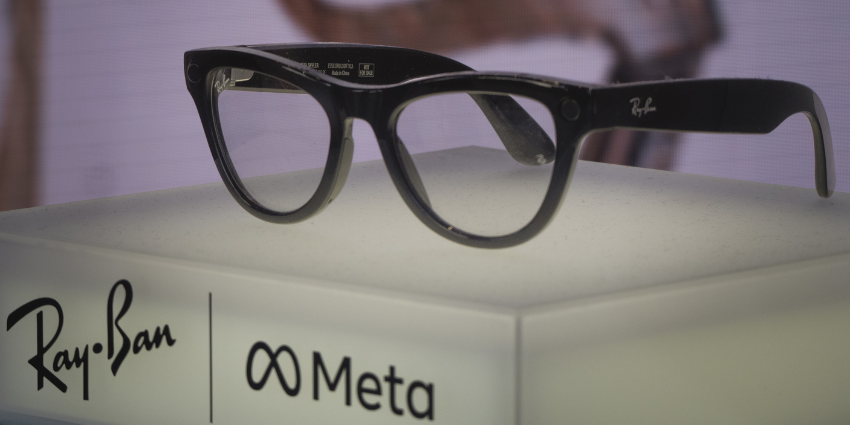

Most XR investment strategy decisions are made in the wrong room. A Chief Innovation Officer walks out of a vendor demo, presents a compelling pilot concept to the board, and secures budget on the strength of what the technology could do, not what it will measurably deliver. Six months later, the headsets are in a cupboard, adoption is at 12%, and the business case is being quietly rearchitected for next year’s budget cycle.
This is not an XR problem. It is a procurement framework problem. Organizations that build enterprise XR ROI into the evaluation process from day one — before the demo, before the vendor shortlist, before the pilot design — are the ones that scale. Everyone else is running expensive experiments and calling them strategy.
TL;DR — The XR Investment Framework
- Use Case Fit: Only invest in XR where the problem is spatial, procedural, or coordination-heavy and where mistakes are costly.
- Baseline First: Define and measure the current workflow KPI before a single headset is unboxed.
- Integration Test: Demand that XR outputs land in systems of record automatically — no manual wrap-up work.
- Friction Budget: Calculate the full cost of device management, onboarding, support, and accessibility before committing.
- Vendor Scrutiny: Evaluate vendors on deployment evidence and measurable outcomes, not demo quality.
- Scale Criteria: Define what ‘success’ looks like at scale before you run the pilot — not after it.
This framework works through each criterion in turn, with specific evaluation questions and a comparison of what separates strategic XR investments from expensive experiments. The stakes are real: organizations applying this structure are generating measurable operational returns. Those without it are generating slide decks.
Related Articles
- Most XR Workplace Projects Fail for One Reason: They Never Should Have Been XR in the First Place
- How to Prove XR Delivers Productivity Gains Instead of Just Engagement Metrics
- Is Your Immersive Workplace Strategy Creating Friction Instead of Reducing It?
How Do Organizations Evaluate XR Investments Effectively?
Effective XR investment evaluation starts with the workflow, not the technology. Before engaging vendors, organizations should identify a specific operational problem with a measurable baseline cost, confirm that immersion provides a meaningful advantage over simpler alternatives, and define the performance delta that would justify deployment and device complexity.
The evaluation failure that repeats itself across enterprise XR programs is starting in the wrong place. Most evaluation processes begin with a vendor briefing, a technology demo, and a use case brainstorm. That sequence almost guarantees that the investment gets shaped around what the vendor can show rather than what the business actually needs.
A more defensible sequence looks like this:
- Identify the operational problem — which workflow is expensive, risky, slow, or skill-constrained?
- Quantify the baseline — what does failure, delay, rework, or error cost today in time, money, or safety incidents?
- Test the ‘precision threshold’ — does this problem require spatial understanding, procedural simulation, or coordination across distributed teams? If not, simpler tools will outperform XR.
- Define the delta — what measurable improvement would justify the total program cost, including devices, content, onboarding, IT, support, and change management?
- Then evaluate vendors — against evidence of that delta, not against demo quality.
This sequence keeps the investment anchored to outcomes. It also makes vendor conversations far more productive: you arrive with specific requirements rather than an open-ended brief that vendors can fill with their strongest feature set.
What Defines a High-Impact Immersive Use Case?
A high-impact XR use case is one where the cost of the current approach is high enough, and the nature of the task spatial or procedural enough, that immersive delivery changes the economics of the workflow. The three categories with the strongest evidence are: safety-critical training, remote expert guidance, and complex multi-party coordination requiring shared spatial understanding.
The evidence base for high-impact XR is strongest in training and simulation for complex or hazardous skills. EON Reality‘s enterprise data provides a useful benchmark. In a three-year financial model drawn from industrial deployments, the company reports a 67% reduction in time-to-competency (from 12 months to 4 months), a $930,000 annual saving from reduced travel and physical training costs, and a $2.6 million annual operational efficiency gain from accelerated competency and instructor productivity.
“ExxonMobil achieved a 50% reduction in on-the-job training time for complex safety procedures. Caterpillar reduced assembly errors by 30% and achieved 40% faster technician training.”
These are not engagement metrics. They are operational outcomes tied directly to training time, error frequency, and cost per competent employee. The pattern holds because the use cases meet the precision threshold: the skills are procedural, the stakes are high, and physical practice is expensive, risky, or limited in availability.
For CIOs evaluating immersive tech evaluation framework criteria, here is a quick-reference test for use case quality:
| Use Case Signal | High-Impact (Invest) | Low-Impact (Avoid) |
|---|---|---|
| Task type | Spatial, procedural, simulation-dependent | Text-heavy, approval-driven, status updates |
| Cost of failure | High — safety incidents, downtime, rework | Low — outcome is the same without XR |
| Physical practice access | Limited, expensive, or hazardous | Readily available and low-cost |
| Geographic distribution | High travel or coordination cost | Co-located, low coordination cost |
| System integration | Output feeds directly into HRIS, LMS, or ops system | Outcome requires manual re-entry elsewhere |
Where Do XR Investment Decisions Fail?
XR investment decisions fail at four predictable points: use case selection (solving the wrong problem), measurement design (tracking the wrong metrics), integration scope (leaving outputs disconnected from systems of record), and scale planning (defining success criteria after the pilot rather than before it).
Each failure point is avoidable with the right framework, but each is common because it requires discipline that runs against the natural momentum of an innovation program. Here is how they appear in practice:
- Use case failure: XR is selected because it is available and interesting, not because it addresses a high-cost workflow. Adoption peaks at the pilot, then falls back to default tools.
- Measurement failure: the program tracks completion rates and satisfaction scores rather than time-to-competency, error reduction, or downtime. The business case cannot be defended at renewal.
- Integration failure: XR outputs require manual re-entry into systems of record. This creates a new hidden workflow step that erodes the productivity gain the program was designed to deliver.
- Scale failure: the pilot succeeds on narrow criteria, but nobody defined what ‘production-ready’ looks like — so the program stalls between pilot and rollout for months, then quietly deprioritizes.
The common thread across all four failures is the absence of a structured XR business case before the program launches. When the business case is built retrospectively to justify a decision already made, it reflects what happened rather than what was intended. That is the definition of expensive experimentation.
How Should Enterprises Assess XR ROI?
Enterprise XR ROI should be calculated across three value drivers: direct cost savings (travel, physical equipment, instructor time), operational efficiency gains (faster competency, fewer errors, reduced downtime), and risk mitigation value (safety incident avoidance, compliance improvement, knowledge preservation). Total cost of ownership must include device management, content development, onboarding, IT support, and accessibility provisioning.
EON Reality’s enterprise financial modeling provides a useful structural reference. Across a three-year deployment, the value breaks into three clear categories: $930,000 in direct cost savings from reduced travel and physical training infrastructure; $2.6 million in operational efficiency from accelerated competency and instructor productivity; and $1 million in risk mitigation from human error incident avoidance.
“Total 3-Year Investment: $499,968. Total Value Generated: $11,590,000. Net Value: $11,090,032.”
These numbers are specific to one platform and deployment model, but the structure is instructive for any XR ROI decision framework. A defensible enterprise ROI model for XR should include all three value categories, a full total cost of ownership calculation, and a payback timeline. Industry evidence suggests a 6–12 month payback window is achievable for high-fit use cases.
What separates organizations that reach that payback from those that do not is almost never the technology. It is the measurement discipline that was in place before deployment started.
What Ensures XR Delivers Business Value?
XR delivers consistent business value when four conditions are met: the use case meets the precision threshold, the measurement framework is defined before deployment, outputs integrate into systems of record, and scale criteria are agreed before the pilot launches. When any one of these is missing, value leaks at a predictable point in the program.
The most durable XR programs are not the ones with the most ambitious scope. They are the ones built on the smallest number of high-confidence use cases, measured rigorously, and scaled incrementally based on operational evidence rather than innovation momentum.
For XR vendor selection, this means asking vendors different questions than most procurement processes do. Instead of ‘what can your platform do?’, the more useful questions are:
- What is your evidence of measurable productivity improvement in a deployment similar to ours?
- How do your outputs integrate with our HRIS, LMS, and operations systems?
- What does your device management and endpoint security model look like at scale?
- How do you handle accessibility, wellbeing, and inclusion requirements?
- What does a ‘production-ready’ deployment look like — and how long does it take to get there from pilot?
Vendors with real enterprise deployment experience will answer these questions specifically. Vendors optimized for the demo stage will pivot back to features. That distinction matters more than any product comparison chart.
The XR investment framework that separates strategic advantage from expensive experimentation is not complicated. It is disciplined. Define the problem. Quantify the baseline. Test the fit. Build the measurement model. Demand integration. Agree the scale criteria. Then, and only then, evaluate vendors.
FAQs
How do organizations evaluate XR investments effectively?
By starting with the operational problem and baseline cost, confirming the use case meets a ‘precision threshold’ for immersion, defining the performance delta before briefing vendors, and evaluating vendors on deployment evidence rather than demo quality.
What defines a high-impact immersive use case?
A use case where the task is spatial, procedural, or coordination-heavy, where the cost of failure, delay, or rework is high, and where XR outputs connect directly to systems of record without creating additional manual steps.
Where do XR investment decisions fail?
At four predictable points: wrong use case selection, tracking engagement instead of productivity metrics, leaving outputs disconnected from systems of record, and defining scale success criteria after the pilot rather than before it.
How should enterprises assess XR ROI?
Across three value drivers — direct cost savings, operational efficiency gains, and risk mitigation value — with a full total cost of ownership calculation that includes devices, content development, onboarding, IT support, and accessibility provisioning.
What ensures XR delivers business value?
Four conditions: the use case meets the precision threshold, the measurement framework is defined before deployment, outputs integrate into systems of record, and scale criteria are agreed before the pilot launches.