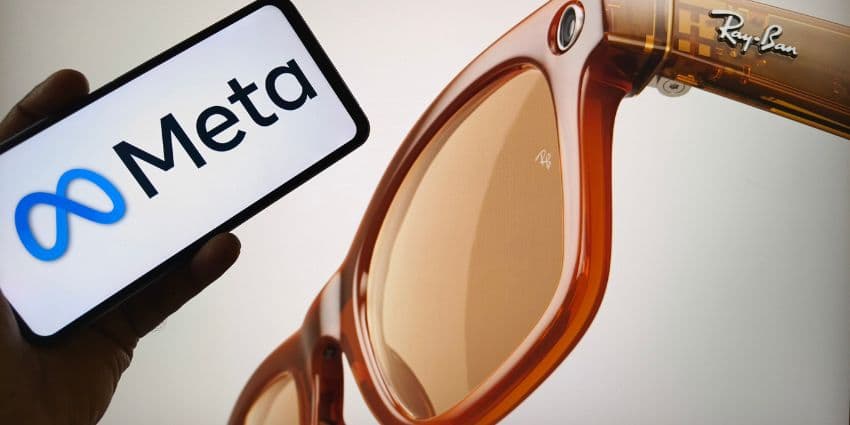
Meta is expanding its AI hardware ambitions with the launch of a new line of smart glasses that significantly lowers the barrier to entry for consumers, introducing an in-house range starting at $299 while debuting the company's latest AI model for wearable devices.
The announcement marks a notable evolution in Meta's wearable strategy.
While the company will continue selling its Ray-Ban and Oakley smart glasses developed with EssilorLuxottica, the new Meta Glasses are the first to carry Meta's own branding rather than that of one of its eyewear partners.
The move broadens the company's portfolio as it seeks to make AI-powered wearables more accessible to mainstream users.
Lower Price, Broader Appeal
With a starting price of $299, the new Meta Glasses sit well below the latest Ray-Ban smart glasses, which begin at $379, and substantially undercut last year's premium Ray-Ban Display glasses.
According to Meta CTO Andrew Bosworth, affordability is a key part of the company's strategy.
Speaking at a media briefing ahead of the launch, Bosworth was keen to illustrate this.
"You really want to be able to be in many places in the market, so reaching people isn't just about design and style, it's also about the price point."
The collection launches in three frame styles: Adventurer, a smaller frame; Fury, a larger rounded design; and Meta Glasses by Kylie, an oval model created in collaboration with Kylie Jenner. The special edition includes exclusive styling elements and an AI-generated version of Jenner's voice for interactions with Meta AI.
Despite carrying Meta branding, the glasses continue the company's relationship with EssilorLuxottica, which remains involved in areas such as lens manufacturing.
Introducing Muse Spark
The glasses are also the first Meta hardware to ship with Muse Spark, the inaugural AI model developed by Meta's Superintelligence Labs.
Muse Spark is designed specifically for wearable experiences, improving the glasses' ability to understand visual context, remember user preferences and provide more personalised responses. Existing Ray-Ban and Oakley smart glasses will receive the new model through a software update.
Like Meta's previous smart glasses, the new devices support hands-free photography and video capture, music playback, live language translation and conversational AI. Users can also ask questions about objects and locations around them using the built-in cameras, allowing Meta AI to interpret visual information in real time.
The emphasis on multimodal AI reflects Meta's broader vision of "personal intelligence," where AI assistants move beyond smartphones and become integrated into everyday experiences through wearable hardware.
Competition in AI Wearables Intensifies
The launch comes as competition in AI-powered wearables accelerates.
Snap recently unveiled a new pair of augmented reality glasses aimed at developers and enterprise users, while Google is preparing AI smart glasses developed alongside Samsung. OpenAI is also widely expected to enter the hardware market following its acquisition of AI device startup io.
Unlike full augmented reality headsets, Meta's glasses focus on lightweight everyday use, combining cameras, microphones and AI capabilities in conventional eyewear rather than overlaying persistent digital content onto the user's field of view.
That positioning has helped Meta establish an early lead in the category.
However, the broader AI ecosystem presents a tougher challenge. Consumer adoption of AI assistants remains dominated by ChatGPT and Google's Gemini, highlighting that success in wearable hardware will depend not only on devices but also on the quality and reach of the AI experiences they deliver.
Balancing Innovation and Privacy
As smart glasses become more capable, privacy remains one of the industry's biggest challenges.
Meta has faced criticism over the potential misuse of wearable cameras after reports emerged earlier this year of users recording members of the public without their knowledge. The company says all of its smart glasses include an LED indicator that illuminates whenever recording is taking place, preventing the camera from operating without a visible notification.
Bosworth acknowledged that preventing misuse remains an ongoing challenge, describing it as a continual effort to stay ahead of bad actors while giving bystanders clear visual cues when recording is active.
The issue is likely to remain a focal point as AI-powered wearables become more common in public spaces and regulators continue to examine how these devices collect and process visual data.
A Broader AI Strategy
The launch reflects Meta's wider ambition to make AI a central part of everyday computing.
Rather than positioning AI solely through chatbots or productivity tools, Meta is investing heavily in hardware designed to keep its AI assistant constantly available through natural voice interactions and contextual awareness.
Lower pricing is expected to play an important role in that strategy. IDC forecasts that average smart glasses prices will continue to fall over the remainder of the decade, potentially helping drive wider consumer adoption and expanding the addressable market for AI-powered wearables.
For Meta, the new glasses represent more than another hardware release. They are another step towards embedding AI into everyday life through devices that users can wear throughout the day – an approach the company believes will become increasingly important as the next phase of personal computing takes shape.