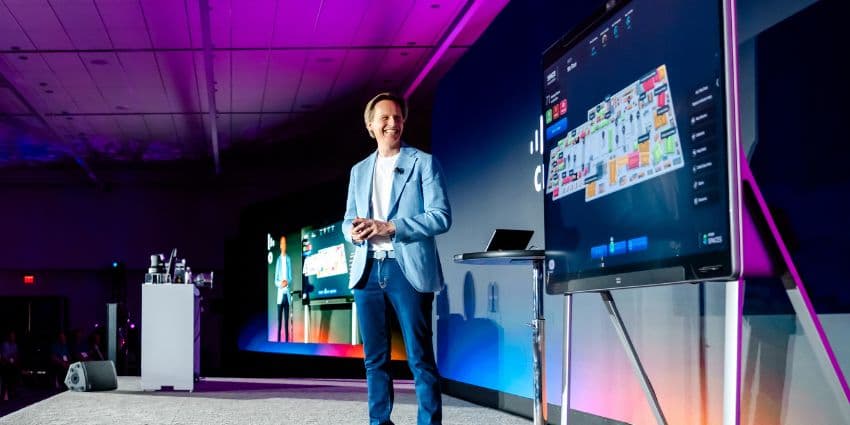
Cisco used its Infocomm 2026 keynote in Las Vegas to argue that the AI era demands more than smart software – it demands intelligent physical infrastructure, all the way to the meeting room.
Espen Løberg, VP and GM of Collaboration Devices, told attendees that devices represent the last mile of AI in the workplace, and that without them, enterprise AI investments will fall short.
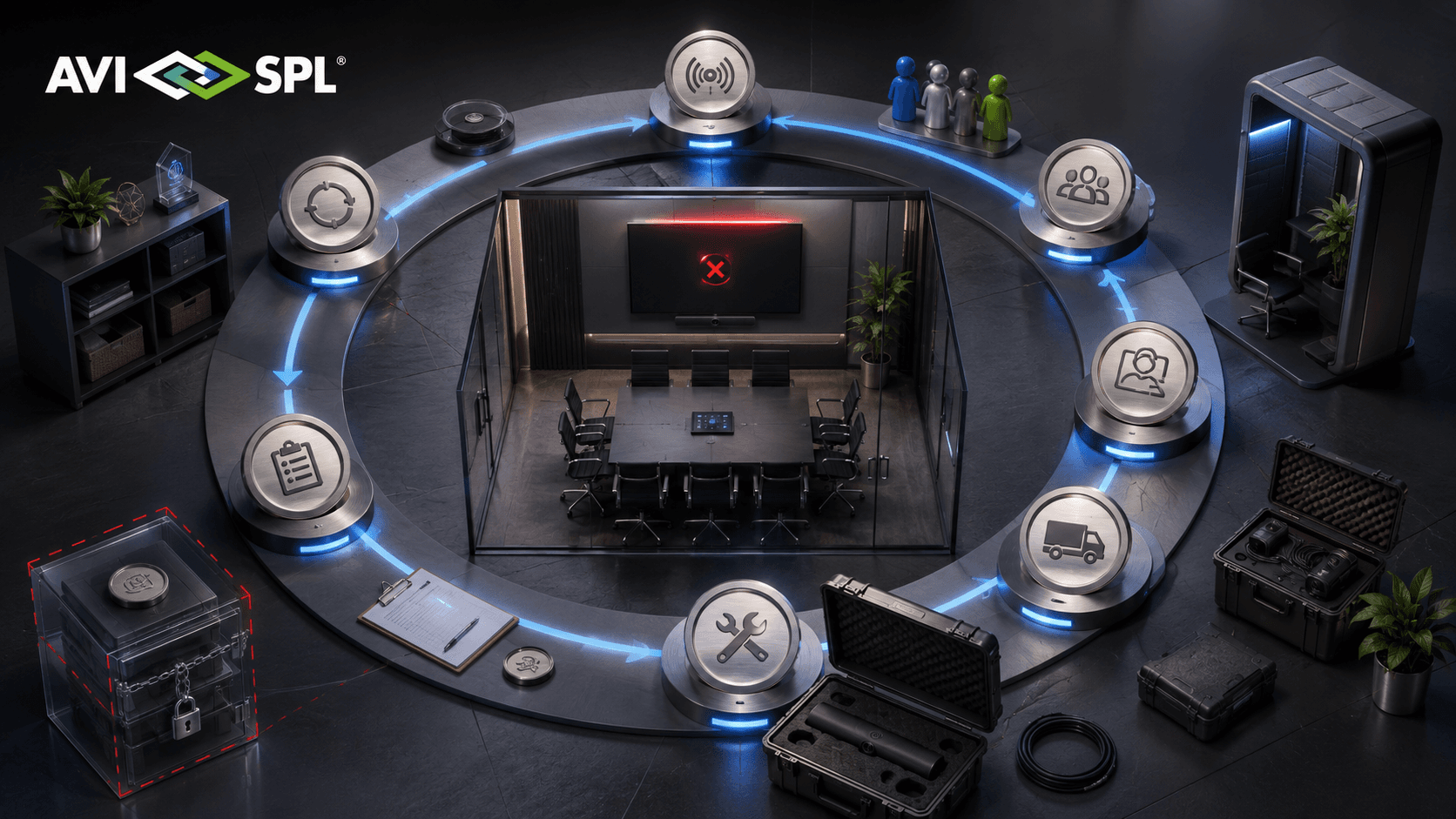
"The tools were intelligent," he said, describing a financial firm whose CIO lost 13 minutes to a broken display before a board meeting in Singapore. "But the room was not."
The Last Mile Problem
Løberg's central thesis was direct: devices are the last mile of AI infrastructure in the workplace.
"Every device is an intelligent node on the network," he said.
"Every device feeds data back through Cisco Cloud Control, and every device gets smarter over time through software updates without replacing hardware. That's what it takes to build for the AI era. It's not a spec, it's a system."
The framing matters. As enterprises race to deploy AI agents and productivity platforms, Løberg argued that the physical collaboration layer – rooms, displays, cameras, microphones – has not kept pace.
The gap between intelligent software and unintelligent spaces is where productivity goes to die.
The Office Has to Earn It
Cisco, he noted, is customer zero for its own technology.
The company has refreshed more than 30 offices worldwide over the past five years, delivering a 29 percent reduction in real estate in key cities, over $100 million in annual savings, and a 90 percent drop in energy consumption – while increasing the number of collaboration spaces by 40 percent.
Løberg also invoked a formula coined by Cisco distinguished engineer Keith Griffin: return on commute equals office value divided by commute cost. "Every employee is doing this math, whether they realise it or not," he said. "Prior to hybrid work, the commute was accepted. Now it has to be justified."
He illustrated the point with an honest admission – when Cisco first returned to its offices, many buildings weren't worth the trip. The subsequent transformation of its New York office became the blueprint for the company's global real estate strategy.
AI That Acts, Not Assists
The sharpest pivot in the keynote came when Løberg turned to the product roadmap.
Cisco is embedding AI agents directly into its room software and devices – not as added features, but as architectural components running locally, at machine speed.
"This is not AI that assists," he said. "This is AI that acts."
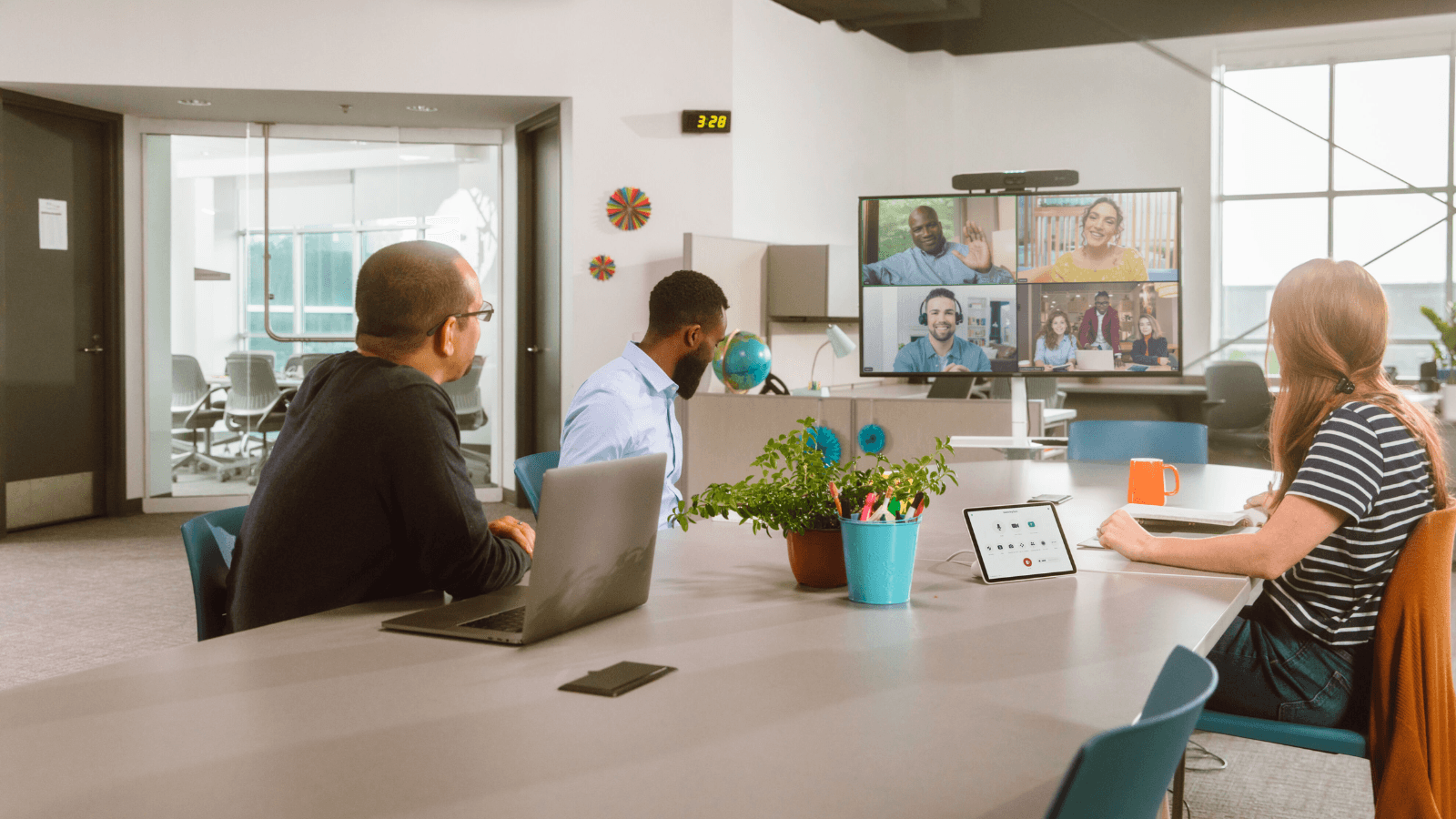
Two examples stood out. The first: intelligent camera agents that automatically select the right view at the right moment during a meeting, demonstrated live with Cisco's Oslo office. The second: a multi-agent system, now available across Cisco devices and the Webex app, that captures meeting summaries and surfaces action items automatically – including in local meetings with no remote participants. "In the agentic era," Løberg said, "a meeting room that doesn't take notes for you is really quite useless."
He also took aim at what he called "Frankenstein rooms" – the multi-vendor, multi-component environments that plague enterprise AV. Complex to install, complex to use, and complex to maintain, these environments represent the friction that Cisco's unified architecture is designed to eliminate.
The move from chatbots to autonomous agents, from cloud tools to physical AI, from hybrid meetings to fully agentic workflows – all of it converges on the same requirement: the workplace itself has to become intelligent. "We are making the agentic workplace real for thousands of organisations worldwide," he said. "But the room has to be worth it."