
Digital innovation is reaching the lower tiers of English football.
Chesterfield FC, competing in League Two (the fourth tier of English football), has installed Premier League–level screens, live updates, and interactive signage at its stadium – transforming the matchday experience for fans and sponsors alike.
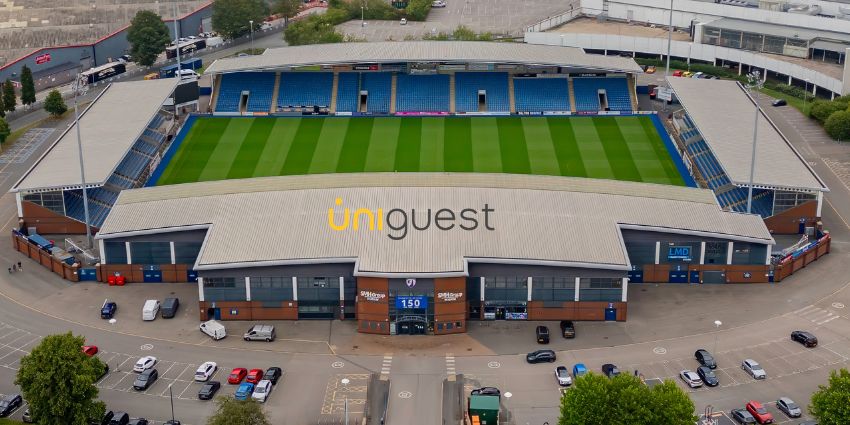
The club has deployed Uniguest’s Sports Hub platform across approximately 40 screens at the SMH Group Stadium – spanning concourses, hospitality lounges, offices, and reception areas.
The platform combines IPTV and digital signage, letting staff deliver live updates for goals, substitutions and raffles, while showing different channels on different screens at the same time.
“There are two sides to having a successful football club,” said Ashley Kirk, Chairman of Chesterfield FC.
“There’s what happens on the pitch, but off it, we knew there was investment needed in the ground. We wanted fans to feel proud of the stadium, as well as the team.”
Real-Time Engagement And Operational Flexibility
Before the upgrade, digital communication was outdated and labour-intensive.
Content updates were manual, IPTV lacked flexibility, and the small internal team faced significant pressure on matchdays.
“It was clunky, you’d upload content, go to a lounge to check it and sometimes it wouldn’t be there,” Adam Croot, Head of Ticketing at Chesterfield FC.
“Then you’re trying to fix it before an event starts. It took up a lot of time.”
The Sports Hub platform now allows centralised control across the stadium, while integration with Microsoft Teams Rooms turns idle meeting room screens into branded digital signage – ensuring every screen adds value year-round.
Fans can benefit from instant updates wherever they are in the venue, while hospitality and concourse areas provide engaging multi-channel experiences that keep attendees connected throughout the game.
A Global Trend In Stadium Technology
Chesterfield FC’s technology adoption reflects a wider shift in sports venues worldwide – interactive, high-tech stadium experiences are increasingly open to both elite and lower-league teams.
Professional sports clubs across football, basketball, baseball, and cricket are investing in digital signage, LED video walls, and IPTV systems to enhance fan engagement, operational efficiency, and revenue opportunities.
In Major League Baseball, Fenway Park in Boston introduced a 100-foot-wide LED videoboard alongside dozens of digital displays, allowing fans to interact with content and sponsors while preserving the historic character of the stadium.
In the NFL, the Dallas Cowboys enhanced AT&T Stadium with micro-LED displays across suites and concourses, delivering immersive visuals and new commercial inventory.
Across Europe, lower-tier football clubs are following suit, adopting technology previously seen only in top-flight venues.
Interactive screens showing live stats, real-time video feeds, and sponsor activations are creating richer fan experiences and new revenue streams.
Why Stadium Technology Matters
Modern fans expect a connected, interactive experience that complements broadcast and mobile content.
Stadium technology now plays a key role in delivering this experience. Digital signage and IPTV provide wayfinding assistance, real-time updates, and social media integration – making matchdays more immersive and engaging.
For smaller clubs, platforms like Uniguest’s Sports Hub offer capabilities once beyond reach.
Real-time content triggers, centralised management, and flexible screen layouts maximise fan engagement and operational efficiency.
Corporate and hospitality spaces benefit from tailored content, sponsor messages, and branded experiences.
Commercial Benefits And Revenue Opportunities
Beyond fan engagement, stadium technology is potentially a powerful revenue driver.
Digital signage enables targeted sponsor placements, dynamic advertising rotations, and interactive campaigns.
For lower-league clubs where gate receipts and merchandising are critical, these tools diversify income streams.
The upgrade has also improved the club’s conference and banqueting proposition, providing flexible, engaging event experiences. This combination of sports and non-sports usage ensures the technology delivers value year-round.
The Future Of Fan Engagement
The stadium of the future blends physical attendance with digital interactivity.
Augmented reality, AI-driven personalisation, mobile integration, and real-time analytics are increasingly standard in modern venues.
Some clubs are even exploring enhanced mobile connectivity to allow fans to stream multiple camera angles, access live stats, and interact with stadium content from their seats.
For Chesterfield FC, early signs indicate that the technology investment is paying off.
According to Uniguest, attendances at the club have doubled in recent seasons, fan feedback has improved, and sponsors are embracing new opportunities.
The pitch remains the heart of sport, but in 2026, the screens surrounding it matter just as much.