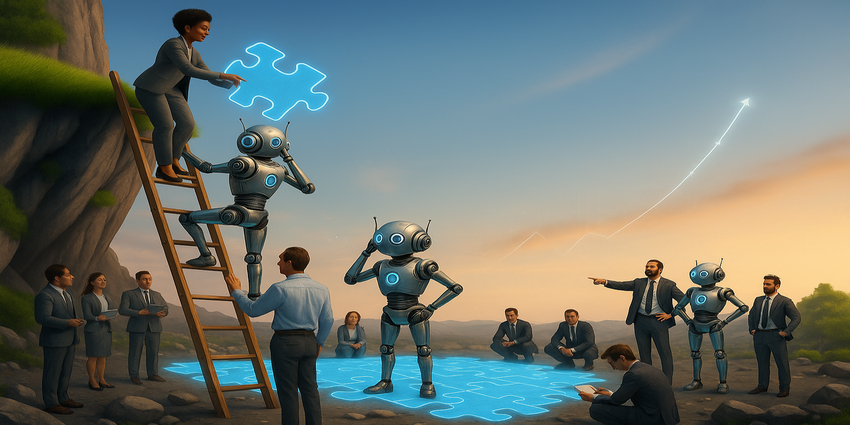

Employee engagement is no longer a soft metric – it’s a business multiplier. As enterprises move deeper into AI Collaboration tools and globally distributed models of work, the organizations that thrive will be those that understand engagement as both a data-driven science and a cultural strategy.
In 2025, engagement has become the foundation for enterprise performance. It fuels innovation, strengthens retention, and directly impacts customer experience. Yet the modern workforce expects more than pay and perks – they’re looking for meaning, connection, and flexibility in how they work and communicate.
The good news? Technology is finally catching up to these expectations. The convergence of collaboration tools, AI-powered analytics, agentic AI and intelligent EX platforms is enabling a new era of connected, human-centric engagement.
Key Sections
How Fragmented Collaboration Tools Are Quietly Draining Productivity
Beyond the App Chaos: Building a Connected Employee Experience with AI
Data, Decisions, and ROI: The Science Behind What Really Drives Engagement
Trust, Tech, and Transformation: Bringing Humanity Back to the Age of Agentic AI
Global Shifts in Motivation, Meaning, and Belonging
The last five years have disrupted the world of work at every level. Companies globally have experienced a double wave of disengagement – first in 2020, driven by isolation and uncertainty which came with the pandemic, and again in 2024, as constant restructuring, digital fatigue and relentless change took their toll (Read more on how to transform fatigue to flow here). Meanwhile, employee expectations have evolved – flexibility, autonomy, and purpose now sit at the heart of what people want from work.
Against this backdrop, a sobering insight: the world’s workplace today is not heading in the right direction. Just over one in five employees globally are fully engaged, highlighting a vast reservoir of untapped potential.
Culture Amp’s recent research highlighted that employees who are proud to work for their company have fallen from 87 percent in 2021 to 83 percent in 2025; those who would recommend their employer have dropped from 84 to 80 percent. Retention intent is also trending downward, with only 55 percent of employees now saying they “rarely think about leaving.”
Regional nuances further shape the picture:
- In Europe and the UK, engagement hinges on confidence in leaders and a motivating vision.
- In APAC and North America, it’s the sense that people genuinely matter and that development is prioritised.
- In the DACH region, employees focus on career growth and clear alignment between expectations and reality.
For today’s leaders, engagement is about trust, communication, and connection. Modern UC platforms bridge that gap, giving employees a shared space to collaborate, be recognised, and stay connected to a common mission.
Beyond HR – Making Engagement a Boardroom Strategy
Disengaged teams cost companies more than missed deadlines; they cost opportunity. Gallup estimates that globally, poor engagement represents up to 9% of lost GDP potential, and that if every organisation could close this engagement gap, the global economy could gain as much as US $9.6 trillion in productivity. A fully engaged workforce could add trillions to the global economy through productivity gains alone. (Read more on cracking the ROI of Employee Engagement here).
Engagement is the multiplier for every other metric that matters. Research shows that engaged employees are more innovative, deliver better customer experiences, and are far less likely to leave.
According to Gallup’s research – covering 339 studies across 230 organisations in 73 countries and 49 industries – there was a clear, consistent link between employee engagement and business performance. Organisations ranking in the top quartile for engagement didn’t just have happier teams; they had stronger bottom lines.
Companies with highly engaged workforces:
- Boost profitability by 21%
- Increase productivity by 17%
- Reduce absenteeism by 41%
- See 24–50% lower turnover, depending on industry type
- Achieve 20% higher sales
- Earn 10% higher customer satisfaction scores
The takeaway is clear: engagement impacts every commercial outcome from sales to retention.
As The Employee Experience Advantage author Jacob Morgan notes:
“In a world where money is no longer the primary motivator, employee experience is the strongest competitive advantage organizations can create.”
The engagement imperative going into 2026 is about building the digital and cultural infrastructure that keeps people performing at their best. In return, your business will see measurable gains in retention and revenue.
How Fragmented Collaboration Tools Are Quietly Draining Productivity
While businesses have invested heavily in tools to enable hybrid work, few have addressed the growing cost of digital friction – the invisible drag created when technology slows rather than supports employees.
On average, this costs organisations 5.5 hours of lost productivity per employee, every week. In a company of 10,000 people, that’s the equivalent of more than 250,000 hours of wasted effort annually – a staggering hit to both morale and the bottom line.
Our coverage in January 2024 highlighted how the hybrid workplace was being undermined by poor technology integration and rising digital friction – a combination that led to significant productivity losses. Many employees felt they were fighting against, rather than working with, their digital environments.
Eighteen months on, the problem hasn’t gone away. As hybrid work and distributed teams have become the norm, organizations have continued adding tools in the name of efficiency. Yet each addition has often compounded complexity, creating overlapping workflows, constant notifications, and siloed data. Gartner even has a name for it: YATTC – “Yet Another Thing To Check”.
Death by Disconnection: How Poor Tech Integration Undermines Employee Engagement
The evidence is hard to ignore. 47% of technology users experience high digital friction, and 34% encounter it several times a week. Nearly a third (29%) of workers even cite poor digital experiences as a key reason they’ve considered leaving their job.
In this environment, digital employee experience (DEX) has become a core pillar of engagement strategy. When employees face constant interruptions, focus and motivation erode.
- App switching: The average employee spends around four hours a week simply regaining focus after toggling between applications.
- Technology fatigue: Knowledge workers now spend an extra 3.1 weeks per year compensating for inefficient tools.
- Notification overload: Employees are constantly “context-switching,” between platforms, leading to cognitive overload and burnout.
The human cost of this friction is frustration; the business cost is attrition. Employees who feel hindered by their digital environment are less engaged, less innovative, and more likely to leave.
From Friction to Flow – Optimising Unified Collaboration Tools
The antidote to digital friction isn’t more tools – it’s better-connected ones.
Tool interoperability, the ability for applications to exchange data and function cohesively, has become the new frontier of productivity. The focus is shifting from adding capabilities to simplifying how people access them.
Forward-looking enterprises are leading with user-centric design and digital workplace architecture that prioritises flow:
- Centralised communication hubs that serve as a single source of truth, ensuring consistent, timely, and accurate updates.
- Integrated EX platforms like Microsoft Viva with SharePoint and Workvivo (by Zoom) which unify collaboration, recognition, and analytics under one digital roof.
- Modern systems that replicate the connection and culture of the office in a virtual environment, enabling development, reducing isolation, and improving access to shared knowledge.
These ecosystems don’t just streamline workflows, they humanise them.
Ultimately, reducing friction is about more than convenience; it’s about giving people mental clarity and operational flow, the conditions that make engagement possible.
The ROI of Simplicity – Why Reducing Friction Boosts Retention and Revenue
Investing in integration pays measurable dividends. According to A study of Microsoft Azure Integration Services, an enterprise with roughly 10,000 employees, achieved a 295% return on investment, an $8.57 million net present value, and a payback period of less than six months – simply by streamlining systems, automating workflows, and consolidating legacy platforms.
The business case is clear:
- Reduced redundancy: Fewer apps mean fewer licenses, support costs, and security risks.
- Higher engagement: Employees experience smoother, more intuitive workflows, leading to greater satisfaction and retention.
- Operational resilience: Interconnected systems make it easier to scale, adapt, and innovate across regions and departments.
Beyond the App Chaos: Building a Connected Employee Experience with AI
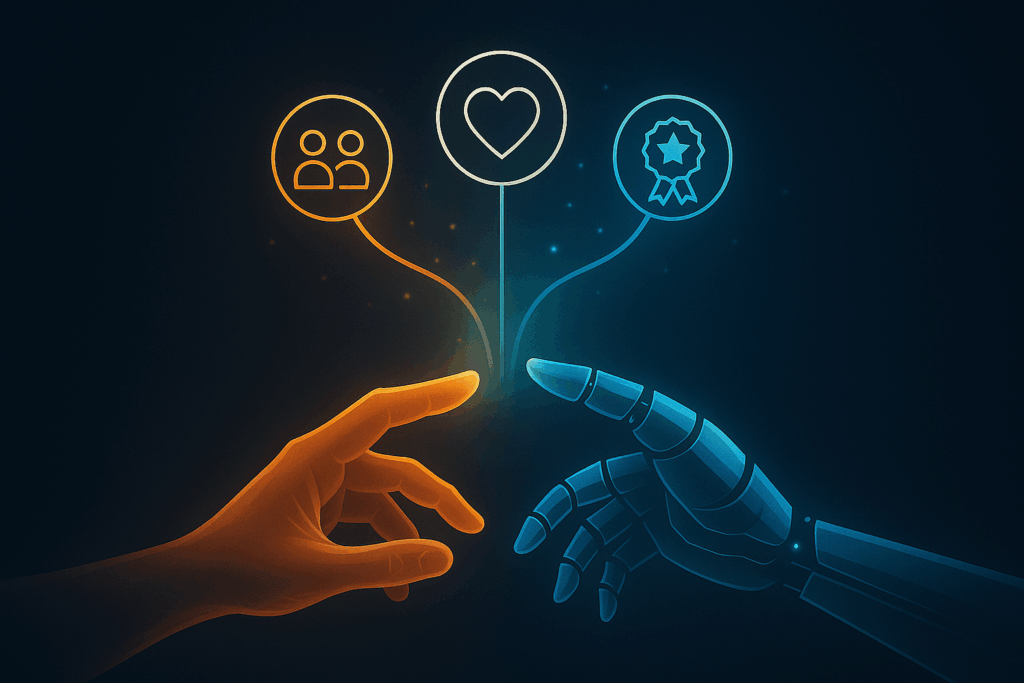
For enterprise buyers and vendors today, the question is not “Which app?” but “How do we build an ecosystem that helps our people do their best work?” AI, collaboration and unified communications now form the backbone of this shift – and they’re powering a transformation in how organisations engage, reward and uplift employees.
Collaboration that Clicks: Turning Tools into Teamwork
AI has gone mainstream – 75% of knowledge workers already use it daily, according to Microsoft. But 68% still say they can’t find enough focus time. The core truth? Technology isn’t the obstacle – it’s the operating system for modern work. When collaboration and AI tools are seamlessly integrated, employee experience thrives.
These tools are fast becoming the invisible engine behind modern collaboration:
- Webex Note Taker: Captures meetings automatically with AI-powered transcription and summarisation, ensuring no insight is lost.
- Microsoft 365 Copilot: Drafts reports, summarises threads, and surfaces key actions directly inside Teams, Outlook, and Viva – keeping everyone aligned in the flow of work.
- Zoom AI Companion: Automatically generates meeting recaps, action lists, and suggested follow-ups, cutting post-meeting admin time dramatically.
When alignment is built into the communication ecosystem rather than bolted on, technology stops fragmenting work.
“The best workplace tech stacks turn “just-another-app” into integrated value systems.”
Scaling Recognition and Well-being with Intelligent EX Platforms
In 2025, leading enterprises are using AI to scale culture with precision, turning moments of appreciation into measurable performance gains.
Why it matters:
- 70% of employees say their work defines their sense of purpose (McKinsey & Company).
- Companies using AI-driven HR solutions see 64% higher talent outcomes (Deloitte).
- Recognition directly influences retention, morale, and innovation – especially in hybrid, distributed teams.
LinkedIn’s Bravo Moment: Turning Appreciation into Performance
LinkedIn partnered with Workhuman to launch Bravo – an AI-powered, social recognition platform – the goal was clear: make appreciation effortless, authentic, and scalable across a global workforce.
What happened:
- Employees who received three or more awards improved their performance ratings by 54% year over year.
- Recognition became contagious – employees who were praised were far more likely to recognise others in return.
- Data from millions of recognition moments provided deep cultural insights, helping leaders understand engagement trends in real time.
- Managers saw stronger cross-team collaboration as recognition flowed horizontally – not just top-down.
Why it worked:
Bravo succeeded because it fit naturally into LinkedIn’s daily workflow. Recognition happened right within existing platforms – no extra steps. AI nudged users with timely prompts and analyzed patterns to surface engagement trends and areas for improvement. Most importantly, empathy stayed central: AI enhanced human intent without replacing it, keeping recognition real and personal.
Lessons for leaders:
- Recognition works best when it’s instant and personal.
- Embed it in existing workflows, don’t make culture another app.
- Use AI to uncover insights, but keep humans in control of emotion.
Cloud-Powered Culture: How Integration Fuels Engagement and Belonging
A strong example of a connected employee experience ecosystem is Microsoft Viva – a cloud-based, AI-driven platform designed to bring communication, learning, insights, and recognition together within Microsoft 365. Rather than functioning as separate tools, Viva’s modules operate as an integrated network that adapts to how employees actually work.
Here’s how Viva exemplifies the connected EX model:
- Unified Collaboration Layer: Viva Engage and Viva Connections create a digital headquarters where employees communicate, share updates, and build community directly inside Teams.
- Recognition and Belonging: Within Viva Engage, employees can celebrate achievements through stories, shout-outs, and community posts.
- Knowledge and Learning: Viva Learning and Viva Topics make professional development seamless by surfacing relevant learning content and expertise right where employees collaborate.
- Listening and Analytics: Viva Glint and Viva Insights gather sentiment and behavioural data to identify engagement trends, burnout risks, and opportunities for recognition or manager action.
- AI-Driven Support: Copilot for Viva connects the entire ecosystem, surfacing context-aware insights, automating reporting, and reducing digital friction across the workday.
Viva demonstrates what a truly integrated EX ecosystem looks like – one that listens, learns, and responds in real time to employee needs.
Data, Decisions, and ROI: The Science Behind What Really Drives Engagement
Modern employee experience (EX) strategies are powered by insight, not instinct. Organisations today sit on mountains of data – from engagement surveys and collaboration metrics to HR systems and performance dashboards – but few turn it into meaningful decisions.
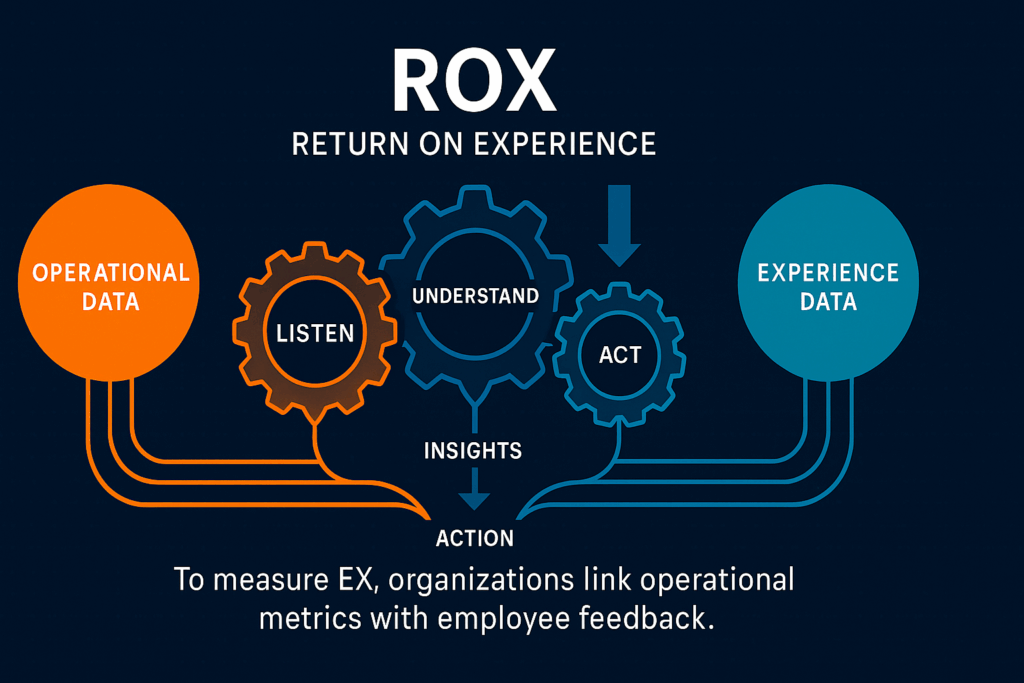
The challenge isn’t collecting information. It’s knowing which signals matter and how to translate them into action. That’s where EX analytics come in. By merging experience data (X-data) with operational data (O-data), leaders can see how engagement truly impacts retention, productivity, and innovation.
People analytics now answers business-critical questions, such as:
- What are the main factors driving retention in our workforce?
- How can onboarding or development programs be improved to reduce early attrition?
- How do engagement and well-being directly influence business outcomes?
The enterprises getting this right treat analytics as a living feedback loop – one that listens continuously, learns from behaviour patterns, and acts with agility.
Connecting People Analytics to Performance and Profitability
Applying the Return on Experience (ROX) matrix will benefit enterprises in understanding the ROI on employee experience. ROX blends financial outcomes (Revenue, retention, productivity) with human indicators (Sentiment, satisfaction, purpose) to quantify how experience investments deliver measurable business value.
ROX isn’t a single number but a system of metrics that helps leaders listen, understand, and act, turning HR analytics into a business intelligence discipline.
When applied effectively, this loop becomes a strategic decision engine. It enables business leaders to see precisely how investments in culture, recognition, and technology translate into tangible outcomes – not six months later, but in real time.
Smarter Insights, Stronger Culture – Using AI to Act on Engagement in Real Time
In the modern EX landscape, data only matters when it drives action. AI-powered analytics platforms give leaders a live view of how collaboration, productivity, and engagement connect across the organisation.
1. Identify Experience Weak Spots
Webex Control Hub has evolved beyond IT oversight into a real-time employee experience engine. It tracks patterns across meetings, messaging, calling, and devices to reveal where engagement thrives – or stalls:
- Too many meetings can indicate overload or inefficiency.
- Low messaging or video use signals isolation or weak communication flow.
- Collaboration maps highlight silos or disconnected teams.
2. Connect Data for a 360° View
- Siloed analytics create blind spots. By combining experience data with operational data from collaboration tools, leaders gain a complete view of how work actually happens.
- Webex Control Hub connects these layers to visualise overwork, burnout, or disengagement trends, turning fragmented metrics into clear, actionable insight.
3. Segment and Personalise
- Engagement isn’t one-size-fits-all. People analytics enable tailored strategies.
- Early-career talent may prioritise mentorship and flexibility.
- Senior employees may value autonomy and recognition.
EX analytics are continuous. Key metrics include:
- ENPS (Employee Net Promoter Score): A simple but powerful gauge of employee advocacy and loyalty, tracking whether engagement initiatives strengthen cultural alignment.
- Retention rate: Tracks whether initiatives boost tenure.
- Collaboration metrics: Measure how engagement drives performance.
Trust, Tech, and Transformation: Bringing Humanity Back to the Age of Agentic AI
AI is reshaping the workplace faster than any previous wave of technology. Over the next three years, 92% of companies plan to increase AI investments, yet only 1% of leaders describe their organisations as “mature” in AI deployment.
Interestingly, industries experiencing higher levels of AI disruption, such as tech, professional services, and creative media – report a 6% improvement in managing work-life balance compared to less disrupted sectors.
Agentic AI Explained: The Next Leap in Employee Experience
Agentic AI – AI systems capable of planning and executing tasks autonomously – is redefining productivity and engagement.
Deloitte reported that A major tech company created a centralised AI use-case programme to manage internal and external GenAI projects.
- External tools: AI chatbots and “agentic solutions” to improve customer service.
- Internal co-pilots: Developer and sales productivity aids.
- API playgrounds: Safe experimentation zones for non-technical users.
The results? Faster proposals, more consistent pitches, and shorter deal cycles. By aligning innovation with governance, the company created both internal value and a foundation for future commercialisation.
Balancing Automation and Empathy in the AI-Powered Workplace
For AI to scale sustainably, trust must scale with it. Yet, according to Adecco’s research, less than half of employees trust that their leaders truly understand AI’s risks and rewards.
To close this confidence gap, organisations should focus on five trust pillars:
- Transparency builds confidence – Hold AI “town halls,” share real use cases, and explain how automation supports, not replaces, people.
- Education empowers – Only a third of workers have ethical AI training; extending this to every level reduces fear and builds fluency.
- Keep humans in the loop – Let AI assist, not decide.
- Lead with ethics, not efficiency – Publish and enforce AI ethics policies covering fairness, privacy, and accountability.
- Show employee benefit – Prove that AI lightens workloads, supports growth, and opens new career paths, not just corporate gains.
When AI adoption is transparent and inclusive, employees see it as an enabler, not an enforcer.
The Future of Engagement: How AI Collaboration Tools Will Power Performance
The next phase of DEX transformation will be led by agentic AI – systems that don’t just assist but autonomously plan, orchestrate, and execute workflows.
Imagine HR business partners freed from policy queries and admin tasks, able instead to coach managers, analyse workforce trends, and drive transformation. This isn’t a distant vision – it’s already unfolding in enterprises deploying AI-powered EX and UC platforms.
The future of work isn’t AI versus humans – it’s AI for humans. The organisations that thrive will be those that embed agentic AI ethically, build trust by design, and use data to amplify – not replace – the power of human experience.
Reconnecting for What Comes Next: Building the Culture, Trust, and Tech That Define Tomorrow’s Workforce
Employee engagement is entering its most transformative chapter – one where technology, trust, and purpose converge. Across industries, a consistent truth is emerging: people no longer engage simply for pay or perks. They seek authenticity, autonomy, and belonging.
Yet the way organizations engage is evolving. The next frontier is predictive and personalised, driven by the rise of agentic AI. These systems will anticipate needs, tailor growth paths, and take on low-value tasks – freeing leaders to focus on what humans do best: creativity, coaching, and culture. Engagement will shift from measuring sentiment to orchestrating experiences, powered by continuous listening and real-time adaptation.
At the same time, trust and connection will define performance more than headcount or hours ever could. Trust in employer remains fragile; how organisations use AI, manage change, and honour flexibility will determine whether that trust grows or fractures.
The most progressive companies are already treating engagement as a living ecosystem – one that listens, learns, and evolves daily. They’re redesigning hybrid work intentionally, building belonging into the flow of work, linking employee experience to customer outcomes.
The future of work will be measured by connection: how deeply people feel seen, supported, and inspired to perform at their best. In this new era, engagement isn’t a metric – it’s the heartbeat of organisational resilience, creativity, and trust. Those who invest in it now will define the next decade of performance.