When Rakuten forced employees to operate in English, it looked to many like a cultural grenade tossed into corporate Japan. Now, with AI reshaping work and global talent becoming the real battleground, that decision looks less eccentric and more like a very early blueprint for modern workforce strategy. For enterprise leaders watching how to build more engaged, more diverse, more globally competitive teams, Rakuten’s English strategy suddenly feels timely again.
Why Is Rakuten’s English Strategy Relevant Again in 2026?
That is the real takeaway from renewed attention on Rakuten’s internal language shift, including a Harvard Business Review podcast revisiting the move and a recent CNBC interview with founder and CEO Hiroshi Mikitani. HBR’s recap underlines the scale of the original mandate: in 2010, Rakuten made English its internal language, requiring meetings, emails and other communications to move to English, with employees given two years to become proficient or face demotion.
The policy came with skepticism, disruption and productivity pain, but it was always designed as a globalization strategy, not a vanity exercise in corporate rebranding.
Related Articles
Why Are High-Performing Employees Quietly Disengaging While Your Engagement Data Looks Strong?
Are Annual Engagement Surveys Already Obsolete?
The Rise of the Megamanager: How AI Is Rewriting Management Roles
How Did Rakuten’s Shift to English Transform Its Workforce Culture?
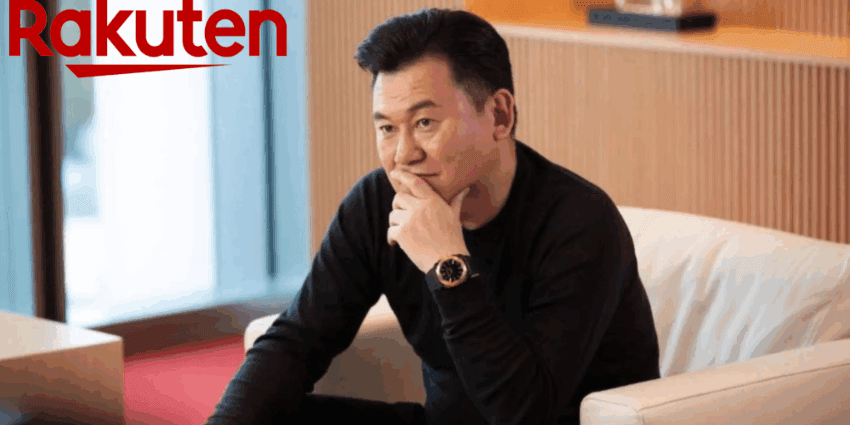
What makes the story newly relevant is what Rakuten says the strategy enabled. In a recent interview with CNBC International, CEO Mickey Mikitani argues that global competition required Rakuten to benchmark itself against international rivals rather than domestic peers. He also linked the language shift directly to talent access, saying:
“The second, is how to secure talented engineers and just hiring the pool from Japanese engineers is quantitatively not big enough… now, 70% of engineers we hire in Japan are non-Japanese.”
He added:
“I just want to make it sure that everybody can communicate with one single language… It has to be English.”
That turns the Rakuten English strategy into something bigger than language policy: it becomes a workforce engagement and talent architecture decision.
What Does Rakuten’s Language Policy Mean for Workforce Engagement?
Rakuten’s own sustainability materials reinforce that broader positioning. The company says its diversity strategy is built around growing and advancing a diverse workforce and fostering a culture of belonging.
In other words, the language shift can now be read not only as an operational tool, but as one part of a wider effort to make Rakuten more accessible to international talent and more reflective of the customer base it serves.
That is especially relevant for enterprise employers wrestling with a stubborn question: how do you diversify the workforce without fragmenting the culture? Rakuten’s answer, for better or worse, was to standardize one key layer of it.
How Is Rakuten Linking Workforce Transformation to AI Readiness?
There is also a business-results angle that stops this becoming a nice little culture anecdote over coffee. Rakuten has highlighted AI utilization and human resource development as strategic priorities, while Mikitani says the company has already seen operational efficiency gains from AI. That does not mean the English strategy alone drove performance, obviously. But it does help his long-running case that painful cultural bets can generate strategic payback over time, especially when they support global hiring, capability building and organizational agility.
The AI layer makes the story even more current. Mikitani argues AI will not replace everything people do, even if it can take on a very large share of tasks. That matters because the future of work conversation is drifting away from simple automation headlines and toward a more nuanced question: what kind of workforce do companies need when humans and AI are working side by side?
Rakuten’s answer appears to be one built on shared language, cross-border talent access and a willingness to push through uncomfortable change early. A little brutal? Perhaps. Effective? Increasingly, that seems to be the point.
What Can Enterprise Leaders Learn From Rakuten’s Long-Term Bet?
For enterprise technology professionals, this is why the story matters: Rakuten is a reminder that workforce engagement is not just perks, pulse surveys and another LinkedIn post about belonging. Sometimes it is a hard strategic operating choice that expands access to talent, supports enterprise adoption of new technologies and gives a business more room to adapt when the market changes. Not every company will fancy going full Mikitani. But many may wish they had borrowed a page sooner.
If you want to stay up to date with the latest workplace technology and digital transformation news, subscribe to the UC Today newsletter and join our growing community of enterprise technology professionals.