Even Realities Hits $1B Valuation with Privacy-First Smart Glasses for Enterprise

The display-first startup is betting enterprise users care more about productivity and privacy than cameras and content creation

4
Immersive Workplace & XR TechNews

Published: July 7, 2026

Christopher Carey

The smart glasses market is quickly becoming one of the most competitive segments in AI hardware, but not every company is pursuing the same vision.

Shenzhen-based startup Even Realities has raised $150 million in a pre-Series B funding round led by Meituan, with participation from existing investor Tencent, giving the company a $1 billion valuation.

Founded in 2023 by former Apple engineers, Even is positioning itself as an alternative to camera-equipped smart glasses by focusing on workplace productivity, privacy and optical display technology.

While companies including Meta and Snap have centred their latest devices around AI assistants, cameras and augmented reality experiences, Even Realities has deliberately taken a different approach.

Celebrating the funding milestone on LinkedIn, Even Realities said the $1 billion valuation marked its transition into unicorn status, highlighting the growing adoption of its display-first smart glasses among professionals and users in demanding real-world environments.

β€œFrom public speaking at TED to real-time translation at national championships, our users wear our product from 8 to 10 hours daily, for the moments that matter.”

The company said its growth has been driven by a focus on design and user-led product development, positioning its glasses as a productivity tool rather than a consumer device built around content capture.

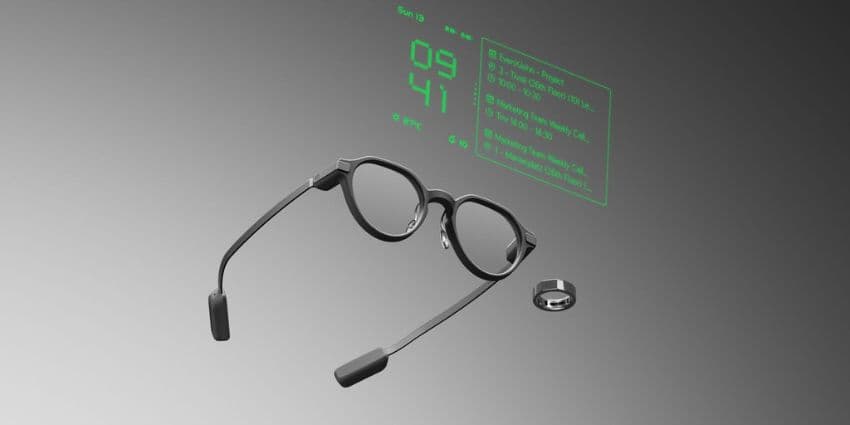
Its flagship Even G2 smart glasses do not include a camera. Instead, they use an integrated heads-up display to project information directly into the wearer’s field of view, while navigation is handled through the companion Even R1 smart ring using tap and swipe gestures.

According to founder and CEO Will Wang, the omission of a camera is a deliberate product decision designed around privacy and comfort.

That philosophy could prove particularly relevant for enterprise deployments, where privacy concerns have consistently been cited as a barrier to wider adoption of wearable AI devices.

By removing the camera entirely, Even avoids many of the concerns associated with recording-enabled smart glasses in workplaces such as boardrooms, healthcare environments and customer meetings.

Productivity Before Content

Rather than focusing on capturing photos or video, Even has built its software around productivity.

One of the company’s flagship features is Conversate, an AI assistant that provides contextual support during conversations by explaining unfamiliar terminology, surfacing relevant information and suggesting follow-up questions in real time. After meetings, the system generates a summary that synchronises with the user’s smartphone.

The company says voice interactions are transcribed into text rather than stored as audio recordings, while user data is encrypted and the platform has been designed to comply with European privacy requirements.

For enterprise users, the combination of real-time translation, meeting assistance and discreet information delivery represents a markedly different value proposition from consumer-focused smart glasses built around content creation.

A Premium Professional Market

Even’s customer base also reflects its positioning.

According to Wang, the company’s typical customer is a male professional between the ages of 30 and 50, with approximately one-third of surveyed users identifying as company executives.

The pricing aligns with that audience. The Even G2 retails for $599, while prescription lenses or the companion R1 ring add approximately $200–300, bringing the average order value to around $1,000.

Rather than competing on affordability, Even appears to be targeting professionals willing to invest in productivity tools that integrate naturally into their daily workflow.

Optics as the Competitive Advantage

While much of the smart glasses market has focused on AI capabilities, Even argues that optical engineering remains the core technological challenge.

The company has developed its own display platform, Even HAO (Holistic Adaptive Optics), which integrates the display chip, waveguide system and prescription lens support into a unified optical architecture.

That investment in optical technology may prove to be one of Even’s key differentiators as competition intensifies across the sector.

Enterprise Opportunity

Even says it has expanded from around 30–40 employees in 2024 to between 300 and 400 today, while more than half of its customers are located in the United States. The company also serves customers across Japan, South Korea, Europe and the Middle East, although it has yet to launch its products in China despite manufacturing there.

The latest funding will support continued platform development, AI capabilities and international expansion.

For enterprise technology leaders, Even Realities represents a different vision of where smart glasses may find their strongest foothold. Rather than attempting to replace the smartphone or become another content creation device, the company is betting that professionals value discreet access to information, meeting intelligence and privacy-first design.

As competition in wearable AI continues to accelerate, Even Realities is positioning itself around a simple proposition: the future of smart glasses may be defined less by what they can capture, and more by what they can discreetly deliver to the wearer when it matters most.

Spatial Computing & XR​Wearable Technology
Featured

Share This Post