
Microsoft has officially discontinued its Mesh platform, simultaneously announcing the general availability of its immersive events for Teams.
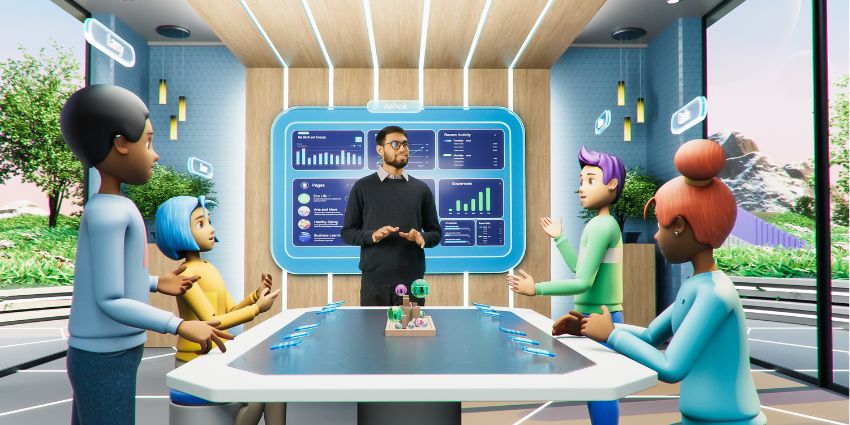
Both XR platforms were designed to make meetings more engaging by allowing users to interact with each other as avatars. However, with much overlap between the two, Microsoft decided to sunset Mesh and focus on the more Teams-centric immersive events.
The shift marks a significant consolidation in Microsoft’s extended reality strategy, bringing three-dimensional collaborative experiences directly into the communication platform enterprises already use daily.
Yet for businesses invested in immersive collaboration technology, this transition raises an important question: What has actually changed?
What Mesh Was and What immersive events is
Microsoft Mesh was conceived as a comprehensive development platform for extended reality experiences. Introduced alongside products like the HoloLens mixed reality headset, Mesh gave developers tools to create metaverse-style environments, implement holoportation capabilities, and design custom virtual landscapes using integrations with Unity.
The platform positioned itself as the foundation for a new era of workplace collaboration, enabling teams to interact through personalized avatars in richly designed three-dimensional spaces.
Developers could leverage the full Mesh toolkit to build bespoke immersive experiences, with the flexibility to create everything from virtual training environments to complex collaborative workspaces. The solution emphasized customization and development possibilities, targeting organizations willing to invest significant resources into building tailored extended reality experiences.
However, this came with some complexity. Organizations had to navigate a separate platform, manage additional access points, and often needed IT expertise to fully realize Mesh’s potential.
The barrier to entry proved substantial, particularly for enterprises seeking straightforward solutions to immediate collaboration challenges rather than long-term metaverse investments.
immersive events in Teams, by contrast, represent a more streamlined approach to the same goal. Rather than requiring separate applications or development expertise, immersive events exist as a native feature within Teams itself.
The experience retains the core elements that made Mesh compelling—three-dimensional environments, avatar-based interaction, and spatial audio—but packages them in a format requiring minimal adjustment for existing Teams users.
The transition emphasizes accessibility over flexibility. While the original Mesh platform offered extensive customization through developer tools and integrations, immersive events focuses on practical business scenarios with pre-designed templates. Teams administrators can create branded Immersive Events using the built-in Editor, adding company logos, images, and text—no code required. For organizations that find building from scratch too resource-intensive, Microsoft provides templates designed for specific use cases.
The technical architecture has also evolved. immersive events leverage Action Groups, which enable administrators to create and trigger dynamic interactions, including animations, music changes, and visual transitions. These capabilities aim to deliver engaging attendee experiences without requiring the development expertise assumed by the original Mesh platform.
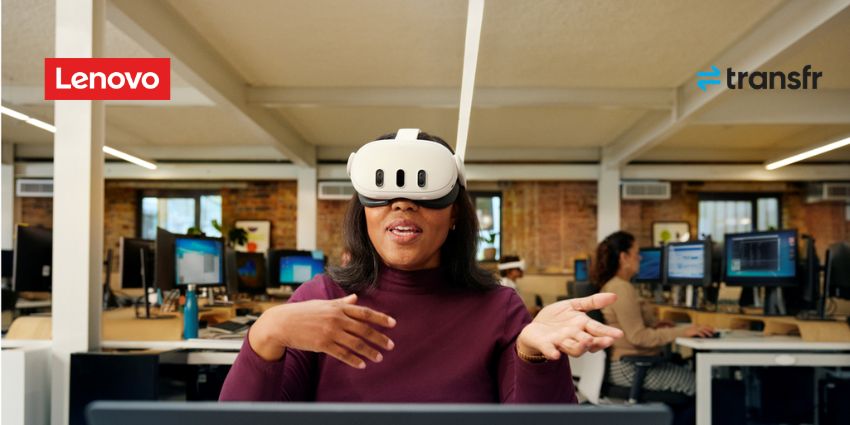
Meetings conducted through immersive events remain accessible via Windows PCs, Macs, and Meta Quest VR headsets, maintaining cross-platform compatibility.
Crucially, the security and identity management infrastructure remains unchanged. Both the original Mesh and immersive events benefit from enterprise-grade security, privacy controls, and identity management powered by Microsoft 365. This continuity ensures that organizations avoid additional compliance or security reviews when adopting immersive events.
Practical Implications for Immersive Meetings
The consolidation from Mesh to Teams immersive events carries significant implications for how businesses approach virtual collaboration.
Most notably, the licensing model has shifted in ways that affect deployment strategies. While attendees need only a standard commercial Teams license to participate, hosts require both a commercial Teams license and the Teams Premium add-on.
For businesses already invested in Teams Premium for features like intelligent meeting recaps or advanced meeting protection, immersive events represent added value within existing expenditure. However, organizations considering immersive events as their primary reason for adopting Premium face a strategic calculation.
As a standalone platform, Mesh required dedicated change management, training on new applications, and often the involvement of specialized technical teams to design and deploy environments. immersive events in Teams lower these barriers considerably.
Teams administrators already familiar with managing calendars, meeting settings, and basic customization can deploy immersive events using existing knowledge. The learning curve compresses from mastering a new platform to understanding additional features within a familiar interface.
This accessibility advantage extends to end users as well. Instead of downloading new applications, learning different interfaces, or managing separate credentials, users can access immersive events directly within Teams. Participants join through their standard Teams calendar, use familiar audio and video controls, and can switch between traditional and immersive views seamlessly.
This integration reduces the friction that often limits adoption of innovative collaboration tools. However, the consolidation also narrows the range of possibilities. The original Mesh platform’s flexibility allowed organizations to build highly specialized immersive experiences tailored to unique business processes.
Manufacturing companies created virtual factory floor environments for safety training. Architectural firms developed three-dimensional project review spaces. Retailers designed immersive showrooms for product launches.
Its customizability attracted a diverse range of organizations, including Accenture, DXC Technology, PwC, Takeda, Telefónica, and the World Economic Forum.
While immersive events in Teams support customization through the Editor utility and templates, the scope is inherently more limited than what full development access enabled.
Organizations that invested heavily in custom Mesh development now face the challenge of rebuilding on the new platform. For businesses just beginning to explore immersive collaboration, this consolidation simplifies decision-making by offering a clearer, more accessible path forward. For those with substantial Mesh investments, it represents a strategic pivot requiring careful evaluation and potential redesign.
The use case profile has also evolved. immersive events in Teams are optimized for scenarios like all-hands meetings or huddles. Mesh was designed to host medium-to-large events, with up to 330 participants joining through the Mesh application. However, with Mesh now replaced by immersive events, that capacity may soon expand.
The Consolidation Strategy and What Comes Next
Microsoft’s decision to sunset Mesh in favor of Teams-native immersive events reveals important insights about enterprise technology strategy and extended reality adoption.
The move acknowledges that revolutionary technology often succeeds through evolutionary adoption. Rather than expecting enterprises to embrace entirely new platforms, Microsoft has embedded immersive capabilities within existing workflows, reducing adoption friction while preserving the core value proposition.
This consolidation strategy aligns with broader trends in unified communications, where platform sprawl increasingly concerns business leaders. Organizations prefer fewer platforms that deliver more functionality, rather than a collection of specialized tools for different use cases.
The unified communications industry will watch closely to see how enterprises respond to immersive events in Teams. Now that participating has become simpler and more seamless, adoption rates will indicate whether three-dimensional meeting environments address real business needs—or remain an innovative but niche feature.