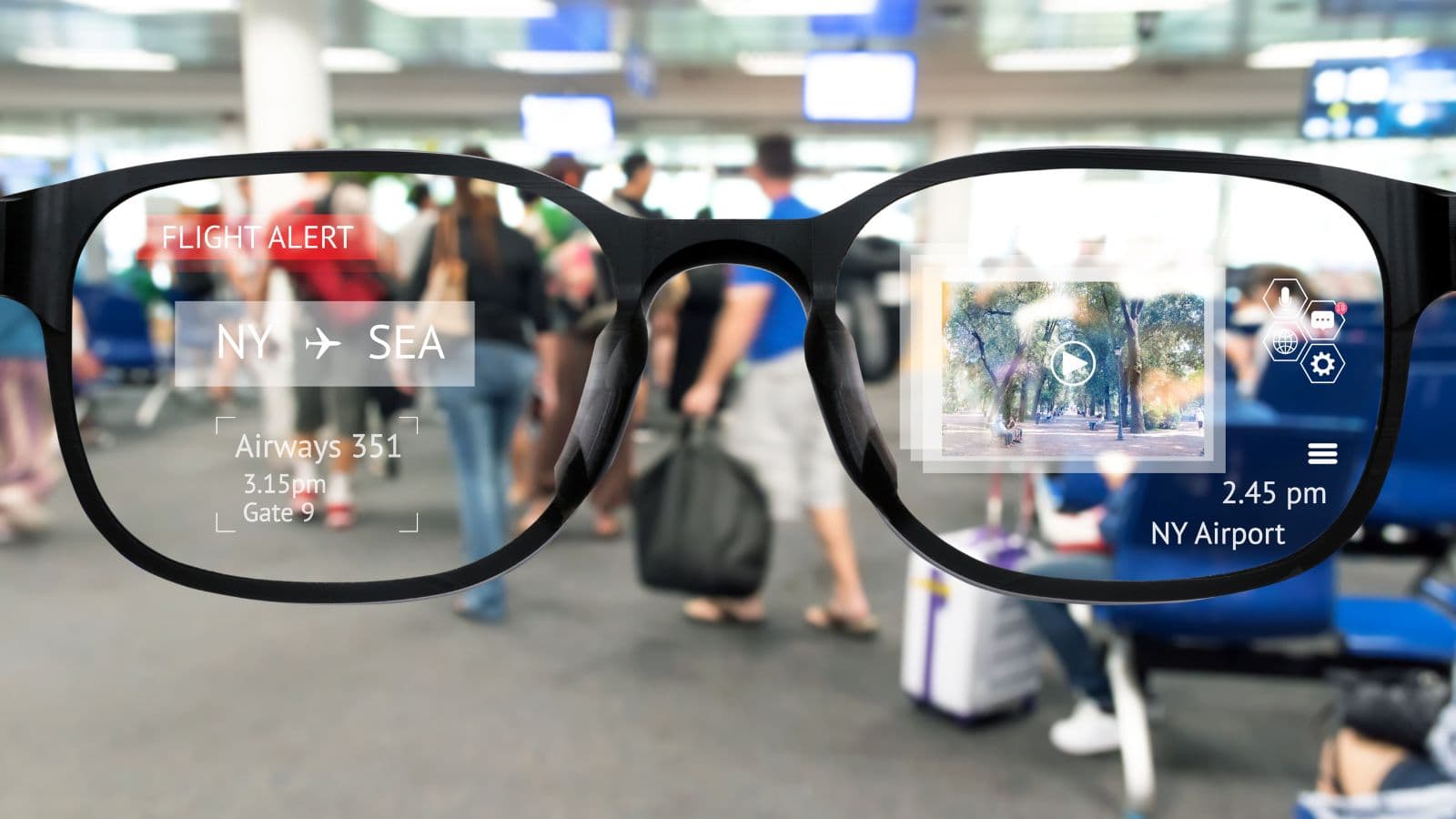
The US Department of Homeland Security (DHS) is reportedly developing smart glasses designed to help Immigration and Customs Enforcement (ICE) agents identify individuals in real time using biometric data.
According to documents reviewed by journalist Ken Klippenstein, the project involves operational prototypes of wearable glasses intended for field use.
The devices would reportedly provide agents with instant access to biometric databases and enable real-time identification during enforcement operations.
The system is allegedly being targeted for potential deployment by September 2027, and the development is likely to intensify debate over facial recognition, artificial intelligence and the growing use of biometric surveillance in public spaces.
In a statement provided to UC Today, a spokesperson from the US Department of Homeland Security said that currently no funds have been committed to 'any form of smart glasses', but added its Science and Technology Directorate is 'constantly assessing the needs of ICE and other DHS components to assist law enforcement officers in the field'.
"These discussions involve privacy offices, chief information officers, and attorneys to ensure that any technology that DHS utilizes is within the full scope of the law. “
Real-Time Identification
Budget documents cited in the reporting describe a plan to equip agents with “innovative hardware” capable of delivering real-time access to information and biometric identification tools in the field.
The smart glasses would capture video and compare individuals against existing government databases, potentially identifying people using facial recognition technology and gait analysis.
While law enforcement agencies already deploy biometric systems in controlled environments, the introduction of wearable devices would represent a significant shift, allowing identification to take place continuously during everyday field interactions.
Civil liberties advocates have warned that such capabilities could dramatically expand the reach of surveillance infrastructure beyond fixed checkpoints or body-worn cameras, embedding identification technology directly into officers’ line of sight.
Civil Liberties Concerns
The reported project has already prompted concern from privacy and legal experts, both inside and outside government.
Critics argue that once deployed, surveillance systems built for specific enforcement purposes can expand in scope over time, a phenomenon often referred to as “mission creep”.
These concerns are heightened by the growing use of biometric databases and facial recognition tools across US federal agencies, which have already been the subject of sustained legal and civil liberties scrutiny.
The Changing Nature Of Surveillance
Unlike fixed surveillance infrastructure, smart glasses are worn directly by agents, enabling continuous recording and data collection during routine encounters.
This shift has raised concerns that biometric identification could become more immediate, less visible and more difficult for the public to detect or challenge in real time.
The introduction of wearable AI systems into law enforcement would mark a significant turning point in how surveillance is conducted in public spaces, particularly in environments such as transport hubs, demonstrations and street-level policing operations.
Critics argue that the emotional and psychological impact of being subject to constant potential identification could fundamentally alter how people behave in public.
Smart Glasses Already Being Used?
The DHS development comes amid other reports that ICE agents are already using commercially available smart glasses during field operations.
Last month, an investigation by The Independent found that agents in multiple US states have been seen wearing Meta AI smart glasses during operational deployments over the past year.
In some cases, agents were observed using the devices to record or photograph members of the public during immigration-related operations.
The Meta Ray-Ban smart glasses are consumer devices capable of recording video, taking photographs, livestreaming footage and using AI features to analyse visual input in real time.
However, DHS policy does not authorise the use of personal recording devices for operational purposes, with only approved government-issued equipment permitted.
Despite this, The Independent found that DHS agents in six states have been seen in the smart glasses since January 2025.
Concerns Over Oversight And Data Governance
Unlike official body-worn cameras, which are subject to strict retention policies and audit requirements, privately owned devices may not be governed by the same data handling frameworks.
This raises concerns about where footage is stored, how long it is retained, and whether it could be accessed or integrated with other systems outside established oversight structures.
Experts have also warned that informal use of consumer devices could undermine transparency, particularly if recording practices vary between officers or field operations.
As both state-developed systems and off-the-shelf devices continue to evolve, policymakers face increasing pressure to define clear boundaries around their use, establish robust safeguards for biometric data, and ensure transparency in how surveillance technologies are deployed in public spaces.
The outcome of that debate is likely to shape not only the future of law enforcement technology, but also the broader relationship between citizens, privacy and the tools increasingly worn at eye level in everyday life.