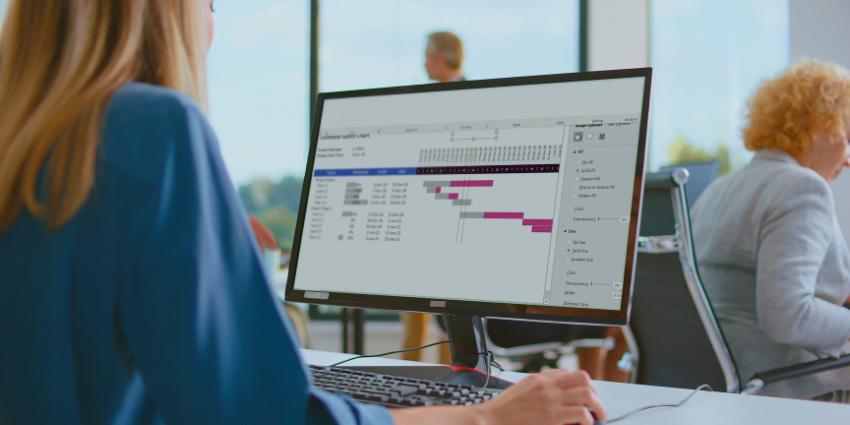

For the past five years, enterprise IT and project management followed a simple rule. If staff failed to log a decision in Jira, Asana or Monday.com, it didn’t happen.
During the peak of remote work, these digital task boards served as the single source of corporate truth. Because physical distance separated teams, workers had to document every pivot, status update and workflow. But in 2026, a phenomenon HR leaders call “hybrid creep” is driving a massive adoption crisis for enterprise software buyers.
Rather than sudden Return-to-Office mandates, enterprises are tightening their policies by moving from one or two mandated in-office days to three or four.
This shift returns control to the physical office but fractures how companies track work. Teams often have quick post-meeting chats in the hallway or brainstorms over coffee. They make critical decisions in the physical world. If nobody returns to their desk to update the digital task board, IT leaders end up funding “zombie boards”. These are costly, outdated SaaS deployments that no longer reflect what the team is actually executing.
The challenge goes beyond renewing licenses for project management software. Teams must find a way to connect their UC stack, including Microsoft Teams, Zoom and Slack, with their PM tools. This connection lets them capture physical office conversations and digitize them automatically.
The shadow project management economy
Digital task boards quickly fall out of sync with physical reality. Project managers then spend their days chasing down team members on Slack or Microsoft Teams. They have to ask if an in-person meeting changed the project scope.
The actual work happens in meeting rooms and casual chats. Meanwhile, teams ignore the software designed to track these tasks.
Tier 1 platforms recognize this disconnect. They know that if their software requires humans to manually input every physical interaction, user adoption will plummet. Speaking at a recent Asana product summit, CEO Dustin Moskovitz highlighted the inefficiency of this manual tracking:
“Knowledge workers from large enterprises spend 63% of their time on ‘work about work.’ This way of working is fundamentally broken.”
Bridging the physical-digital divide
The major players in work management want to solve this hybrid gap. They are transforming their platforms from destination apps into invisible background layers. These layers ingest data directly from where work actually happens, meaning users no longer need to actively visit and update them.
Atlassian, which has championed its “Team Anywhere” model, is pushing automation to bridge the gap between synchronous physical work and asynchronous digital tracking. Following the company’s recent restructuring to focus on its AI roadmap, Co-CEO Mike Cannon-Brookes addressed the strategy in an internal memo regarding the layoffs:
“We fundamentally believe people and AI create the best outcomes. Our approach is not ‘AI replaces people’. But it would be disingenuous to pretend AI doesn’t change the mix of skills we need.”
Asana has taken a similar approach with the rollout of its “AI Teammates”. Rather than waiting for a human to update a status, these agents actively monitor the enterprise communication layer. Built on the company’s Work Graph, the agents understand who is doing what, by when and why. The platform now has the ability to reason alongside humans. It can automatically chase down updates, re-prioritize workloads and read project context without human intervention.
Microsoft is also leveraging its UC footprint to fix the project management gap. With the recent revamp of Microsoft Planner and the introduction of the Copilot “Planner Agent”, Microsoft is tying task management directly into Teams. If colleagues make a decision during a hybrid Teams meeting, Copilot can ingest the transcript. It recognizes the verbal agreement and automatically updates the corresponding Planner board.
The takeaway for IT and UC buyers
As hybrid creep solidifies the three or four day in-office workweek, IT leaders must rethink their software procurement strategies. Buying project management tools in isolation is no longer a viable option.
If a task management platform lacks deep integrations with the company’s core UC stack, it will fail the adoption test. This applies whether the connection is through native Microsoft 365 integrations, Asana’s Claude-powered AI Studio or Slack’s new open-source Model Context Protocol (MCP) server.
The era of standalone project management is over. IT buyers must now demand tools that actively listen to the workforce. If a platform cannot turn a hallway conversation into a logged workflow, employees will simply stop using it.
The winning platforms in 2026 will bridge this gap seamlessly. They will capture the physical watercooler, understand the context and update the ticket before employees even return to their desks.
Navigating the new project management landscape
As the enterprise project management market shifts to accommodate hybrid work, the race to build the ultimate AI-driven task platform is accelerating. IT buyers evaluating their SaaS stacks this year must look beyond basic task tracking and understand how these platforms are deploying autonomous agents and shifting their release cycles to maintain user adoption.
For a deeper dive into how the major players are positioning themselves for this next era of work, explore our recent coverage:
- monday.com vs Asana vs Smartsheet: Which AI strategy will win enterprise in 2026?: A breakdown of how the top Tier 1 vendors are differentiating their AI rollouts for the enterprise.
- monday.com Opens Its Platform to AI Agents: How the introduction of the Model Context Protocol (MCP) is allowing project teams to build custom, cross-platform AI workflows.
- Why Atlassian is Shifting Jira to Seasonal Releases: A look at how the software giant is changing its update cadence to help IT admins better manage change fatigue and user adoption.