
The initial mania of the Gen AI boom has settled, giving way to a more pragmatic, occasionally cynical reality in the enterprise tech sector. As the dust settles from the explosion of “AI-in-a-box” product announcements, IT leaders and channel partners are finding that the bridge between a promising demo and a production-ready workflow is fraught with structural peril. The market is fatigued by features. The demand now is exclusively for tangible outcomes. For the channel, this transition represents an existential pivot. The traditional reactive support model in managed services is being dismantled, shifting the baseline from manual triage to proactive diagnostics.
However, the path to this automated nirvana is not paved with plug-and-play tools. It requires a fundamental restructuring of how AI is delivered in managed services. This is a lesson that Integris learned the hard way. Rather than simply reselling vendor promises, Integris adopted a “Client Zero” approach, building and validating an internal governance framework across its own workflows before allowing a single byte of code to touch a customer’s environment.
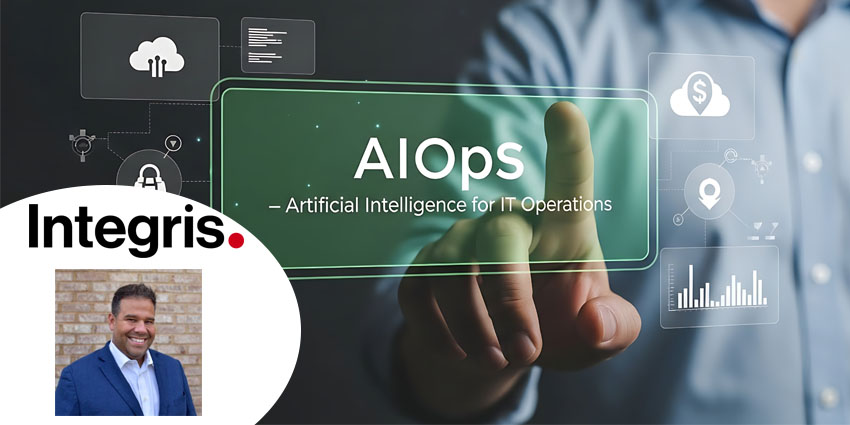
Dr. Brian Luckey, CIO and technically the CTO for Integris, has spent the last year overseeing this rigorous internal testing. With over 25 years of executive experience in operations and service delivery, Luckey’s perspective offers a sobering yet optimistic blueprint for the channel. Actual value doesn’t come from speed, but from the architectural discipline to fail internally so the client doesn’t have to.
- The AI Risk Mitigation Playbook for IT Leaders: Governance, Security, and Ethical Deployment
- Cisco Launches 360 Partner Program, Sharpening Channel Differentiation in the AI Era
The Fallacy of the ‘Simple Solution’ With AI in Managed Services
For many channel partners, the temptation to deploy “low-hanging fruit” automations is appealing. Vendors promise that layering a Copilot over existing repositories will instantly democratize data. Luckey’s experience contradicts this optimism, revealing that AI in managed services is often less of a magic wand and more of a magnifying glass for existing organizational chaos. The failure of these “simple solutions” during the Integris Client Zero phase highlighted that algorithms cannot organize data that the enterprise has neglected.
“We found that with simple solutions—like just putting Copilot on top of SharePoint—we, and our clients, hoped for immediate value. You think, ‘If I put it on top, I should be able to just search files and make it easy.’ The problem is, you don’t realize how disorganized your files are. Unless you’re highly organized, your files today are probably all over the place.”
This realization forced Integris back to the drawing board. The issue was not the technology, but the underlying data architecture. However, the challenges were not limited to file management. In an attempt to modernize their help desk, Integris developed an “Intelligent Routing” workflow intended to bypass the traditional tiered support model (L1, L2, L3) and route tickets directly to the most capable engineer. On paper, it was the holy grail of efficiency. In practice, it exposed the nuances of human capability that algorithms struggle to quantify.
“In theory, this sounded great. It sounded super easy: ‘Let’s just get some skills together, assign these engineers some skills, figure out calendaring, and do it,'” said Luckey. “We quickly found it’s a little bit more complex than just putting a few things in place. If you look at a matrix with engineers on one side and skills on the top, you can’t just put a number to it subjectively; ‘I think Jimmy’s a three, Bill’s a two, and Susie’s a four.’ It doesn’t work out that way.”
The solution required using AI to analyze historical tickets to objectively determine skill sets and validate the data before redeploying the routing system. It was a microcosm of the broader journey for AI in managed services, a move from subjective management to data-driven precision.
Constructing the AI Immune System
For buying committees at enterprise organizations, particularly those in highly regulated industries, the speed of adoption is secondary to governance safety. The horror stories of data leaks and hallucinated compliance breaches are top of mind for C-Suite leaders. Integris counters this by prioritizing an “explainability threshold” and a governance-first architecture. Luckey describes the internal philosophy as avoiding “Client Zero Dark Thirty,” a scenario in which internal testing goes wrong and must never bleed into the client environment.
The governance layer acts as a safety valve. By deploying strict operational sandboxes, ensuring all data is automatically scrubbed and masked, and maintaining compliance with its CMMC Level 2 certification, Integris treats innovation and security as non-negotiable partners.
This caution is supported by market analysis indicating a high failure rate for projects that lack this rigorous foundation, with Gartner predicting that 40 percent of agentic AI-based projects will fail by the end of 2027.
“We just wanted to make sure our guardrails were not part of that statistic. We are perfecting AI internally to ensure our customers never have to be the beta test. That is what’s important.”
This philosophy champions the “human-in-the-loop” mandate. While the goal is efficiency, high-stakes decisions regarding infrastructure and privacy require human oversight to ensure the technology remains a tool rather than an unchecked decision-maker. This creates what Luckey terms an “AI immune system,” capable of identifying and resolving internal issues within the digital twin of their operations before they impact the customer.
“The evolution of trust and the journey to autonomy is not a flip of the switch,” Luckey added. “You can’t just flip it on; you have to have a controlled progression where AI helps, but you keep a watchful eye.”
The Death of the Ticket and the Birth of Outcomes in Managed Services
Perhaps the most profound shift AI in managed services brings is to the market’s commercial and talent structures. If the machine handles diagnostics and routing, the traditional training ground for junior engineers, the “busy work” of Level 1 support, disappears. This has sparked fears across the tech workforce about manufacturing its own obsolescence. However, Luckey argues that the entry-level role isn’t dying, but evolving from reactive repair to proactive innovation.
“We didn’t want to be the ones saying we’re letting go of hundreds of people because of AI, that’s just not the fact,” Luckey asserted. Through campaigns like “Build for Better,” Integris is upskilling staff across all departments—from finance to engineering—moving them from “AI curiosity” to “practical mastery.”
This internal evolution mirrors the changing commercial relationship between MSPs and their clients. As automation enables “silent IT operations,” in which problems are remediated before users notice, traditional pricing models based on users or devices become obsolete. If the value proposition is that the phone doesn’t ring, the contract must reflect the value of uptime and business outcomes, rather than the volume of activity.
Luckey envisions a future where pricing is as bespoke as the solution, moving away from commoditized services toward outcome-based revenue:
“You may have some canned AI or automations with predetermined outcomes, almost like a Chinese takeout menu where you can choose different things, but I think the real value lies in custom solutions. By crafting a solution around the business outcomes they are trying to achieve, you can really start changing the contract structure and pricing to be more outcome-based.”
Key Takeaways For Channel Leaders Exploring AIOps
The speed of deployment often dominates the narrative of AI in managed services. Integris, however, suggests that the true competitive advantage lies in the depth of governance. By adopting the Client Zero mindset, they have proven that the only way to automate the enterprise safely is to automate oneself first.
As the industry moves toward silent operations and outcome-based economics, the partners who succeed will be those who, like Luckey, view automation not as a product to be sold, but as an operational philosophy to be lived.