
Artificial intelligence might be transforming workplaces across the globe, promising smarter scheduling, automated note-taking, and more accessible collaboration.
But when it comes to hybrid meetings, the technology still isn’t quite living up to the hype.
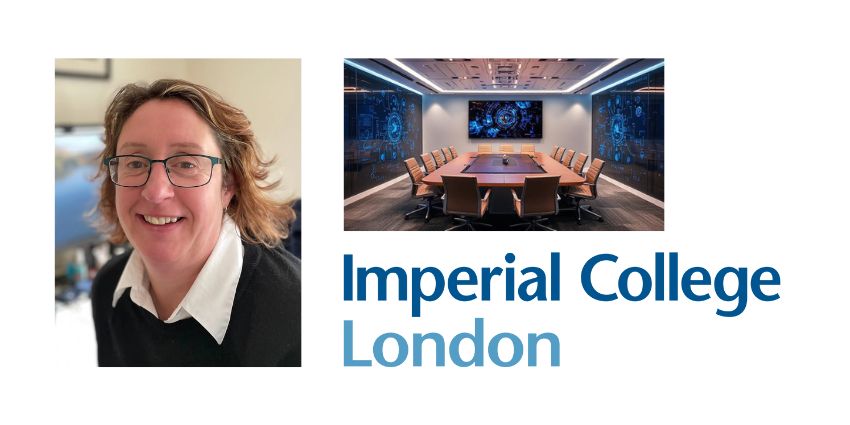
Speaking to UC Today, Caroline Carter, AV Services Manager at Imperial College London outlined how AI is being used, and whether it could create more equity in hybrid settings.
“To be perfectly honest, at the moment, it’s not [creating equity],” Carter says. “In time, possibly yes. But right now, the way people conduct their meetings still creates imbalance.”
For Carter, the issue isn’t that AI tools don’t exist – it’s that meeting culture, room design, and adoption habits haven’t caught up.
“Unless everyone’s online, the experience isn’t equal,” she explains. “If you’ve got twenty people in a room and two online, they’re not going to get the same experience.
You might miss the hand up, or the person trying to contribute remotely. That’s not something AI fixes yet – it’s about how we design the spaces and manage the interaction.”
AI in Action – But Not in the Lecture Hall (Yet)
While Imperial is known for its cutting-edge research in engineering and science, Carter says AI’s practical use on campus remains modest.
“For meetings, we use AI mainly for minute-taking and scheduling,” she explains. “If you’ve double-booked yourself or missed something, you can catch up easily. It’s brilliant for accessibility and for people with caring responsibilities – nobody has to miss the important points.”
Lecture theatres, however, are another story. “We use lecture capture and captions, but they’re not AI-driven yet,” Carter says. “We’ve tested some tools, but they’re not as advanced as we want them to be. It’ll come in time – but we’re not there yet.”
Accessibility is one of the clearest benefit areas Carter sees.
AI can help neurodivergent staff and those with dyslexia or dyspraxia to communicate more effectively, and ensure that everyone can engage with the content, even if they’ve missed a meeting. “You know exactly where you are, what you’re doing – which is great,” she says.
The Human Link in the AI Chain
As meeting rooms and collaboration platforms become smarter, Carter argues that training and user awareness are now more critical than ever.
“Training is massive,” she says. “If you want to get the best out of any system – whether it’s AV kit or AI tools – you can’t just assume you know how to use it. It’s like a smart TV at home; you think you know it, but then realise there’s a whole world of features you’ve never touched.”
Imperial offers regular workshops and guidance for staff, but Carter acknowledges that not everyone engages. “You can offer training, but not everybody takes it up,” she admits. “The key is showing people what’s in it for them – how it can make their day-to-day job easier. Whether it’s co-pilot software or ChatGPT, if they can see a clear benefit, they’re more likely to adopt it.”
This human factor, she says, is far more challenging than the technology itself.
Some people love it, they’re the techies who’ll try anything new, [but] others just want to walk into a room, flick a light switch, and get on with it. You’ve got to find that happy medium.”
Overcoming Hesitation and Building Confidence
Carter also highlights that hesitancy around AI comes from multiple sources – fear, lack of knowledge, or uncertainty about ethical boundaries. “Some people are scared to use it, they don’t know how to use it, or they don’t know if they should use it,” she says.
Currently, Imperial has no formal KPIs or policies regulating AI usage outside of student assessments. “It’s optional – people can use it if they want,” she says. “It’s a benefit, not something we impose. Some have never used Copilot or ChatGPT, but for someone like me, who’s dyslexic and dyspraxic, it’s a game-changer.”
Even without a policy framework, she believes the focus should be on demonstrating tangible benefits to encourage adoption. Workshops, live demos, and practical examples of what AI can do are far more effective than mandates.
The Everyday AI Revolution?
One of the most striking aspects of Imperial’s AI adoption is that change is incremental and practical, rather than revolutionary. Carter envisions AI taking over mundane administrative tasks, from booking rooms and setting up hybrid meetings to arranging catering.
“You’ll be able to say, ‘Book a room for twelve, with catering and a hybrid setup,’ and it’ll do the lot,” she explains. “All you’ll need to do is show up.”
This quiet transformation reflects a broader trend across universities and enterprises alike – AI’s real impact is in the small, repetitive tasks that consume time and attention, freeing humans to focus on creative and strategic work.
Carter is also mindful of the ethical considerations surrounding AI use in academia. While the technology can streamline work and improve accessibility, there is a need to ensure authenticity and prevent misuse, particularly in student submissions.
“Make sure it doesn’t sound like it’s not you,” she warns. “Sometimes AI output can misrepresent someone’s voice. That’s an interesting challenge as we move forward.”
Her perspective highlights the delicate balance institutions must strike between embracing innovation and maintaining integrity, a lesson that resonates across both education and enterprise UC environments.
A Smarter, More Equitable Future
Despite the current limitations, Carter remains optimistic about AI’s long-term role in hybrid work.
She predicts that future meeting spaces will integrate smarter tools capable of capturing online and in-room participants equally, providing equitable engagement and seamless collaboration.
But she stresses that the technology alone won’t solve the problem. “AI can make meetings smarter, but people still make them meaningful,” she says.
Adoption, training, and cultural buy-in will be the ultimate determinants of success.
For UC and AV professionals alike, the lesson is clear – the journey toward AI-enhanced meetings is not just a technological challenge, it’s a human one.
As Carter’s experience at Imperial demonstrates, the future of hybrid work depends as much on education and culture as on algorithms and software.
- Smart Meetings: How AI Meeting Room Technology Works
- The Meeting Room Revolution: How AI is Transforming Corporate Collaboration from the Ground Up