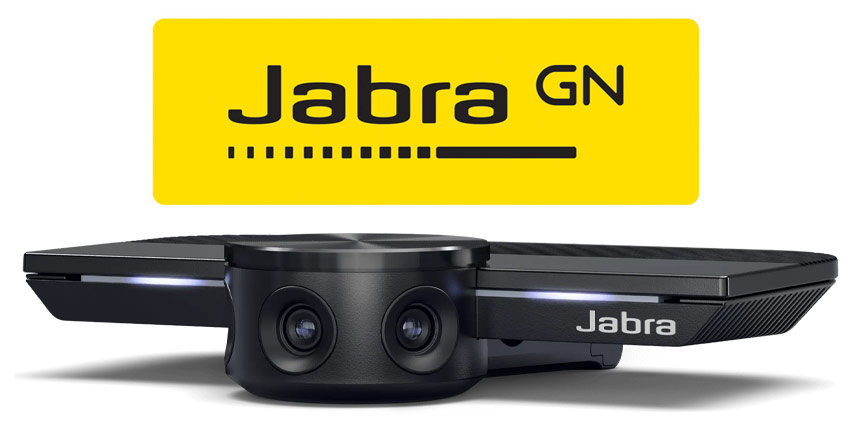

Although we might not have liked having to adopt video calls during the pandemic, as most of us moved to a remote working model, many have realised that video is an extremely powerful tool. The latest solutions, like the Jabra PanaCast, allow users to harness video to get the most from calls while also improving collaboration and increasing productivity.
Video: Why You Need to Use It
“One of the things that we saw pre-pandemic was the fact that many teams were becoming dispersed geographically,” says James Spencer, Video Director Northern Europe at Jabra.
“Instead of having a team that is based solely in one office, you now have people in different countries all contributing into the same team or business unit. So, there has been a need to bring people together for a while now”
During the pandemic, bringing all employees together became a necessity for every organisation. “The only way to contact people now is via an audio or video call.”

Yes, we can conduct a certain portion of this communication via voice calls; but in order to achieve effective business collaboration and bridge the gap left by a lack of face-to-face meetings, video is much more productive and personal.
“When using video, you’re able to see the body language of the other people on the call. This allows you to pick up on what they are feeling and ensure they are brought into the conversation. In fact, 87% of remote employees say they feel more connected and involved with teams and projects when using video conferencing, according to GetVoIP.
“It’s much easier to build rapport by being able to see the person than it is when you’re just speaking to them on the phone. Video also allows you the flexibility to run product demos and present visual material, which is especially useful when speaking to end-customers,” says Spencer.
Flexibility is Key
“When we are able to migrate back to the office, companies will be looking to make their working environments more flexible in order to ensure staff safety,” explains Spencer.
“This could mean more meeting room booths in the open office. Being able to put a camera with 180⁰ field-of-view wherever you want within a large office space will become important, as it will allow all participants involved the meeting to be seen even if they are socially distanced in the room.”
However, video is not just confined to the office. Two other significant sectors making strong use of video solutions right now are the Healthcare and the Education sectors.
“We have seen a big rise in the need to deploy video solutions within the NHS,” shares Spencer. “We provided PanaCast to several NHS trusts and they used it within green and red COVID zones in their hospitals, so that staff didn’t have to remove PPE and could discuss patient care safely. So again, it’s that flexibility coming into play.”
“We’ve also seen a rise in video usage within Education,” Spencer adds. “There’s now a hybrid-type learning scenario, where you have some children in the classroom and some at home and you need a way of connecting the two together.”
According to Spencer, professional-quality video is particularly crucial here.
“You need a solution that enables you to see the entire classroom so that you can really get a feel for what’s going on in the lesson and make sure that both the teacher and the students don’t miss anything.”
Jabra is adding a new whiteboarding feature to its PanaCast camera to take video in the classroom to the next level.
“If the teacher has a whiteboard on their wall, PanaCast will focus in on this, allowing students to read what is displayed there, while still showing the entire classroom. This tool supports quality of learning whilst classrooms can’t occupy the normal levels of students.”
What to Look For
There are a number of features that organisations should consider when investing in a video solution to ensure maximum potential value from the investment.
“In all environments, video is deployed into, there is a need to encapsulate everyone within the picture. So you will need that 180° field of view,” says Spencer. “And we also need a Panaromic-4K image to provide high-quality visual resolution.”
Another thing to take into consideration is safety.
“The PanaCast has an open SDK platform, allowing developers to write specific APIs for increased functionality. This means that it can provide an IT Manager with any specific data they want to know. It allows them, for example, to monitor real-time meeting room usage,” explains Spencer. “This means that if you set max occupancy limits on a room, you actually have a tool that tells you when you’ve crossed that limit and thus ensures social distancing compliance.”
Spencer believes that video is here to stay.
“After seeing video collaboration being adopted by so many people this year, we’re likely to see ongoing usage increase even further as companies look to improve productivity, enhance remote collaboration, build rapport with customers and keep their employees as safe as possible”