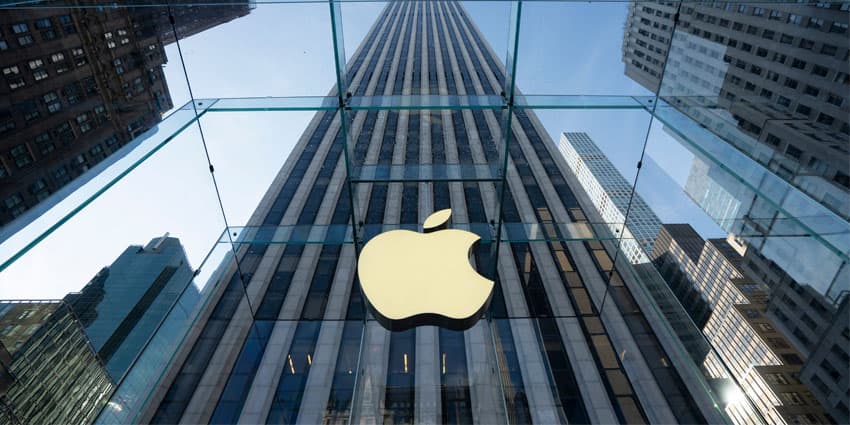
Quiet transitions rarely mark the end of an era in Silicon Valley, yet Apple’s meticulously choreographed leadership succession speaks volumes about its future trajectory. After 15 years of orchestrating unprecedented financial growth and supply chain mastery, Tim Cook is stepping down as chief executive to assume the role of executive chairman. On September 1, he will hand the reins to John Ternus, the company’s longtime senior vice president of hardware engineering.
For the consumer market, this represents a changing of the guard. But for enterprise tech leaders, whether in unified communications and collaboration, AI, audiovisual architecture, and corporate IT, this appointment broadcasts a conspicuous strategic pivot.
Cook’s legacy is inextricably linked to operational scale, having cultivated an installed base of more than 2.5 billion active devices globally. Reflecting on his tenure, Cook stated, “It has been the greatest privilege of my life to be the CEO of Apple and to have been trusted to lead such an extraordinary company.” In anointing his successor, Cook emphasized a return to foundational product development, noting that:
“John Ternus has the mind of an engineer, the soul of an innovator, and the heart to lead with integrity and with honor.”
For buying committees and C-suite executives, a CEO with the “mind of an engineer” suggests a future in which Apple’s enterprise offerings rely heavily on silicon-level integration rather than purely software-as-a-service plays. Ternus himself acknowledged the gravity of the transition, stating, “Having spent almost my entire career at Apple, I have been lucky to have worked under Steve Jobs and to have had Tim Cook as my mentor.”
- Apple Doubles Down on AI Wearables as Smart Glasses Plan Comes Into Focus
- Apple Bets Big on Agentic AI – But Enterprises Should Watch What It Can’t Yet Deliver
Edge Computing and the Next Era of Enterprise AI
As organizations grapple with data sovereignty, latency, and the immense cloud computing costs associated with Gen AI, Ternus’s hardware background offers a distinct alternative to Apple's competitors' strategies. While Microsoft, Google, and Meta commit hundreds of billions of dollars to massive data centers, Apple has historically avoided such capital-intensive infrastructure plays. Instead, the company is betting that intensive AI workloads will increasingly run locally on chips inside end-user devices.
Apple Intelligence has already laid the groundwork for this, integrating AI-capable silicon directly into the hardware architecture. For IT and collaboration leaders, this localized approach to AI processing is highly attractive. Running large language models and intelligent assistants on the edge, directly on an M5 MacBook Pro or an iPhone, mitigates the severe security vulnerabilities inherent in transmitting proprietary corporate data to the cloud.
With Ternus at the helm, tech buyers should anticipate a hardware roadmap aggressively tailored toward localized AI execution, feasibly altering how organizations procure devices for their workforces.
How John Ternus the Engineer Might Accelerate Spatial Computing and Enterprise XR Integration
The UC and AV sectors are currently navigating the nascent stages of mixed reality in the workplace. Apple’s Vision Pro remains a polarizing but undeniably potent catalyst in this arena. While consumer adoption of spatial computing has faced pricing headwinds, the enterprise use cases for augmented and virtual reality are rapidly solidifying. Under Ternus’s engineering leadership, Apple is expected to refine its XR portfolio specifically for corporate utility.