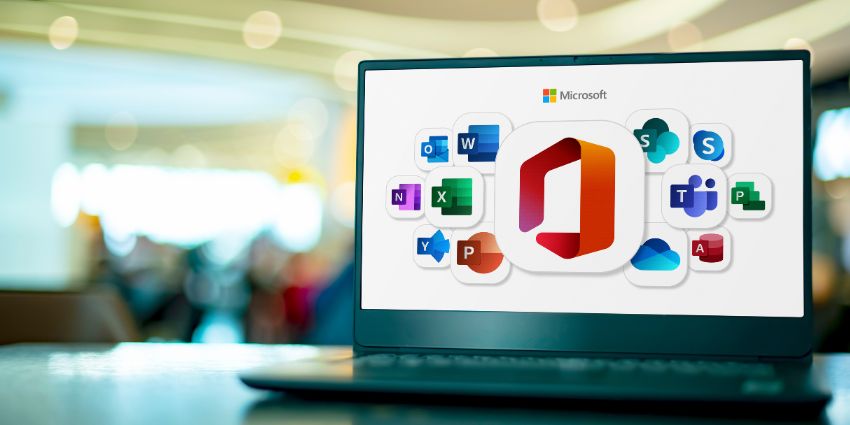

Microsoft’s latest earnings call has highlighted the twin forces shaping its enterprise AI strategy: accelerating adoption of Copilot and other AI-driven tools – but sharply rising costs for AI infrastructure.
The company’s revenue climbed 17 percent to $81.3 billion, beating analysts’ expectations.
But capital expenditure jumped a whopping 66 percent from a year ago to $37.5 billion, underscoring the heavy upfront investment required to scale AI services such as Microsoft 365 Copilot, GitHub Copilot, and other agentic applications.
The surging costs saw a drop in its share price, down six percent in after-hours trading.
AI Adoption Driving Enterprise Engagement
Microsoft CEO Satya Nadella emphasised the rapid uptake of AI tools across the enterprise, saying daily users of the Copilot app increased nearly three times year over year.
Copilot integrations span productivity, security, and developer workflows, with enterprise customers increasingly embedding AI agents into core business operations. Nadella highlighted the organisational impact:
“WorkIQ takes the data underneath Microsoft 365 and creates the most valuable stateful agent for every organisation. It delivers powerful reasoning capabilities over people, their roles, their artifacts, their communications, and their history and memory all within an organization’s security boundary.”
The company also reported strong momentum in GitHub Copilot, which now supports multiple AI models and workflow automation for developers.
“Acquiring an Azure customer is super important to us, but so is acquiring an M36 or a GitHub or a Dragon Copilot, which are all incremental business and TAMs for us,” he added.
Rising AI Costs Weigh on Investor Sentiment
Despite strong top-line growth, Microsoft’s share price was hit after the earnings release, reflecting concerns over its surge in capital spending.
Much of the CapEx increase is tied to AI infrastructure, including GPUs, CPUs, and custom accelerators.
Nadella addressed the rationale on the call:
“If I had taken the GPUs that just came online in Q1 and Q2, in terms of GPUs and allocated them all to Azure, the KPI would have been over 40. And I think the most important thing to realise is that this is about investing in all the layers of the stack that benefit customers.”
Hood added that much of the CapEx is classified as short-lived assets that directly support AI workloads and first-party applications: “Roughly two-thirds of our CapEx was on short-lived assets, primarily GPUs and CPUs. Our customer demand continues to exceed our supply.”
Analysts noted that while overall numbers were strong, slowing Azure growth – 38 percent year-on-year, a point lower than the previous quarter – was part of the investor caution.
Building AI Infrastructure at Scale
Microsoft is investing heavily to meet enterprise demand for AI, with a focus on high-density compute and data centre innovations. Nadella described the company’s Fairwater AI “super factory”:
“We connect both Atlanta and Wisconsin sites through an AI WAN to build a first-of-kind AI super factory. Fairwater’s two-story design and liquid cooling allow us to run higher GPU density and thereby improve both performance and latencies for high-scale training.”
Custom silicon also plays a key role in reducing total cost of ownership. Nadella highlighted the Maya 200 accelerator, saying it delivers 10 plus flops at FP4 precision with over 30 percent improved TCO compared to the latest generation hardware in our fleet.
The combination of advanced compute, storage, and networking is designed to support not only Azure workloads but also first-party AI applications, aligning with Microsoft’s broader enterprise strategy.
Expanding Agentic Platforms and Enterprise AI
Beyond infrastructure, Microsoft is emphasising the proliferation of AI “agents” as new organisational tools. Nadella framed agents as the next platform-level shift in enterprise software:
“Like in every platform shift, all software is being rewritten. A new app platform is being born. You can think of agents as the new apps.”
Microsoft’s Foundry and Fabric platforms provide model catalogues, orchestration tools, and analytics for enterprises building their own agentic systems. Nadella pointed to customer examples demonstrating broad use cases:
“Alaska Airlines is creating natural language flight search. BMW is speeding up design cycles. Land O’Lakes is enabling precision farming for co-op members and Symphony AI is addressing bottlenecks in the CPG industry.”
Copilot experiences extend into security, coding, and healthcare. Nadella highlighted this, saying “Dragon Corp. Pilot is the leader in its category, helping over 100,000 medical providers automate their workflows.”
Meanwhile, GitHub Copilot subscribers grew 75 percent year-on-year, reinforcing the enterprise adoption of AI-powered coding assistants.
Implications for IT Leaders and the Wider Market
For IT leaders, the earnings call underlines a strategic imperative: investing in AI capabilities is no longer optional. Organisations will need to balance the benefits of agentic platforms, productivity Copilots, and developer tools against rising infrastructure costs and limited cloud capacity. Early adopters can secure competitive advantage, but latecomers risk falling behind as AI becomes embedded in enterprise workflows.
For the wider market, Microsoft’s results illustrate the broader trend in technology: AI adoption is surging across industries, from aviation to agriculture to healthcare, but the economics of scaling AI at enterprise level remain complex. Investors and competitors alike are watching how effectively Microsoft can manage costs while maintaining rapid deployment of AI tools.
Diversification and Strategic Outlook
Microsoft disclosed that 45 percent of its $625 billion commercial backlog is tied to OpenAI, prompting questions about concentration risk. Hood tried to reassure investors, saying:
“55 percent or roughly $350 billion is related to the breadth of our portfolio, a breadth of customers, across solutions, across Azure, across industries, across geographies. That is a significant RPO balance, larger than most peers. More diversified than most peers.”
Looking ahead, Microsoft expects continued strong growth across AI-infused products, even as CapEx moderates sequentially. The company forecasts Azure revenue growth between 37 percent and 38 percent for the next quarter, while emphasising the ongoing balance between supply-constrained capacity and first-party AI deployment.
“As an investor, when you think about our CapEx, don’t just think about Azure, think about Copilot. We don’t want to maximise just one business of ours. We want to be able to allocate capacity, while we are supply constrained, that allows us to build the best portfolio,” Nadella said.
The earnings call could be considered a mixed bag for Microsoft – while adoption metrics for Copilot and other agents are climbing, the costs of scaling these systems remain substantial.