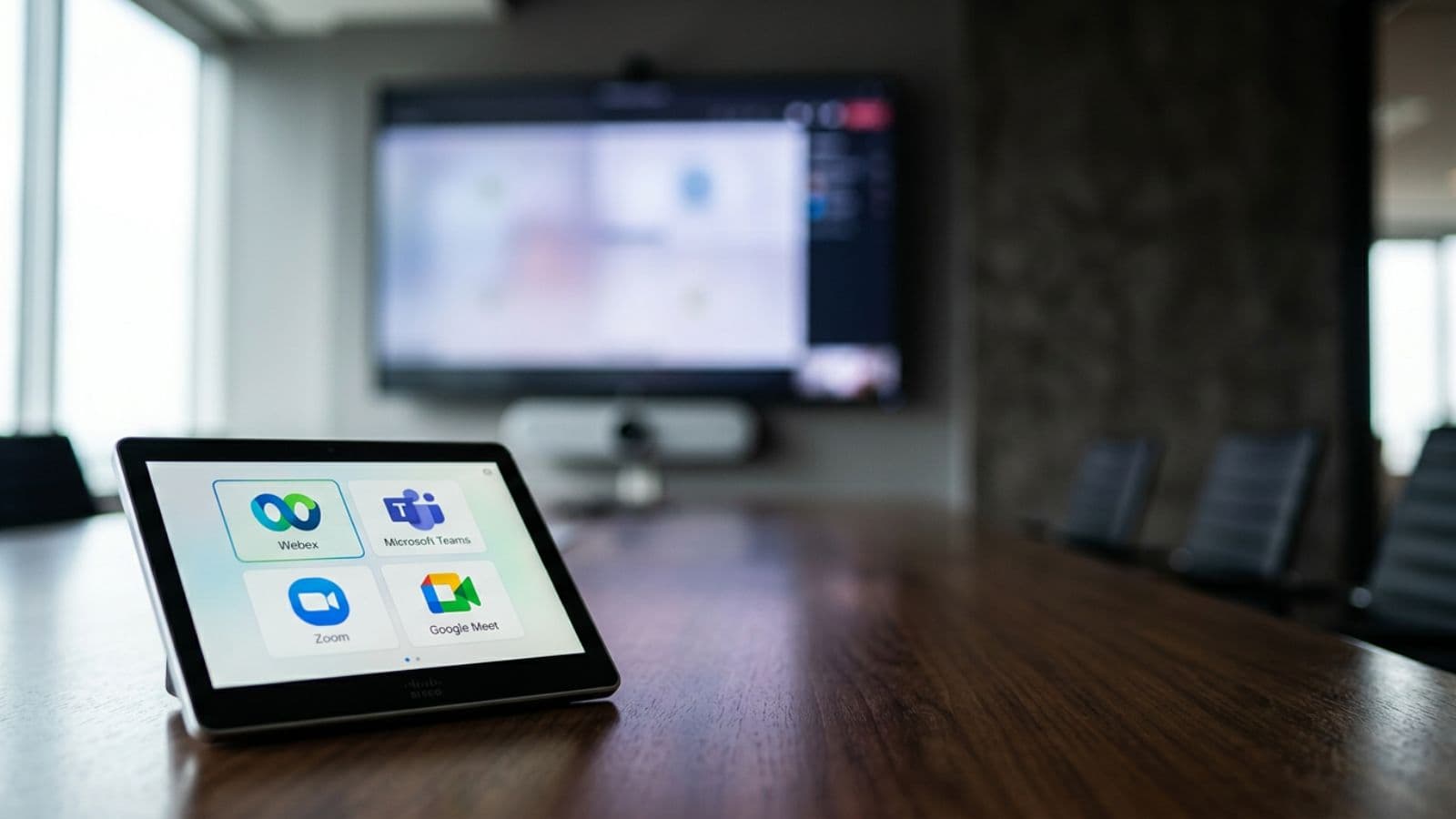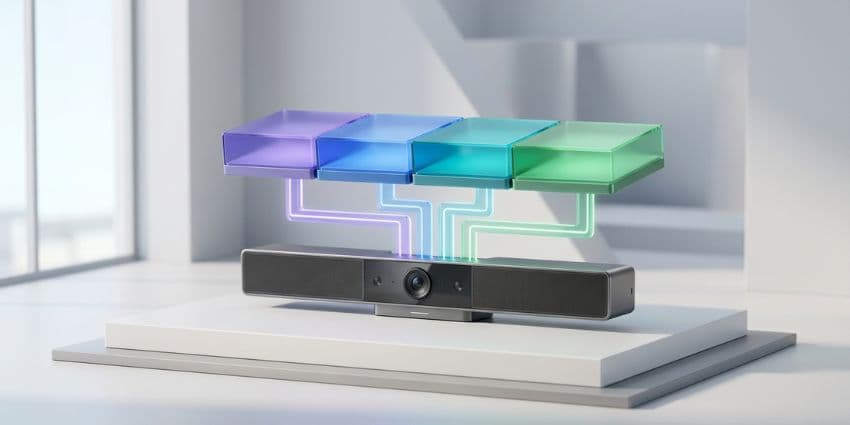
The meeting room used to be built around an assumption: the organisation had a preferred platform, and the room would follow it. The data shows how rarely that holds. Cisco research suggests up to 85% of enterprise IT teams support two or more meeting platforms. They do so to cover separate business units, specific use cases or business continuity. Even businesses that standardise internally on Teams, Zoom, Webex or Google Meet still work with customers, partners and guests who bring other platforms into the calendar every day.
That fragmentation runs deep. Industry estimates put the global total at roughly 44 million meeting rooms, with about a quarter relying on bring-your-own-device setups. Fewer than 8% are standardised spaces such as Microsoft Teams Rooms or Zoom Rooms. Most rooms stay inconsistent and platform-locked. What changed at InfoComm was the expectation attached to the rooms that do get equipped. The question has moved from whether a call can technically connect to whether the experience feels native enough that users stop noticing the platform divide.
Why customer demand is forcing meeting room ecosystems open
Cisco and Zoom used the show to launch Cisco Devices for Zoom Rooms, extending full Zoom Rooms modality across Cisco's device portfolio from the Desk Pro G2 to the Room Kit EQ. It moves past the SIP-based guest-join approach that came before. That older method delivered a stripped-back interface, limited AI and management outside the Cisco environment. The new offer puts a native Zoom home screen, workflow and licence on Cisco hardware, with a public beta now open and general availability due in September.
Espen Løberg of Cisco said the move followed a year of customer feedback, and that buyers, not vendors, drove the decision.
It's really been our joint customers that have brought us together and enabled us to do this.
Those customers are living with mixed environments and do not want to choose between the hardware they prefer, the platform their users prefer and the management layer IT needs. Cisco sits underneath the Zoom experience, supplying device intelligence, network diagnostics and workspace analytics that the platform alone cannot. The company has not retreated from Webex, which it says reaches 650 million monthly meeting participants, and is treating room hardware as a separate contest from the platform that runs on it.
The tie-up is one move in a broader scramble. At ISE 2026 earlier in the year, Google and Microsoft introduced their own interoperability. Chrome OS-based Google Meet rooms can now join Teams meetings, and Windows-based Teams Rooms can join Meet meetings, on by default. Cisco's own RoomOS now positions itself as platform-agnostic across Webex, Teams, Google Meet and Zoom. The market has narrowed to the firms that can offer any-to-any connectivity. No vendor is trying to collapse the platforms into one. They are addressing the same problem: rooms that must join whichever link lands on the calendar, without IT deploying parallel systems for each platform.
How expectations moved from connection to native experience
Logitech has lived with this longer than most. Henry Levak says the company has always sold into multi-platform environments, starting with USB interoperability that let customers plug a camera into any laptop and use almost any service. That need has not gone away, but expectations have risen sharply.