
If you are shopping for tools that keep Unified Communications running smoothly, you are not alone.
This market is busy, noisy, and full of overlapping promises. Which is exactly why a clear connectivity tool market map is useful.
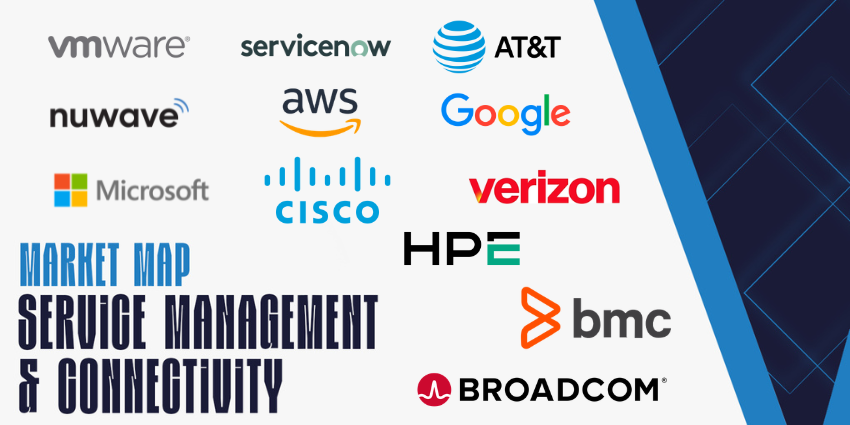
In this guide, we highlight service management ITSM platforms, connectivity players, and unified observability vendors. In collaboration with your IT team, they can help resolve issues before employees feel them.
Think of it as a short list of top ITSM vendors and tier-one infrastructure specialists that can strengthen call quality, reduce downtime, and make day-to-day work more reliable.
Related Articles:
- Are You Ready For an Infrastructure Upgrade? How to Prepare for ITSM & Connectivity Adoption
- ServiceNow or Atlassian? Cisco or Juniper? Our ITSM & Connectivity Tier-1 Showdown
- ITSM Trends & Workplace Connectivity Upgrades to Watch in 2026
Network & Connectivity Services
This is the SD-WAN and cloud networking layer that helps voice and video take the best route. This is especially the case even when channels are congested or degraded.
- AT&T: A managed SD-WAN option for enterprises that want WAN performance and cost optimization without running everything themselves.
- Verizon: Managed SD-WAN focused on application-aware routing and network optimization, so critical traffic (like UC) is prioritized over less time-sensitive data.
UC Performance Monitoring & Quality of Experience
These tools help you answer the question: “Is this a Teams issue, a device issue, or a network issue?”. They turn complaints into evidence.
- Microsoft: Call Quality Dashboard (CQD) and related tooling give reporting and investigation paths for Teams call and meeting quality.
- Cisco: Their ThousandEyes tool provides visibility into internet and network paths affecting Microsoft Teams, helping teams spot where performance is breaking down.
IT Service Management (ITSM)
This is where “something went wrong” becomes a managed process: ownership, escalation, change control, and repeatable resolution. In other words, fewer repeat fires. Here are the top ITSM vendors to consider.
- ServiceNow: Enterprise ITSM built around standardized workflows for incidents, requests, and service delivery at scale, useful for bringing order to UC support operations.
- BMC: BMC Helix ITSM Service Desk positions itself as a single point of contact for incidents and user requests, with ITIL-aligned workflows to restore service quickly.
Want to see a live demo one of these tools? Want to discuss ITSM over a slice of pizza? Check out these events on service management & connectivity innovation.
Unified Service Management (IT + UC)
This is about reducing the “grey zone” between teams. We want to avoid UC, network, and IT service desks working in silos. The goal is to have platforms that create shared visibility and more joined-up operations.
- HPE: HPE OpsRamp is pitched as a hybrid operations command center with unified visibility, AI-driven insights, and automation across complex estates.
- NUWAVE: Suited to UC-specific service management, especially in multi-platform environments. It provides a ‘single pane of glass’ to provision, manage, and support communications across UC platforms.
API, Integration & Middleware Platforms
This layer is the “connector kit” that makes UC part of the wider business workflow. It reduces manual admin by helping systems share information reliably.
- Broadcom: Layer7 is useful when an enterprise wants a consistent, governed way for systems to connect. For UC teams, that can mean fewer brittle one-off integrations and more reliable links between UC platforms, service desks, identity, and reporting.
- VMware: VMware Tanzu’s Spring Cloud Gateway approach helps organizations route and manage API traffic in a consistent way, including common concerns like resiliency and monitoring. In plain terms, it supports scalable integrations that do not fall over the moment your environment grows.
Cloud Infrastructure for UC
Even if your UC app is “cloud,” you still need dependable infrastructure choices for performance and resilience.
- Amazon Web Services: AWS outlines its Regions and Availability Zones model, which underpins how many enterprises plan resilience for critical workloads.
- Google: Google Cloud highlights its private global network and backbone capabilities, positioned around performance and reliability for demanding workloads.
Conclusion
This market map is not a “buy all of it” checklist. It is a way to match vendors to the problem you are actually trying to solve.
If your pain is unpredictable call quality, start with enterprise connectivity vendors. Then look at QoE monitoring so you can prove what is happening.
On the other hand if you’re seeing recurring incidents and slow resolution, prioritize service management ITSM with strong workflows and ownership.
And if your issues live between teams – unify visibility and connect systems, because reliability improves fastest when evidence and actions travel together.
FAQs
Who are the main IT service management vendors for UC?
In many enterprise shortlists, the most common starting point is ServiceNow and BMC. This is because they support incidents, changes, requests, and scalable workflows that can be applied to UC operations.
Who are the top players in the service management and connectivity space for enterprises?
Across this connectivity tool market map, major players include AT&T and Verizon (connectivity), Microsoft and Cisco (QoE monitoring), ServiceNow and BMC (ITSM), and HPE and NUWAVE (unified service management), with Broadcom and VMware supporting integration layers.
Where can I find out more about Service Management & Connectivity?
Check out UC Today’s Ultimate Guide to Service Management & Connectivity, which helps enterprise buyers to upgrade their UC stack with these vital infrastructure systems. It highlights notable trends, adoption advice, and common mistakes that buying committees should avoid.