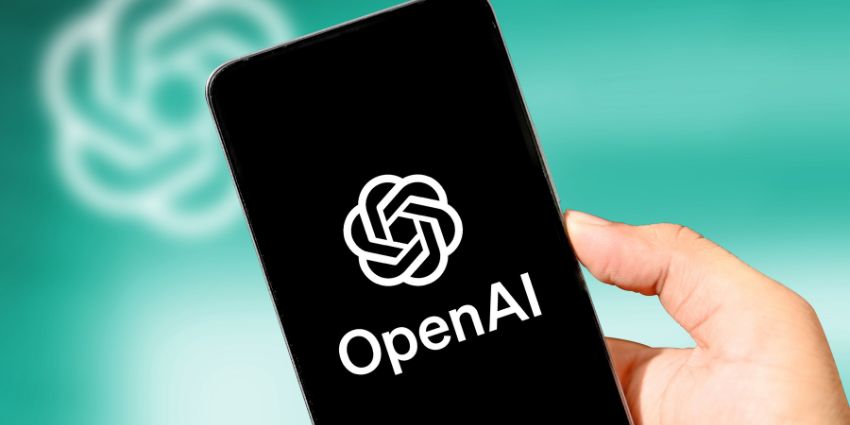

OpenAI has released a new enterprise-focused version of its ChatGPT mobile application, introducing an iOS app designed for organisations that manage devices through mobile device management systems.
The application, titled ChatGPT for Intune, is available on Apple’s App Store as a separate listing aimed at businesses and educational institutions that require tighter control over how software operates on managed iPhones and iPads.
The app is available for devices running iOS 17 or later and is designed to support enterprise deployment across managed mobile environments.
Designed For Managed Enterprise Environments
ChatGPT for Intune is built to integrate with Microsoft’s Intune platform, a mobile device management system used by organisations to control applications, enforce security policies and manage corporate data on employee devices.
In enterprise and education settings, Intune is commonly used to ensure that only approved software is installed and that sensitive data remains within controlled environments.
The Intune-compatible version of ChatGPT is intended to meet these requirements by allowing IT administrators to apply organisational policies to the app.
This includes controls over authentication, data handling and device-level restrictions, helping organisations deploy AI tools in environments where governance and compliance are critical.
Core AI Features Remain Unchanged
While the packaging is different, the app retains the core capabilities of the standard ChatGPT mobile experience.
Users can generate written content such as emails and reports, upload files and images for analysis, summarise documents, use voice-based interaction and create images from text prompts.
The app also supports step-by-step explanations and learning assistance, making it suitable for both workplace productivity and educational use cases.
The inclusion of these features highlights a broader shift in enterprise software, where AI tools are increasingly being positioned as general-purpose assistants rather than single-function applications.
The value proposition is less about individual features and more about integrating these capabilities into secure, managed workflows.
Wider Industry Shift Toward Enterprise AI Integration
The release of a managed version of ChatGPT reflects a broader trend across the technology industry, where AI providers are increasingly focusing on enterprise deployment and regulated environments.
Across the sector, companies are adapting generative AI tools to meet organisational requirements for security, compliance and data governance.
Similar approaches have been seen in other enterprise-focused AI offerings, including Microsoft’s integration of Copilot into Microsoft 365, Google’s expansion of Gemini into Workspace products, and Salesforce’s continued development of AI-driven automation within its CRM platform.
In parallel, organisations are becoming more structured in how they adopt AI tools.
Early experimentation with public chatbots has given way to formal deployment strategies, where IT departments evaluate models based on data protection, auditability and integration with existing systems.
Mobile deployment has become a key part of this shift.
As workforces become more distributed and mobile-first, enterprises are seeking ways to bring AI assistance into secure smartphone and tablet environments.
Device management platforms such as Microsoft Intune play a central role in enabling this, providing the infrastructure needed to enforce policy controls at scale.
Expanding Use Cases in Education and Enterprise
Beyond corporate environments, managed AI tools are also increasingly relevant in education.
Schools and universities often rely on mobile device management systems to distribute apps across student devices, particularly in programmes where tablets are issued as part of coursework.
In these environments, controlled AI access allows educators to introduce generative tools while maintaining oversight of how they are used.
At the same time, enterprise use cases continue to expand beyond basic productivity tasks.
Organisations are exploring AI for customer support automation, document processing, internal knowledge search and software development assistance.
The ability to deploy these tools within controlled environments is becoming a key factor in enterprise adoption decisions.
Rather than functioning as standalone apps, these systems are increasingly being integrated into regulated digital ecosystems where governance is as important as capability.
A Step in Platform Maturation
The launch of ChatGPT for Intune signals a continued shift in how AI products are packaged and distributed.
While consumer adoption has driven early growth in generative AI, long-term expansion is increasingly expected to come from enterprise and institutional deployment.
By aligning with mobile device management systems, OpenAI is positioning ChatGPT to operate within the same frameworks used by other enterprise software tools.
This includes integration with identity systems, policy enforcement layers and administrative controls that are standard in large organisations.