For years, dvLED displays have been the centrepiece of airport terminals, sports arenas, and luxury penthouses – impressive, but largely out of reach for the average corporate conference room.
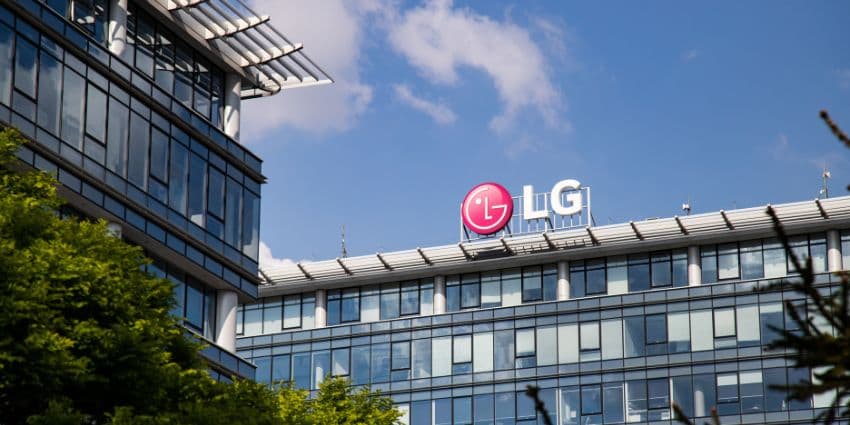
LG's latest product announcements suggest the company is betting heavily that the enterprise meeting room is dvLED's next major frontier.
LG Electronics USA has unveiled five new display solutions under its MAGNIT family for 2026: the MAGNIT Gen 2 (LMPB), MAGNIT Active Micro LED (LSAH), MAGNIT Essential (LMEA), MAGNIT Essential All-in-One (LASA), and the MAGNIT Gen 2 AIO (LAAB).
Debuted at InfoComm 2026, the lineup spans a wider range of use cases and price points than LG has previously addressed in the dvLED space – and several of these products have direct implications for IT and unified communications decision-makers.
“InfoComm 2026 represents an important milestone for the continued expansion of our DVLED portfolio,” said Michael Kosla, B2B senior vice president at LG Electronics USA.
“From the LG MAGNIT Gen 2 and Essential models to our integrated All-in-One systems, we’re delivering a broader range of display technologies designed to simplify deployment, support diverse environments and provide exceptional visual performance.
The One Built for Your Conference Room
The product most relevant to UC environments is the LG MAGNIT Gen 2 AIO.
At 136 inches with 4K UHD resolution (3840x2160) and a 0.78mm pixel pitch, it delivers the kind of visual clarity that makes sense in spaces where executive presence, data visualisation, and remote collaboration all need to land simultaneously.
What distinguishes it from a standard large-format display isn't just size – it's the integration story.
The Gen 2 AIO combines a built-in controller, integrated speakers, and webOS 8.0 in a single unit, eliminating the external controller wiring that typically adds complexity and cost to LED video wall deployments.
LG describes the installation as a four-step process, which is a meaningful claim for IT teams managing multi-site rollouts without dedicated AV staff on the ground.
For UC-specific deployments, the Gen 2 AIO includes Office Meeting Mode and Crestron Connected compatibility – signals that LG is designing this with enterprise control ecosystems in mind, not just as a display. HDR10 and HDR10 Pro support round out the spec sheet for organisations where content quality matters as much as connectivity.
The target environments LG calls out – conference rooms, executive briefing centres, and control rooms – map closely to the spaces where IT and facilities teams are currently evaluating their next display refresh cycle.
A New Entry Point: The Essential Series
Beyond the Gen 2 AIO, the introduction of the MAGNIT Essential line is worth noting for IT buyers who have considered dvLED but been deterred by cost or installation complexity.