
As 2025 draws to a close, one term has defined the year for many employees: RTO, or Return to Office. This shift is driven by major companies like Amazon, AT&T, and JP Morgan mandating full-time office attendance.
These announcements have faced employee backlash, driven not only by the return of long commutes and their associated costs to employees, but also by the work environment that awaits them. Many offices cannot provide the seamless work experience employees have grown accustomed to having at home. This presents a challenge for its success, considering many of their RTO mandates touted the move as a productivity measure.
A major contributor to this sentiment is the poor technology and meeting room experience within many offices. As James Spencer, Video Solutions Director at Jabra, explains:
“80% of people actually spend a lot of time searching for meeting rooms in the first place.”
Added together, these delays can consume up to 15 minutes per meeting, causing significant frustration.
If companies want to get RTO right, they need to identify the barriers that make in-office collaboration difficult and strengthen the benefits of working together in person.
Related stories:
- The Visibility Effect: How Video Meeting Visibility Doubles Attention and Engagement
- Why Modern Video Meetings Need AI-Optimized Systems
- The 14% Signal: Why You Need to Prepare for the Voice AI Surge
Why Returning to the Office is Hindering Collaboration
Remote and hybrid working on a wide scale has driven many companies to downsize their office footprints. While this reduced expenses, the return to the office has created issues with increased demand for meeting rooms and limited space.
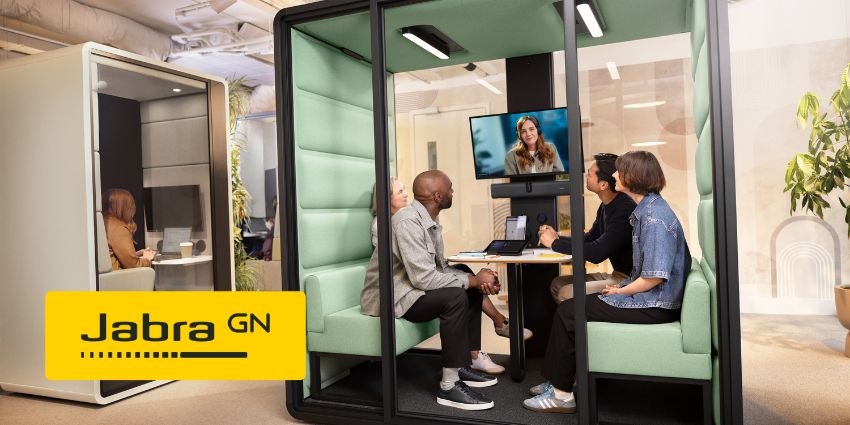
Spencer explains that companies are “putting small four- or six-person pods into office spaces to get over the issue of oversubscribed meeting rooms.” However, this only creates further issues.
Even when a room or pod is available, employees often find the technology inside unsuitable for their meetings. It may lack support for preferred devices, fail to function seamlessly, or inadequately capture the space. In practice, this means valuable time is spent troubleshooting or relocating to a more suitable area.
Consequently, employees increasingly perceive the office as a barrier to productivity rather than an enabler, and it has become a source of stress and wasted time.
How Smart AV Solutions Can Make RTO Work
With the right tools, companies can make RTO work without expanding office space. Smart solutions help employees use existing rooms more efficiently.
Take meeting room management as a starting point. The Jabra Scheduler, for example, is a touchpad device that staff can use to book and check the availability of meeting rooms. Integrated with digital calendars, the system prevents employees from running between booked rooms by clearly showing when and where meetings can be scheduled.
Equally important is the experience within each room. The Jabra PanaCast 40 Video Bar System, with its 180-degree field of view, ensures everyone in a small pod or office space is seen clearly on screen. For added flexibility, a BYOD (bring your own device) option allows participants to start calls quickly, use their preferred devices, and collaborate effectively.
As Spencer explains, AV involves more than just technology; it is about designing spaces that truly accommodate people’s needs:
“Once you understand what people want from the office, and the types of meetings they have and how they want to connect, you can design rooms and social spaces that actually meet those needs, rather than forcing everyone into a one-size-fits-all setup.”
Together, these AV solutions help create office spaces that genuinely support collaboration. They optimize the use of space, support BYOD workflows, and provide scalable, manageable technology. In doing so, companies can transform their offices from sources of frustration into spaces that foster productivity and innovation.
Turning Office Technology into Real Productivity Gains
With the right AV in place, RTO strategies can finally deliver on their promise: making in-person work efficient, seamless, and rewarding.
By integrating tools that provide real-time insight into room occupancy, deliver functionality tailored to each setup, and enable seamless collaboration within those spaces, companies can remove many of the common frustrations employees face when returning to the office. Meeting rooms become easier to locate and book, collaborative sessions run smoothly, and hybrid participants can engage fully without missing context or reactions.
Ultimately, a successful RTO isn’t just about bringing people back under one roof; it’s about creating an office experience that adds value. When offices are designed with flexible technology, intuitive scheduling, and collaboration in mind, they become hubs for innovation, connection, and engagement.
Related stories: