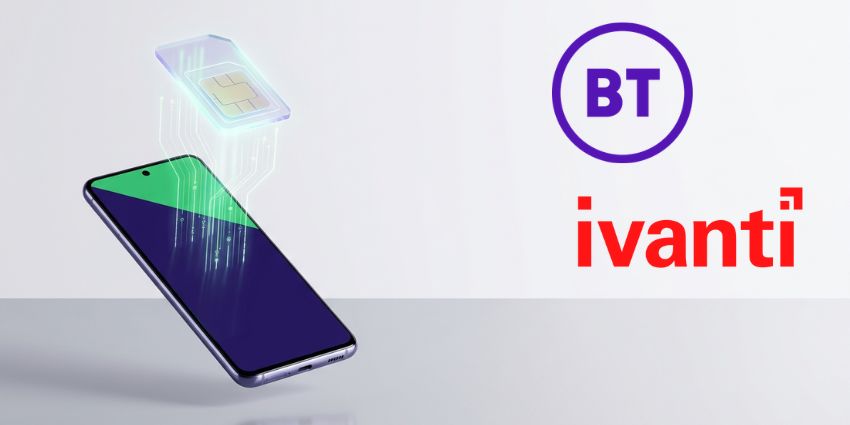

BT Business and Ivanti have launched a new way for organisations to switch on mobile connectivity for managed Android devices at scale, without anyone physically handling a device.
The capability lets businesses install eSIMs directly from their Mobile Device Management platform and activate them on a device with no physical handling or manual steps required. BT and Ivanti describe it as a telco world first.
Using a single route, devices either install eSIMs automatically or through a short installation process, cutting deployment time from days to minutes. For businesses provisioning mobile fleets running into the thousands, the companies say the model is designed to save both time and money at the point of rollout.
How the eSIM Deployment Model Works
The partnership combines Android’s ecosystem, Ivanti’s device management platform and BT’s mobile network expertise, giving business customers one consistent method of deployment across their device estates. Rather than issuing physical SIM cards or requiring IT staff or end users to complete manual installation steps, connectivity is switched on centrally through the same workflow already used to manage the device itself.
Bruce Payne, Principal Field CTO at Ivanti, says embedding eSIM installation into the management workflow gives IT teams more control as mobile estates grow.
“As organisations scale their mobile fleets, setting up connectivity must be as automated and manageable as the devices themselves. Embedding eSIM installation and activation directly into the management workflow allows organisations to further standardise provisioning, reduce manual effort and maintain control as mobile estates grow.”
Sally Fuller, Mobile and Unified Mobility Director at BT, says the goal was to remove friction from device readiness.
“Customers want devices that are ready when their people need them. Working with Android and Ivanti has allowed us to create a simple and reliable way to switch on connectivity across Android devices. It removes processes which can slow organisations down and replaces it with a single digital process that works sustainably and at scale.”
Why Remote eSIM Provisioning Matters for Enterprise Mobility
The launch lands as more enterprises push to centralise device provisioning rather than treat connectivity as a separate, manual step from device configuration. Android 15 already extended native eSIM management to IT admins via activation codes, and the BT-Ivanti capability builds directly on that groundwork by folding the carrier side of the process into the same MDM workflow used for zero-touch enrolment and app deployment.
BT and Ivanti frame this as more than a one-off feature. The companies say the move paves the way for future services built around secure, remotely managed connectivity, giving businesses more flexibility as their workforces, devices and security needs evolve. That positions eSIM provisioning as infrastructure for whatever comes next in managed mobility, rather than a standalone convenience.
It also arrives alongside a broader shift toward mobile-first, carrier-integrated services in the UC space, including Teams Phone Mobile deployments that already require eSIM or dual-SIM capable devices. As more voice and collaboration services depend on that underlying connectivity being present and working from day one, the manual provisioning gap the BT-Ivanti model addresses becomes more consequential rather than less.
What This Means for IT Teams Managing Android Fleets
For IT and security teams, the practical draw is fewer manual touchpoints between a device leaving the box and a user being productive on it. BT and Ivanti’s pitch centres on eliminating the days-long gap that physical SIM logistics can create when provisioning devices at scale, particularly for organisations onboarding staff across multiple sites or replacing hardware on a rolling basis.