Salesforce has expanded the capabilities of Slackbot, giving the AI assistant deeper access across its enterprise platform.
Rather than requiring employees to move between multiple applications, the update extends Slackbot's reach across Salesforce products, including CRM, allowing users to access data and workflows from multiple platforms through a single conversational interface.
The latest Slackbot enhancements form part of Salesforce's overarching strategy to deepen integration between Slack and Salesforce CRM, designed to move the UCaaS platform beyond collaboration and messaging into enterprise AI orchestration.
Slackbot Gains Deeper Access Across the Salesforce Platform
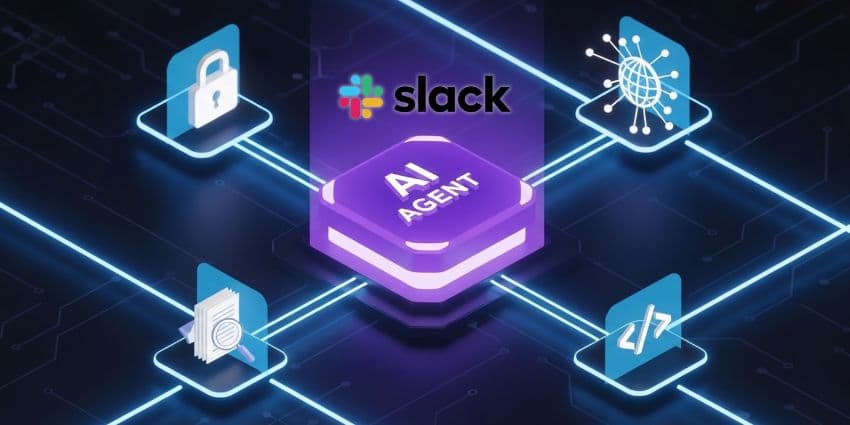
The latest update gives Slackbot the ability to access and interact with a much larger portion of the Salesforce ecosystem directly from within Slack conversations. Rather than navigating between separate applications, users can retrieve information, update records, and trigger workflows without leaving the collaboration platform. Slackbot can also determine which enterprise systems to query, bringing information from multiple sources together into a single conversational response.
The integration extends across Salesforce products, including CRM, Tableau, and Data 360, while also connecting with partner applications through newly introduced Model Context Protocol (MCP) servers. The expansion forms part of Salesforce's wider effort to expose platform capabilities through APIs and standardized AI connections, allowing both people and AI agents to work with enterprise data more efficiently. The new architecture also enables organizations to deploy these capabilities without building custom integrations while preserving existing Salesforce permissions and governance controls.
In action, Tiago Machado Scherer, Sales Director at Salesforce, describes what the experience looks like:
"Pull a customer record, update a pipeline, or trigger a DocuSign approval, all from one Slackbot conversation. No custom code, no tab-switching."
The announcement also continues Salesforce's broader Headless 360 strategy, which aims to make platform capabilities accessible regardless of where users choose to work. By exposing business data, workflows, and services through APIs and MCP servers, Salesforce is turning Slack into a conversational entry point to its wider ecosystem rather than simply another application connected to the platform. The company has also expanded Slackbot with reusable skills, allowing employees to turn successful prompts and workflows into shared resources that can be used across teams.
Slack Is Becoming the Orchestration Layer for AI-Driven Work
Beyond the product enhancements themselves, the announcement signals a broader strategic shift in how Salesforce views Slack's role within the enterprise.