

Slack has unveiled a new set of developer tools to help users create apps in a quicker and easier way.
Attendees of today’s Slack Frontiers conference witnessed the launch of a new CLI tool and software development kit (SDK) intended to improve the experience of building Slack apps.
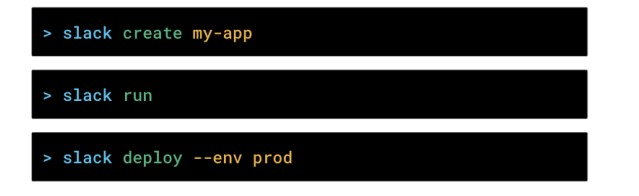
Slack CLI (command line interface) “takes care” of creating a new app ID, manages event subscriptions, and scaffolds the code for users with the command slack create. It allows users to run their apps locally, test in a variety of environments, and deploy code directly from their terminal, as well as enabling them to create projects that follow best practice for structuring.
These new features allow developers to integrate Slack app development into their broader software development lifecycle. The vendor stated that these enhancements make managing Slacks apps “easier than ever” and fully automatable, allowing developers to focus on their app’s code without copying configuration parameters between systems.
Meanwhile, the new SDK is built using TypeScript and targeting the Deno runtime. It is designed to support the range of platform features as well as improving developer productivity and ergonomics with built-in features, such as autocomplete and code hinting.
“It’s really hard to write apps today in Slack because you have to go through administration features. If you want to build an app, you have to go through a lot of configuration, to then test it you have to install a bunch of third-party tools, and to run it, you have to run up your own servers and infrastructure,” Steve Wood, VP of Product, Developer Platform at Slack told UC Today.
“Slack CLI will be elastic, scalable, secure, and compliant – all the stuff you expect from Slack. Your app would be there and totally scalable and you could do it in three command lines. What previously could take months, can now take minutes”
“We’re providing the template app for you, we’re providing the ability to connect your laptop to Slack and solving a bunch of difficult technical challenges that require third party software. We’re also providing an environment to deploy your code to, which is compliant and we have the data controls in place so that your admins feel confident.”
Slack is also hosting data as part of its new SDK. It is an optional, fully-managed add-on for enterprise-grade applications with full admin controls and integration with popular developer tools. It allows developers to specify who can access an app’s commands.
Tables API
Inspired by the success of its automation tool Workflow Builder, Slack has also developed its new Tables API to make it easier for developers to solve complex problems. The API allows developers to store any data required on Slack’s managed infrastructure, and includes all of the standard CRUD (create, read, update and delete) operations for developers, and can operate at any scale.
These new features are part of Slack’s efforts to democratise technology, said Wood.
“Not only are we trying to open up the market to more people who might start building apps but also expanding our developer ecosystem, hopefully exploding it from the one million that we currently have to millions and millions,” he stated.
“We’ve distilled the problem to ‘what is the idea you want to create?’ and then we’ve empowered developers by solving all the tough technical challenges – that’s the big benefit to Slack developers”
“It took a heck of a lot of engineering to figure out how to make apps talk to each other, interlocking with each other the way you’d expect, like when you use Lego you expect you can put the pieces together the way you want. We have truly built the software equivalent of Lego.”