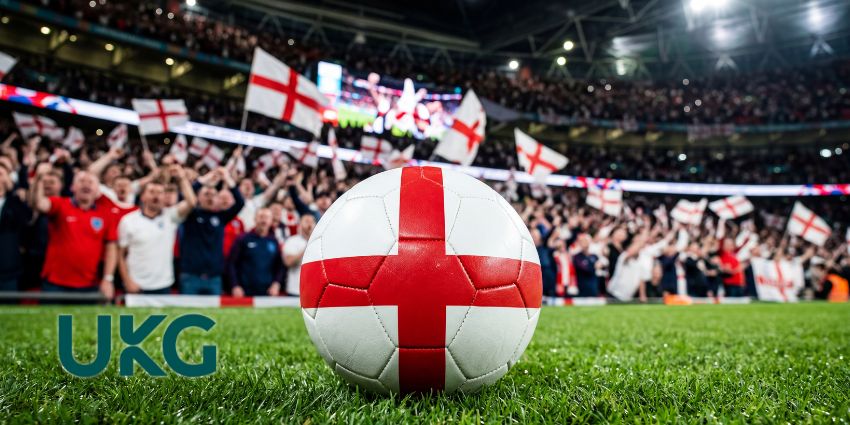

As England edge closer to a potential FIFA World Cup final appearance, employers could face a potential surge in absenteeism, schedule changes, and reduced productivity as football fever grips the workforce, according to UKG research.
The study estimates the tournament could result in £12.6 billion in lost productivity globally, with UK businesses alone facing an estimated £681 million hit as employees alter their working patterns to follow the action.
The research comes as businesses prepare for what could become one of the busiest periods for flexible working requests, which could be heightened if England breaks its 60-year drought and actually wins the tournament.
World Cup Set to Test Workforce Planning
UKG surveyed 8,000 employees across Australia, Canada, France, Germany, Mexico, the Netherlands, the UK, and the US, finding that more than a third (37%) expected to change their work schedule because of the tournament.
More than a quarter (27%) said they are likely to miss work by arriving late, leaving early, or skipping a shift altogether, while one in three (33%) plans to take at least one day off during the competition.
The research also points to a rise in “presenteeism,” or employees who attend work but are operating below their normal capacity. Around 22% expect to arrive at work tired or exhausted, while 11% admit they will be working while hungover. Meanwhile, 14% plan to secretly stream matches or highlights during working hours as they attempt to keep up with the tournament.
Taken together, the findings suggest employers could face a combination of absenteeism and reduced on-the-job performance throughout the tournament. Employees arriving late, taking unplanned leave, or working while fatigued can all reduce productivity, while colleagues covering additional workloads may experience increased pressure of their own. UKG said the knock-on effect could extend beyond output, impacting customer service, team morale, and day-to-day operations, particularly in organizations with large frontline workforces.
Flexibility May Be Better Than a Crackdown
For employers, the temptation may be to introduce stricter attendance policies or take a zero-tolerance approach to unauthorized absences. While that may reduce some disruption, it also risks damaging employee morale at a time when many workers view major sporting events as shared cultural moments.
Indeed, UKG found that 19% of those surveyed said they would consider looking for a new job if their work schedule negatively affected their World Cup experience. Managers themselves are also expected to seek greater flexibility, with half planning to request schedule changes in advance compared with just over a third of non-managers.
Yet doing nothing also stands to affect workplace performance. As Paul Karter, Recruitment Consultant at EW Recruitment Services, said:
“The World Cup is brilliant… but if you’re in the UK, your body clock doesn’t stand a chance. Early kick-offs, late-night games, and the occasional 3am alarm if you’re truly committed,” he said.
“Suddenly you’re wide awake at midnight, half-asleep by 10am, and questioning every life decision by Wednesday. Productivity? Hanging on by a thread. Coffee intake? At an all-time high.”
To avoid this, UKG argues that planning ahead is likely to produce better outcomes. Allowing employees to swap shifts, use annual leave strategically, or adjust working hours where possible could reduce unexpected absences while maintaining staffing levels.
UKG similarly recommends organizations combine long-term workforce planning with real-time visibility into staffing levels and maintain clear communication with employees throughout the tournament. Giving managers the flexibility to respond quickly as fixtures are confirmed could help minimize disruption while reinforcing trust across the workforce.
Balancing Business Needs With Employee Expectations
The World Cup lasts 39 days, with the stakes growing higher as teams progress through the tournament. That makes workforce planning more complicated than for a single sporting event and requires employers to respond as schedules evolve. For sectors with large frontline workforces, the challenge could be particularly acute.
At the same time, the research highlights how employee expectations around flexibility continue to evolve. Workers increasingly expect employers to recognize major cultural events and offer practical accommodations where possible rather than relying solely on rigid attendance policies.
With England due to play at 20:00 this Wednesday in the semifinals, and excitement continuing to build, businesses may find that preparing for football fever now is easier than dealing with widespread disruption later. Employers that combine clear communication with sensible flexibility are likely to be better placed to keep both productivity and employee morale intact as the tournament reaches its climax.