
Europe has a retention problem. Most HR leaders blame pay, progression, or flexibility. New research from Ricoh points to something far more mundane: admin.
The study surveyed office workers across Europe and found that 48% are already considering a new role within the next twelve months. More striking is why. Workers are not leaving because of a lack of purpose. They are leaving because too much of their day gets consumed by tasks that have nothing to do with the job they were hired to do.
Admin workload is eating nearly two working days a week
Only 43% of European office workers say they spend most of their day on tasks that directly deliver value. Over a quarter (26%) say admin outside their core role takes up most of their time. Workers put the total loss at around 15 hours a week, close to two full working days.
The knock-on effects show up quickly. Some 23% of workers say admin limits their productivity. Another 19% feel less motivated as a result. The same proportion say it kills their creativity. And 14% have already considered leaving their organisation because of admin burden alone.
Gallup data puts global employee engagement at just 21%, costing the world economy an estimated $438 billion in lost productivity. Admin overload is one of the clearest contributors to that number.
Excessive admin breeds conflict and resentment in teams
The Ricoh research doesn’t just show individual frustration. It shows admin overload fracturing teams.
Nearly one in five workers (18%) say admin creates conflict within their team. Fourteen percent feel resentful toward colleagues with lighter admin loads. Fewer than a quarter (23%) believe the workload is distributed fairly. Perceived unfairness is one of the strongest drivers of voluntary turnover.
There is also a generational dimension. Sixteen percent of workers report tension around younger colleagues who resist admin-heavy tasks. Smartsheet research backs this up, finding that over 40% of workers spend at least a quarter of their week on manual, repetitive work.
Most employers don’t know how bad the problem is
Only 18% of workers feel their employer genuinely cares about admin overload. A quarter say their managers underestimate how long it takes.
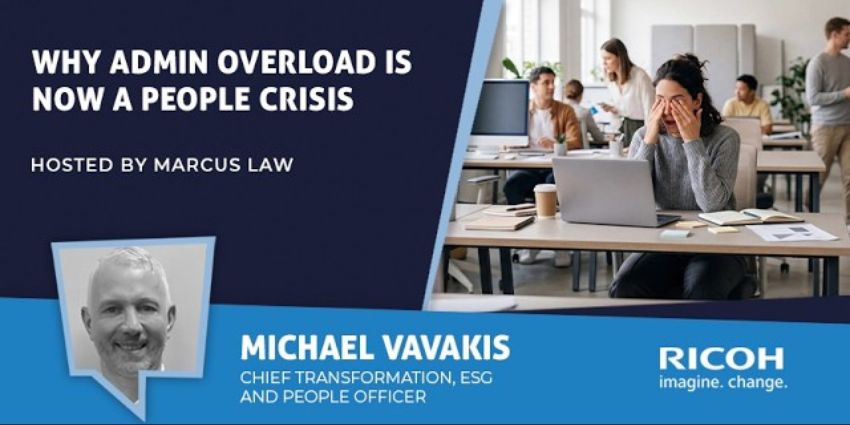
Ricoh’s Chief People Officer for Europe, Michael Vavakis, says the gap damages trust:
“Admin overload is not simply an efficiency issue, but a signal of how supported people feel today at work.”
McKinsey research on European talent found that the gap between what employees experience and what employers believe they deliver is one of the most consistent drivers of attrition across the continent. The Ricoh data reinforces that finding. Closing the perception gap costs very little and directly affects whether people stay.
Workflow automation fixes admin burden, but only with clear communication
Thirty-one percent of workers surveyed expressed anxiety about automation replacing their roles. This matters for work management buyers. Without clear communication, automation investments can worsen the retention problems they are meant to fix.
The operational case for workflow automation is strong. Tim Banting, Head of Research at Techtelligence, has noted that “enterprises are drowning in administrative overhead” and that buyers now evaluate UC platforms on their ability to cut day-to-day drag, not just communication quality. Research shows automation can reduce repetitive tasks by 60 to 95%. Some 74% of IT leaders say it has saved employees between 11 and 30% of their working time.
Enterprise automation platforms consolidate fragmented toolsets and tackle cross-functional admin at scale. But workers need to understand what gets automated and why. Tying automation rollout to visible skills development, rather than headcount reduction, is not just good practice. It is a retention strategy.
The business case is clear
European attrition rates sit at 17.4% across the tech sector, with the UK at 19%. Replacing an employee costs between six and nine months of their salary. Losing people to preventable admin frustration is an expensive problem.
When Ricoh asked workers what they would do with time freed from admin, 29% said they would focus on creative work. A quarter would use it to recharge. Some 23% would spend it on learning new skills. Workers want to contribute more. They just need the conditions to do it.
As UC Today’s analysis of automation trends for 2026 shows, enterprise buyers are already shifting focus from communication tools to execution tools. They want platforms that visibly reduce friction and deliver measurable productivity gains. The 15 hours a week workers lose to admin is exactly the problem those platforms exist to solve.