
Logitech is bringing a range of new enterprise products to InfoComm 2026 next week, with AI integration running through most of what the company will put in front of buyers and integrators.
The portfolio spans meeting room cameras, enterprise headsets, and peripherals, each with some form of AI functionality built in.
The question for the market is whether that adds up to a coherent platform story or a collection of individually capable products.
Cameras
The Rally Camera AI Pro is the headliner. It’s a dual-camera system built for large rooms – town halls, training facilities, boardrooms – running Logitech’s RightSight 2 auto-framing technology.
The system is designed to handle the kind of unpredictable movement and varied seating arrangements that larger spaces generate, where a single fixed camera typically struggles.
The standard Rally Camera AI takes a different form factor approach, with an in-wall mount designed to make the camera less visible in the room. That’s a detail that tends to matter more to designers and integrators than spec sheets suggest.
Enterprises investing in premium meeting spaces have increasingly pushed back on hardware that looks retrofitted, and the in-wall option is a direct response to that.
Henry Levak, VP of Product at Logitech for Business, previously framed the cameras’ intent plainly: “Rally AI Cameras are designed to power the hybrid-first office, where the tech fades into the background to let the digital and physical worlds blend.
“From small walls to town halls, they provide a cinematic experience for meeting attendees while quietly solving problems that IT managers, facilities teams, and workplace experience professionals face every day.”
Both cameras lean on RightSight 2 for auto-framing and speaker tracking. How well it performs in genuinely complex environments – irregular room shapes, poor acoustics, mixed seating – is the real test, and that’s something integrators will want to evaluate hands-on.
Headsets
The Zone Wireless 2 series leads with hybrid active noise cancellation and AI-powered microphones, targeting users in open-plan and noisy office environments.
The noise cancellation works in both directions – filtering background sound for the wearer and cleaning up the outgoing audio signal for remote participants.
For organisations still managing the reality of hybrid work, where office environments are louder and more unpredictable than they were pre-2020, that bidirectional approach is worth noting.
The more relevant pitch for IT buyers is probably the management story.
Logitech Sync allows IT teams to remotely update firmware, monitor device health, and manage large headset deployments from a central dashboard.
For enterprises dealing with device sprawl across multiple sites and thousands of endpoints, that kind of visibility is a practical consideration that goes beyond the hardware itself. It’s the kind of feature that doesn’t make headlines but does make procurement decisions.
Peripherals
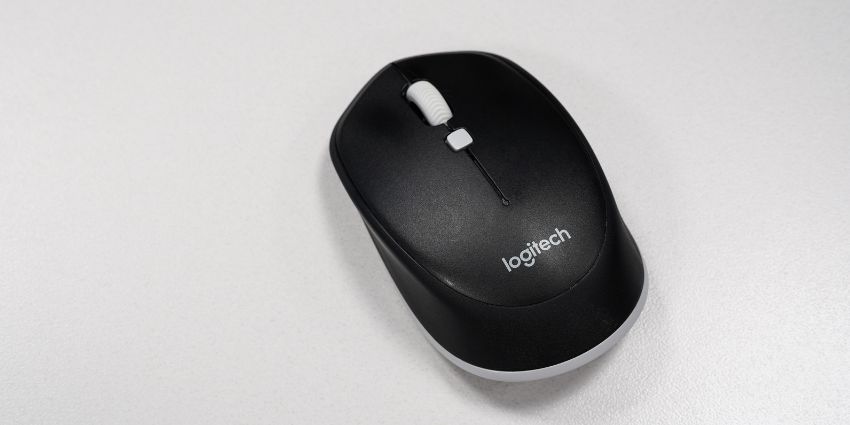
The MX Master 4 for Business is a productivity mouse with native Windows 11 haptic integration, 8K DPI glass tracking, and enterprise security credentials.
It’s a less obvious fit for an AV conference, but it points to Logitech widening its enterprise ambitions beyond the meeting room and onto the desk.
The haptic integration means controls respond dynamically depending on what the user is doing – a subtle productivity feature, but one that signals attention to the finer details of the Windows enterprise experience.
Platform coverage
Logitech will run educational sessions at the event covering Microsoft Teams, Zoom, and Google Meet integrations.
The company isn’t aligning with any single platform, which has been its consistent position for some time now.
In a market where large enterprises frequently run more than one collaboration platform across different teams or regions, that neutrality is genuinely useful rather than just a marketing stance.
What This Means for IT Leaders
Taken together, the InfoComm lineup reflects a direction Logitech has been building toward for a while: hardware that doesn’t just connect to AI-powered platforms but actively contributes to them through better input – cleaner audio, more accurate video framing, more reliable device management.
For IT leaders evaluating the portfolio, the practical questions are familiar ones.
Does the AI functionality hold up in real environments, not just demos? How does Logitech Sync integrate with existing device management infrastructure? And as Microsoft, Google, and Zoom each develop their own hardware or deepen partnerships with other manufacturers, does platform-agnostic hardware remain a priority for procurement teams, or does ecosystem lock-in start to look more attractive?
Logitech isn’t the only vendor arriving in Las Vegas with AI baked into its hardware pitch. But it’s one of the few covering cameras, headsets, and peripherals under the same roof.