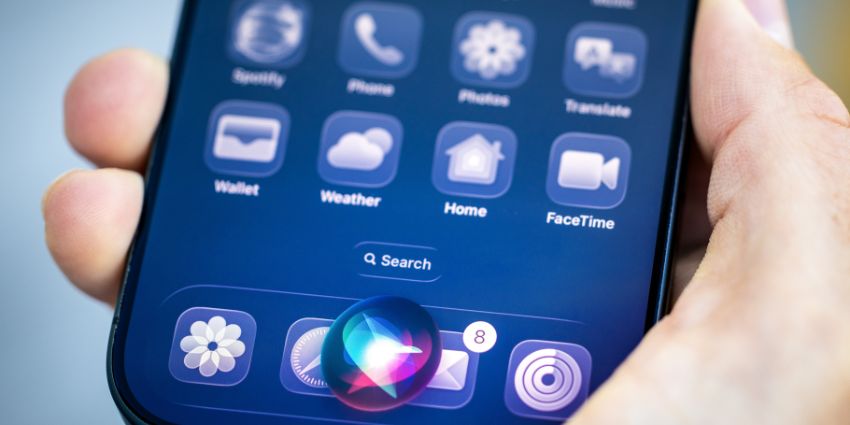

Apple kicked off its Worldwide Developer Conference (WWDC) 2026 with a keynote that made one thing abundantly clear: the company is no longer content to play catch-up on artificial intelligence.
With a reimagined Siri, deeper AI integration across its productivity suite, and a push to make automation accessible to everyday users, iOS 27 looks like Apple’s most consequential software release in years – at least on paper.
The event also carried some broader significance. This is Tim Cook’s final WWDC as CEO, with hardware engineering SVP John Ternus set to take the helm on September 1.
For enterprise watchers, that transition is worth keeping an eye on – Ternus’s background suggests a company that may be about to rebalance toward hardware ambition.
“At Apple, our mission has always been to turn the potential of advanced technology into helpful and intuitive products for everyone, and that has never been more important than today,” said Craig Federighi, Apple’s Senior Vice President of Software Engineering.
“Truly helpful AI must be centred on our users’ needs, deeply integrated into the products they rely on every day, grounded in personal context, and built with privacy at every step.
Siri AI – Finally a Serious Contender?
The most significant announcement for business users is Siri AI, and the most interesting feature about Siri AI is what is powering it: Google’s Gemini models.
That is not a small admission from Apple. For a company that has historically kept its core experiences firmly in-house, turning to a direct competitor to underpin its flagship assistant signals just how far Siri had fallen behind – and how seriously Apple is taking the need to close that gap.
The result is an assistant that, at least in demo, behaves far more like the AI tools that have been gaining traction in professional environments.
It can hold a conversation, maintain context across follow-up questions, take action based on what is on screen, and surface relevant information without the user needing to know exactly how to ask for it.
For businesses that have been waiting for Apple to deliver an AI experience comparable to what Microsoft is building into its ecosystem, this is the most credible attempt yet.
The cross-platform reach is also worth noting.
Siri AI will be available across iPhone, iPad, Mac, Apple Watch, Apple Vision Pro, and CarPlay from day one, with a dedicated chatbot app rounding out the offering on devices where a fuller conversational experience makes sense.
For organisations running Apple-heavy device estates, having a consistent AI layer across all of those surfaces – rather than a patchwork of third-party tools – has real appeal from a management and standardisation standpoint.
That said, there is an important caveat for European businesses.
Siri AI will not be available on iOS 27 or iPadOS 27 in the EU at launch, with Apple once again pointing to the Digital Markets Act as the reason.
It will be available in the EU on macOS, visionOS, and watchOS, but the absence on iPhone and iPad – the devices that matter most in most workplace contexts – is a meaningful gap.
EU-based organisations should factor that into any planning around Apple’s AI rollout.
Automation Without the Complexity
One of the quieter but more practically useful announcements was the AI overhaul of the Shortcuts app.
Shortcuts has long been one of those features that impresses in theory but rarely gets used in practice outside of a relatively small community of power users.
The friction of building automations – understanding how actions chain together, how variables work, how triggers are configured – has always been a barrier for the majority of employees who could genuinely benefit from the tool.
Apple is removing that barrier. In iOS 27, users can simply describe what they want a shortcut to do in plain language, and Apple Intelligence will build it.
They can then refine or adjust it the same way – by describing the change, rather than editing the underlying workflow. It is a shift that has real implications for how businesses think about productivity tooling.
Capabilities that previously required IT support or a technically minded colleague to set up are now, at least in principle, self-service. The degree to which that holds up outside of controlled demos remains to be seen, but the direction of travel is the right one.
AI Woven Into the Fabric of Daily Work
Elsewhere, Apple is pushing Apple Intelligence deeper into the apps that make up the working day, and the cumulative picture is one of an operating system that is increasingly trying to reduce low-level cognitive overhead.
Smart replies in Messages and Mail that adapt to a user’s individual writing style, natural language event management in Calendar, and system-wide proofreading that extends into third-party apps all point toward an OS that is less about features and more about removing friction.
For IT and security teams, the Passwords update deserves particular attention.
Apple Intelligence will identify weak or compromised credentials and allow users to strengthen them with a single tap – with the app then handling the update on the relevant website automatically.
It is the kind of feature that addresses a persistent and well-documented problem in enterprise security without requiring any change in employee behaviour, which is typically where these initiatives fall down.
Performance Where It Counts
Not everything in iOS 27 is about AI. Apple is also promising substantial under-the-hood performance improvements that will matter to organisations managing devices at scale – faster app launches, quicker file transfers, and a rebuilt search infrastructure across Spotlight, Mail, and Photos.
Notably, Apple has reworked its CPU scheduler in a way that should deliver tangible speed improvements on older hardware, meaning devices as far back as the iPhone 11 stand to benefit. For businesses not yet on a refresh cycle, that is a meaningful piece of news.
iOS 27 and its companion updates are expected to roll out this fall, with developer betas available now.