
New York has become the first US state to issue a blanket ban on smart glasses across all of its courts.
Starting July 20, anyone walking into one of the state’s 1,240 court facilities – lawyers, staff, and visitors alike – will have to surrender any eyewear equipped with a camera, microphone, or recording capability before they’re allowed inside. Prescription lenses offer no exemption.
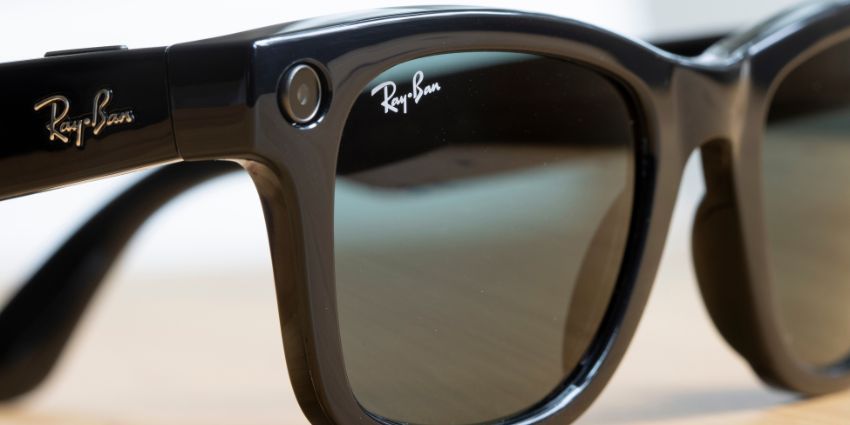
The move follows a high-profile incident in February, when members of Meta chief Mark Zuckerberg’s security detail were spotted wearing Meta Ray-Ban glasses as they escorted him into a courtroom for testimony in a jury trial over social media addiction.
The judge issued a warning against recording proceedings with the devices, but the moment landed hard with court administrators across the country.
Some courts in Pennsylvania and Wisconsin had already restricted smart glasses on their premises, and Philadelphia had its own order in place. New York, however, is the first to act at a statewide level – and legal experts say it almost certainly won’t be the last.
“Courts already ban recording generally, so this is a low-lift policy update, not a new legal theory, which makes it easy to replicate,” Mark McCreary, Chief AI & Information Security Officer at law firm Fox Rothschild told UC Today.
“I would expect several more state systems to adopt similar rules within the year.”
The Workplace Question
For IT leaders and HR teams, the courthouse story is really a preview. The same privacy concerns driving courtroom bans are already surfacing in offices, factory floors, healthcare settings, and anywhere regulated data moves through the building.
The answer, for most employers, is unlikely to be a blanket ban of the kind New York’s courts have imposed. The legal landscape is considerably more complicated outside the courthouse.
“Employment counsel are split,” McCreary explains.
“One school of thought is that workplace smart glasses are a ‘minefield’ and lean toward banning them, but a flat ban could trigger ADA issues for medically prescribed devices.”
That’s a meaningful constraint. Smart glasses aren’t exclusively consumer gadgets – some workers rely on them for accessibility and medical reasons, which puts a hard prohibition on a collision course with disability accommodation law.
Employers that try to enforce a blanket ban without carving out medically prescribed devices could find themselves exposed.
State recording consent laws add another layer of complexity.
In two-party consent states like Illinois, an employee recording a colleague without their knowledge could expose the company to real legal liability. But federal labour law cuts the other way.
In the US, the National Labor Relations Act protects employees who use recording as part of concerted activity – for instance, documenting unsafe working conditions – which means a policy broad enough to stop covert surveillance could inadvertently infringe on protected employee rights.
“My guess is most employers land on clearly written policies and training rather than outright bans, especially in healthcare, finance and manufacturing where regulated data is at stake,” McCreary added.
For IT and compliance teams, that means the work is in the policy detail – defining where smart glasses can and cannot be worn, what recording is permissible, how violations are handled, and how the policy interacts with existing data protection and acceptable use frameworks.
The Manufacturer’s Exposure
The pressure isn’t falling only on employers.
Smart glasses manufacturers – Meta most prominently, given the Ray-Ban smart glasses’ market position – are facing a growing legal and reputational reckoning of their own.
Meta has already updated its devices to prevent the capture LED from being disabled and to shut down the camera if the LED is physically tampered with. But McCreary argues those updates address only a fraction of the underlying liability picture.
“Meta’s capture LED and tamper detection updates help, but they only protect the light’s integrity, not the person being filmed, who still gets nothing more than a blink,” he says.
The deeper risk sits elsewhere. Meta is currently defending a lawsuit alleging that it marketed its glasses as “designed for privacy, controlled by you” while routing footage through human reviewers – some of whom reportedly viewed footage of nudity and financial documents.
McCreary describes that framing as a consumer deception claim, which he considers a “smarter pleading” than a privacy tort given how unsettled bystander privacy law remains.
More significantly, dormant facial recognition code reportedly found in Meta’s companion app raises what McCreary sees as the bigger long-term liability driver.
“Meta already paid roughly $7 billion combined in FTC, Illinois BIPA, and Texas biometric settlements over its old facial recognition practices,” he notes.
“Activating that on hardware that scans strangers who never consented is a direct collision with biometric privacy statutes, since bystanders have no way to opt in.”
What Businesses Should Do Now
The New York courthouse ban is a policy signal, not just a legal story.
For businesses, the smart move is to get ahead of the question rather than wait for a state legislature or a plaintiff’s attorney to force the issue.
That starts with auditing whether smart glasses are already in the building – issued as enterprise devices or brought in personally by employees – and whether existing acceptable use or recording policies cover them explicitly.
From there, the risk calculus varies by sector.
Healthcare and financial services organizations face the tightest regulated-data exposure. Manufacturing environments where proprietary processes are visible carry their own concerns. Customer-facing environments, meanwhile, have a direct duty of care to the people on the other side of the counter who never agreed to be filmed.
The technology isn’t slowing down. Meta’s Ray-Bans are already mainstream, and competitors are accelerating.
But the window for getting policy right – before an incident forces the conversation – is narrowing.