
Dreamforce – Salesforce’s biggest annual event – comes at a point when its customers are being asked to make bigger decisions about AI, data, CRM, sales operations, and collaboration. The technology is moving beyond individual copilots and isolated pilots. Salesforce’s “Agentic Enterprise” message is about connecting people and AI agents across the systems where work gets done.
For enterprise teams, this Salesforce event is not just about headline product announcements. It is an opportunity to test what is working in production, hear from organizations using agents at scale, and ask practical questions about data, governance, adoption, cost, and measurable value.
This Dreamforce guide covers what has been announced so far, who should attend, and how to get ready before the full agenda is released.
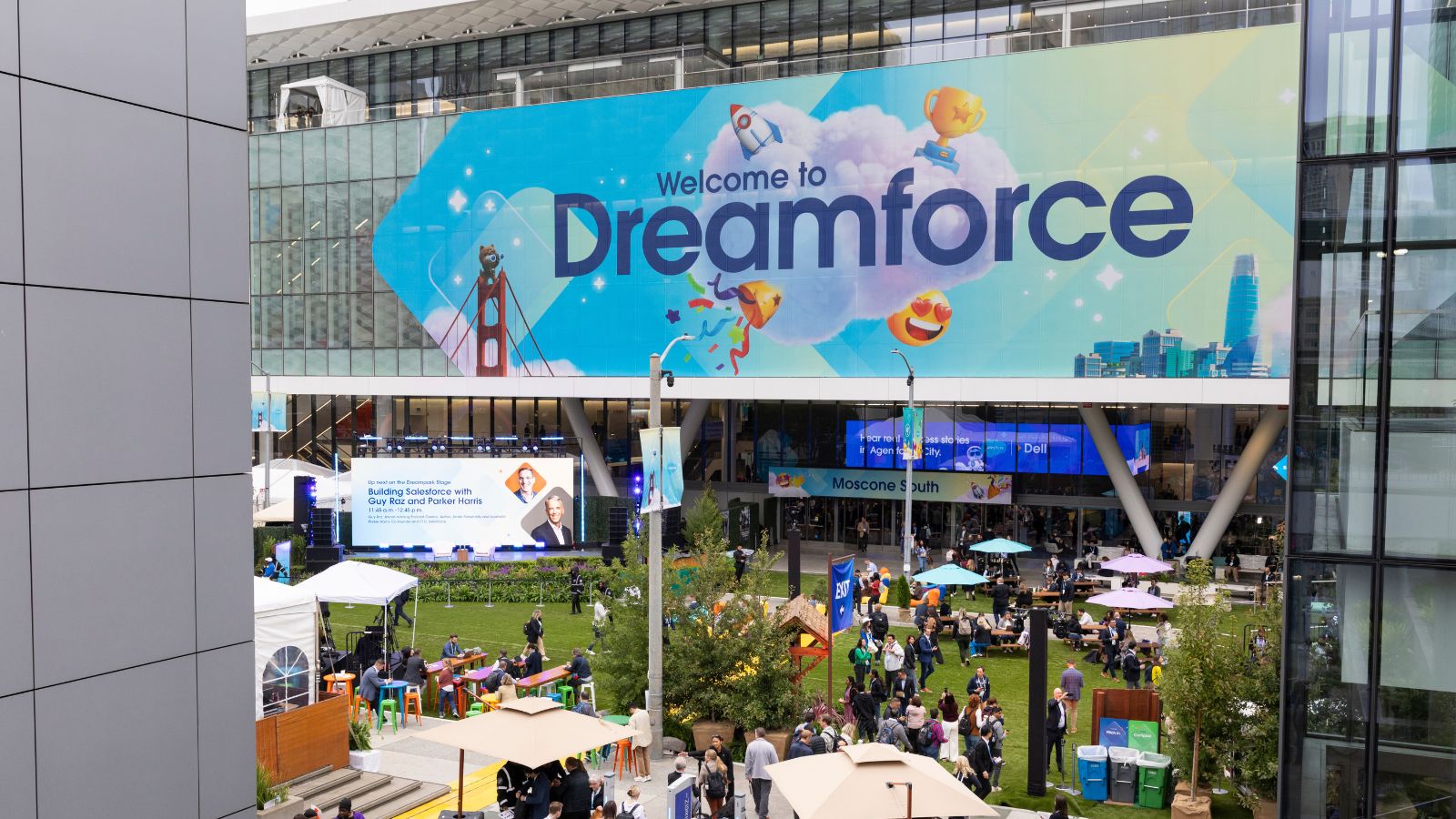
What is Dreamforce 2026? Salesforce’s annual event takes place September 15-17, 2026, at the Moscone Convention Center in San Francisco. The event focuses on Salesforce’s Agentic Enterprise strategy, with product announcements, customer use cases, hands-on learning, peer networking, and a free virtual program on Salesforce+ from September 15-18.
In This Guide
- Dreamforce 2026 at a Glance
- Why Dreamforce 2026 Matters
- Who Should Attend Dreamforce 2026?
- What to Expect at Dreamforce 2026
- Key Themes to Watch at Dreamforce 2026
- How to Prepare for Dreamforce 2026
- Questions to Ask at Dreamforce 2026
- What to Do When the Full Agenda Is Released
- Reader Perspectives on Dreamforce 2026
- Official Dreamforce Resources
- Frequently Asked Questions About Dreamforce 2026
- Follow Dreamforce 2026 With UC Today
Dreamforce 2026 at a Glance
Event: Dreamforce 2026
In-person dates: September 15-17, 2026
Location: Moscone Convention Center, San Francisco
Virtual access: Free registration for Salesforce+
Salesforce+ dates: September 15-18, 2026
Virtual program: 400+ sessions, virtual hands-on training, live keynotes, and exclusive interviews
Theme: The Agentic Enterprise
What Salesforce has announced so far:
- 1,600+ breakout sessions across products, roles, and industries
- 50+ visionary and product keynotes
- 150+ hands-on trainings and demos
- 240+ community roundtables
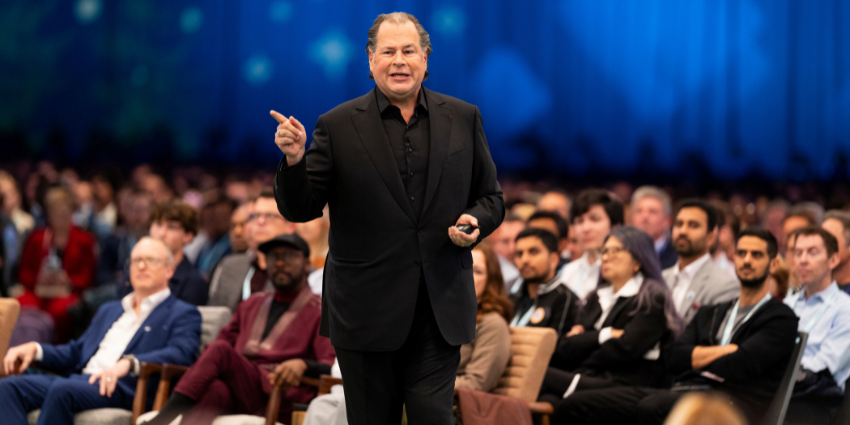
- Opening keynote with Marc Benioff and special guests
- Customer stories and agent-building content
- One-to-one sessions with Agentforce and Slack product experts
- Trailblazer Bootcamp
- Dreamforce Welcome Reception
- Dreamfest, including a headline performer
Salesforce currently lists a Full Conference pass at $1,899 under its “Last Chance” offer, before the stated full price of $2,299. Salesforce also advertises group registration options for teams of three or more. Pricing, availability, speakers, programming, and event logistics can change, so the official Dreamforce website should be your source for the latest information.
For people unable to attend in San Francisco, Salesforce says free Salesforce+ registration provides access to 400+ sessions, virtual hands-on training, live launches across Slack, Agentforce, Customer 360, and Data 360, plus broadcast-only programming and interviews. The virtual program runs September 15-18, one day longer than the in-person Dreamforce dates.
Why attend Dreamforce 2026? Dreamforce gives Salesforce customers and enterprise technology leaders a chance to assess Agentforce, Data 360, Slack, AI governance, CRM innovation, and real customer deployments before making platform, architecture, or investment decisions.
Why Dreamforce 2026 Matters
Dreamforce 2026 will be a useful reality check for organizations trying to turn AI ambition into day-to-day operational change. Salesforce is bringing its Agentic Enterprise strategy to San Francisco at a moment when business leaders are asking hard questions: Which workflows should agents handle? What still needs human judgment? And what has to change in the data, process, and governance model before AI can be trusted with meaningful work?
That makes the event relevant beyond the Salesforce administrator or CRM team. The conversation now reaches sales leaders deciding how to equip reps without removing the human element, IT teams managing new integration and security demands, and UC leaders looking at how customer context and AI actions move into the collaboration tools employees use every day.
With customer use cases expected to feature prominently, Dreamforce should help attendees separate the polished AI vision from the implementation work required to make it stick.
CRM Is Moving Into the Flow of Work
Salesforce is extending CRM beyond its own interface. New Salesforce-hosted Model Context Protocol, or MCP, servers enable Slackbot to access CRM, Tableau, Data 360, and connected applications. Salesforce says users can retrieve customer information, update records, trigger workflows, and work with customized Salesforce configurations from within Slack, while respecting existing permissions and validation rules.
For UC and collaboration teams, this could bring customer context and CRM actions into the channels where sales, service, technical, and partner teams already work together. Instead of moving between a messaging platform and CRM, teams could discuss an account, identify an issue, surface data, and take an approved next step within the same shared conversation.
Dreamforce is where buyers could test the operational reality behind that vision. Look for customer examples that show how Salesforce preserves data quality, auditability, security, and approval controls when CRM actions move into collaboration workflows. The key question is whether this reduces friction without creating a less-governed CRM environment.
CRM Competition Is Becoming an AI Workflow Battle
The CRM market is no longer competing on record management alone. Salesforce’s Agentforce, Data 360, MuleSoft, and Slack strategy is designed to connect customer data, applications, automation, and AI agents. The goal is to make CRM part of an enterprise workflow layer rather than a standalone front-office system.
Competitors are taking a similar direction. ServiceNow is positioning its operational CRM offering around AI-driven workflows across sales, service, CPQ, field operations, and IT. Its argument is that workflow context, not just customer data, will determine whether agents can carry out useful work safely and consistently.
For UC leaders, the decision increasingly concerns where communication, customer context, and AI-led actions come together. At Dreamforce, ask how Salesforce supports mixed environments that include Teams, Zoom, contact center platforms, and other business systems; where human approval is required; and how customers measure and control AI-related costs.
The practical comparison is no longer CRM versus CRM, but which platform can support governed work across the enterprise.
Agentforce Now Has a Higher Burden of Proof
Salesforce is taking Agentforce into Dreamforce with more substantial commercial and deployment claims than it had a year ago. During its Q1 earnings call, Salesforce said Agentforce annual recurring revenue had exceeded $1 billion, while combined Agentforce, Data 360, and Informatica Cloud ARR reached $3.4 billion. The company also reported 28.6 trillion tokens processed in the quarter and 3.8 billion Agentic Work Units, which Salesforce uses to measure AI work completed.
Those figures show momentum, but they do not on their own prove value for enterprise buyers. The more useful evidence lies in the customer and internal examples Salesforce has begun to share. PenFed said its 76-agent deployment across operations, mortgages, IT, and HR is expected to save nearly $1.6 million this year. UCLA Health said it launched an initial customer-facing Agentforce use case within eight months after establishing testing protocols and leadership approval processes.
This makes Dreamforce a practical due-diligence opportunity for organizations evaluating agentic AI. Salesforce is expected to put significant emphasis on customer use cases, and attendees should use them to test what sits behind the headline results: the data work, integrations, process redesign, testing, guardrails, human escalation paths, and adoption effort required to reach production.
What should enterprise buyers investigate at Dreamforce 2026? Look for production customer use cases that show the data preparation, integrations, human oversight, testing, governance, implementation effort, costs, and measurable outcomes behind an Agentforce deployment.
Who Should Attend Dreamforce 2026?
Dreamforce 2026 is relevant to organizations already using Salesforce, assessing a wider Salesforce deployment, or deciding how CRM, agentic AI, data, and collaboration should change their operating model. Attendees should arrive with a defined business problem and a clear plan for the evidence they need to collect. Teams unable to travel can use Salesforce+ as a free way to follow keynotes, product launches, and a substantial virtual learning program, although it will not replace the in-person value of peer networking, customer meetings, hands-on conversations, or the wider San Francisco event campus.
Salesforce Customers Planning Their Next Move
Salesforce customers considering Agentforce, Data 360, Slack, Tableau, MuleSoft, Informatica, or broader platform consolidation should attend to compare customer use cases, product direction, and deployment approaches. Focus on evidence that goes beyond a demo: data readiness, integration requirements, governance, user adoption, human escalation, commercial model, and measurable outcomes.
CIOs, CTOs, and Enterprise Architects
Technology leaders should attend to assess whether Salesforce’s strategy can simplify their CRM, data, automation, analytics, and AI landscape or add further platform complexity. Dreamforce offers a chance to examine how Agentforce, Data 360, Informatica Cloud, MuleSoft, and Slack connect with existing enterprise systems, and what this could mean for architecture, operating models, budgets, and roadmap decisions.
UC, Collaboration, and Workplace Technology Leaders
UC and workplace technology leaders should attend because Salesforce is positioning Slack as more than a messaging tool. Its MCP-enabled approach brings CRM data, analytics, workflows, and AI agents into shared conversations, creating new questions around platform coexistence, identity, information governance, employee experience, and integration with Teams, Zoom, contact center platforms, and other workplace tools.
Sales, Revenue, and Commercial Operations Leaders
Sales leaders and revenue operations teams should attend to evaluate how Salesforce applies AI to prospecting, pipeline management, forecasting, seller productivity, and approvals. The most valuable sessions and customer conversations will show what changes in the daily sales workflow, how teams maintain CRM data quality and management oversight, and whether the results show up in seller capacity, speed to lead, forecast accuracy, conversion, or revenue.
IT, Data, Security, and Governance Teams
IT, data, security, compliance, and Salesforce administration teams should attend because agentic AI depends on the systems that control access, data quality, integration, auditability, and oversight. Prioritize technical training and architecture discussions on permissions, data boundaries, model access, third-party MCP connections, data residency, testing, observability, retention, and human-in-the-loop controls, especially if your organization operates in a regulated sector.
Salesforce Partners, ISVs, and Service Providers
Consultancies, systems integrators, ISVs, managed-service providers, and technology partners should attend to understand where Salesforce is directing its product investment and where customers need implementation support. The opportunity is likely to extend beyond deployments to use-case design, process redesign, integrations, governance, workforce enablement, and ongoing optimization as organizations move Agentforce and connected workflows from pilots into production.
What to Expect at Dreamforce 2026
Salesforce has confirmed the overall shape of Dreamforce 2026. The event will combine executive announcements, technical learning, customer examples, peer discussion, and social programming across three days in San Francisco and on Salesforce+.
Keynotes and Product News
Opening keynote with Marc Benioff and special guests – Salesforce has confirmed its opening keynote, where it is likely to set out the company’s product and Agentic Enterprise direction.
Visionary and product keynotes – Salesforce has announced 50+ keynote sessions featuring product leaders and outside speakers.
Learning and Skills Development
Breakout sessions – Salesforce says there will be 1,600+ sessions across products, roles, and industries.
Hands-on training and demos – The event will include 150+ practical trainings and demonstrations, giving attendees the opportunity to explore Salesforce technology directly.
Trailblazer Bootcamp – Salesforce describes Trailblazer Bootcamp as immersive, expert-led learning focused on building, deploying, and applying AI.
Virtual Attendance on Salesforce+
Free Salesforce+ access – Salesforce says Dreamforce 2026 will stream live on Salesforce+ from September 15-18, with free registration required.
Live virtual learning – The virtual program will include 400+ sessions, virtual hands-on training, live product launches, and sessions with business leaders, AI experts, and cultural figures.
Dreamforce Today and exclusive interviews – Salesforce+ will feature “Dreamforce Today,” a daily broadcast designed to highlight key sessions and takeaways, along with exclusive interviews.
Global streaming – Salesforce says it will provide 72 hours of live content, including global programming intended to support viewers in different time zones.
Main keynote – Marc Benioff and special guests will present the Dreamforce 2026 main keynote live on Salesforce+. Readers can add the session to their agenda through Salesforce’s main keynote page.
Customer and Product Experience
Customer use cases – Salesforce has signaled that customer stories will be a major part of Dreamforce 2026, giving buyers a way to assess how organizations are applying agentic AI, CRM, data, and collaboration technology in production.
One-to-one Agentforce and Slack sessions – Salesforce says attendees will be able to book individual sessions with product experts to discuss their use cases and next steps.
Core content and agent building – Salesforce has confirmed sessions on revenue skills, expert-led learning, hands-on training, and agent building.
Peer Connections and Community
Community roundtables – Salesforce has announced 240+ peer roundtables intended to help attendees exchange ideas and discuss transformation with other practitioners.
Networking and campus moments – The event will include organized networking opportunities and informal activities across the Dreamforce campus.
Entertainment and Social Events
Dreamforce Welcome Reception – Salesforce has confirmed a welcome reception where attendees can meet peers and members of its “Agentblazer” community.
Dreamfest – Salesforce has confirmed that Dreamforce 2026 will include Dreamfest with a headline musical performer. Metallica and Benson Boone were headliners at Dreamfest 2025.
Key Themes to Watch at Dreamforce 2026
The New Divide Between AI Scale and Human Selling
AI is forcing sales organizations to decide which work belongs to people and which can be delegated to agents. As companies restructure and reduce headcount across technology and go-to-market teams, leaders need to understand where automation creates capacity and where human judgment, credibility, and relationships remain essential to winning complex business.
Salesforce CEO Marc Benioff argues that AI sales technology will not end human selling. Salesforce is positioning Agentforce for Sales to take on high-volume tasks such as lead qualification, follow-up, and pipeline administration, while preserving human reps for strategic accounts and complex conversations. At Dreamforce, look for customer examples that explain how sales roles are changing, which tasks agents own, and whether AI-created capacity improves customer engagement and revenue performance.
Read CX Today’s recent coverage of Benioff’s view on the ‘tension’ between AI and human selling.
Building an AI-Ready Data Foundation
Agentic AI is only as reliable as the data, permissions, and business context behind it. Salesforce is putting Data 360 at the center of its Agentforce strategy, aiming to unify customer and business data so agents can retrieve accurate information and take appropriate action.
This is a business issue as much as a technical one. Leaders need to establish data ownership, access controls, quality standards, and processes for keeping information current before agents are trusted with meaningful work. Dreamforce should help attendees assess how Data 360, CRM, Tableau, MuleSoft, and third-party data sources can support a governed AI foundation.
Governing the Agentic Enterprise
As agents progress from answering questions to making recommendations, triggering workflows, and completing tasks, governance becomes an operational requirement. Organizations need clear policies for accountability, testing, monitoring, security, data access, human escalation, and cost control. They also need a consistent way to measure agent activity and the business outcomes it produces.
Salesforce has begun using its Agentic Work Unit metric to track discrete work completed by agents, such as updating a record, closing a case, or triggering a workflow. Its Q4 results also included customer and internal examples tied to service volumes, response times, customer satisfaction, booking performance, and employee time saved.
At Dreamforce, prioritize sessions that explain how teams define success, monitor agent behavior, handle errors, and maintain a clear handoff between autonomous action and human judgment. UC Today’s Q4 earnings analysis provides further context on the metrics Salesforce is using to make its case.
The central Dreamforce 2026 question for enterprise buyers: How can an organization deploy AI agents safely, using reliable data, appropriate human oversight, and measurable business outcomes?
How to Prepare for Dreamforce 2026
Set a Business Objective
Define the one or two decisions your organization needs help making, such as an Agentforce use case, AI governance model, data strategy, sales productivity initiative, or Slack and collaboration architecture. This gives the event a clear purpose and makes it easier to prioritize sessions and meetings once the agenda is published.
Bring the Right Internal Stakeholders
Dreamforce’s themes cut across sales, IT, data, security, collaboration, and operations. Consider sending a small cross-functional group, or agree in advance how different attendees will divide coverage, compare notes, and turn findings into recommendations after the event.
Book Key Conversations Early
Use the event to arrange meetings with Salesforce account teams, product experts, implementation partners, and peer organizations facing similar challenges. Prepare a short briefing that explains your current environment, priority use cases, constraints, and the evidence you need before making an investment decision.
Build an Evidence Checklist
Focus on real deployments rather than broad product demonstrations. Ask for comparable customer references, implementation timelines, integration requirements, governance controls, human escalation processes, adoption results, and a clear explanation of pricing and ongoing operating costs.
How should attendees prepare for Dreamforce? Set clear business objectives, identify the internal stakeholders who need answers, book priority conversations early, and focus on validating real customer outcomes instead of relying only on product demonstrations.
Questions to Ask at Dreamforce 2026
Agentforce and AI Deployments
- Which customer use cases are live in production, rather than pilot programs?
- What data, integration, process-design, and testing work was required before deployment?
- Where does a human need to approve, review, or take over from an agent?
- How do customers measure agent accuracy, value, cost, and ongoing performance?
- What happens when an agent cannot complete a task or acts on incomplete information?
Data, Integration, and Governance
- Which data sources does the agent access, and how are permissions applied across them?
- How does Salesforce support data quality, lineage, auditability, retention, and residency requirements?
- What role do Data 360, MuleSoft, Tableau, Informatica Cloud, and third-party systems each play in the architecture?
- How are MCP connections approved, monitored, and revoked?
- What controls are available for regulated or high-risk workflows?
Sales and Collaboration Workflows
- Which sales tasks are best suited to agents, and which should remain human-led?
- How does Agentforce work alongside the collaboration and UC tools already in use?
- How are CRM updates, approvals, and customer-sensitive actions governed when initiated in Slack?
- What evidence shows that AI is improving seller productivity, pipeline quality, or customer engagement?
- How should teams redesign roles, training, and management processes as agents take on more work?
What to Do When the Full Agenda Is Released
Salesforce has confirmed the scale of the program, but the full Dreamforce 2026 schedule is still to come. Once it is live, attendees should use it to turn broad objectives into a practical three-day plan.
Prioritize Customer Evidence
Start with customer-led sessions in your industry or with a comparable operating model. These are likely to offer the clearest insight into implementation timelines, data and integration work, governance, adoption, and measurable outcomes.
Divide and Conquer
If several colleagues are attending, assign coverage by priority area such as Agentforce, data, sales, security, Slack, integrations, or industry use cases. Schedule a daily debrief to share findings and adjust the plan.
Book Hands-On Time
Reserve product-expert sessions and practical training early, particularly for Agentforce, Slack, Data 360, and architecture discussions. Bring a concise overview of your environment and the use case you want to validate.
Leave Room for Peer Conversations
Avoid filling every hour with sessions. Roundtables, customer discussions, and informal conversations can provide the context that product keynotes and demonstrations cannot, especially when evaluating how other organizations are managing governance and change.
Turn Findings Into Next Steps
Before leaving San Francisco, agree on the actions that follow the event: customer-reference calls, technical workshops, pilot decisions, architecture reviews, partner assessments, or a leadership briefing. The value of Dreamforce will depend on what the team does with the information afterward.
Reader Perspectives on Dreamforce 2026
What are you most looking forward to hearing about at Dreamforce 2026? UC Today will update this section with perspectives and predictions from Salesforce customers, enterprise technology leaders, partners, and the wider community as the event approaches.
To share your perspective on the event & the announcements you are looking out for, email [email protected].
Official Dreamforce Resources
The official Dreamforce website will have the most up-to-date information on registration, pricing, speakers, sponsors, programming, and event logistics.
Register for Dreamforce
View Dreamforce Speakers
Watch on Salesforce+
Dreamforce 2026 summary: The Salesforce event will bring together product keynotes, 1,600+ breakout sessions, hands-on training, customer examples, community roundtables, and networking in San Francisco from September 15-17, 2026. A free Salesforce+ virtual program will run September 15-18.
Dreamforce 2026 – FAQs
When is Dreamforce 2026?
Dreamforce 2026 takes place in San Francisco from September 15-17, 2026. The free Salesforce+ virtual program runs from September 15-18, 2026.
Where is Dreamforce 2026 held?
Dreamforce 2026 will take place at the Moscone Convention Center in San Francisco from September 15-17. Salesforce+ will stream a free virtual program from September 15-18, including 400+ sessions, virtual hands-on training, live keynotes, and exclusive interviews.
Who should attend Dreamforce 2026?
Dreamforce is relevant to Salesforce customers, CIOs, IT and data leaders, UC and collaboration teams, sales and revenue operations leaders, security and governance teams, and Salesforce partners assessing AI, CRM, data, automation, and workplace technology. People unable to travel can register free for the Salesforce+ virtual program.
Can I attend Dreamforce 2026 online?
Yes. Salesforce says Dreamforce 2026 will stream live on Salesforce+ from September 15-18, and registration is free. The virtual program includes 400+ sessions, virtual hands-on training, live product launches, the main keynote with Marc Benioff and special guests, Dreamforce Today broadcasts, and exclusive interviews.
Who is speaking at Dreamforce 2026?
Salesforce is continuing to add speakers. Confirmed speakers so far include:
Salesforce speakers
- Marc Benioff, CEO and Chair, Salesforce
- Rob Smedley, Chief Customer Officer, Data 360, Salesforce
- Nitin Mangtani, EVP and GM, Commerce and Retail Cloud, Salesforce
- Matthew McConaughey, Academy Award-winning actor, New York Times bestselling author, and Salesforce Brand Partner
- Anton Osika, CEO and Co-Founder, Lovable
- Renée Richardson Gosline, Senior Lecturer and Head of the Human-First AI Lab at MIT
Follow Dreamforce 2026 With UC Today
UC Today will be following Dreamforce 2026 with news, interviews, product analysis, and on-site coverage from San Francisco.
Sean Nolan, Technology Journalist at UC Today, will be reporting from the event, covering the announcements, customer use cases, and enterprise technology conversations shaping Dreamforce.
Follow UC Today’s Dreamforce coverage for updates on Agentforce, CRM, workplace technology, collaboration, data, and the customer examples that matter after the keynotes end.
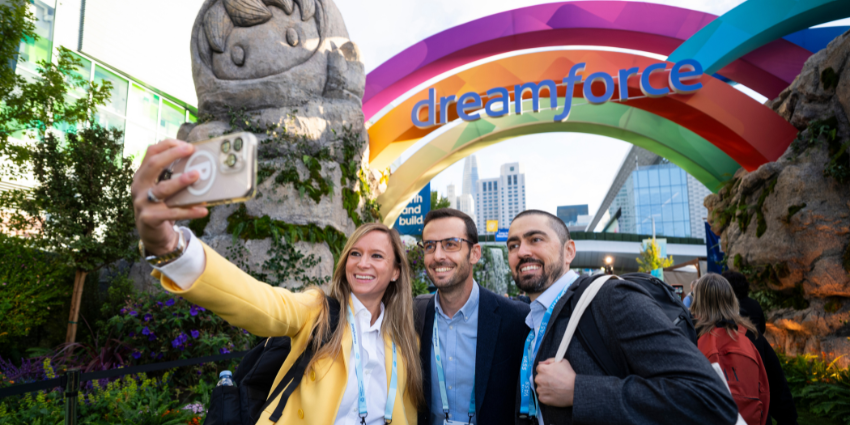
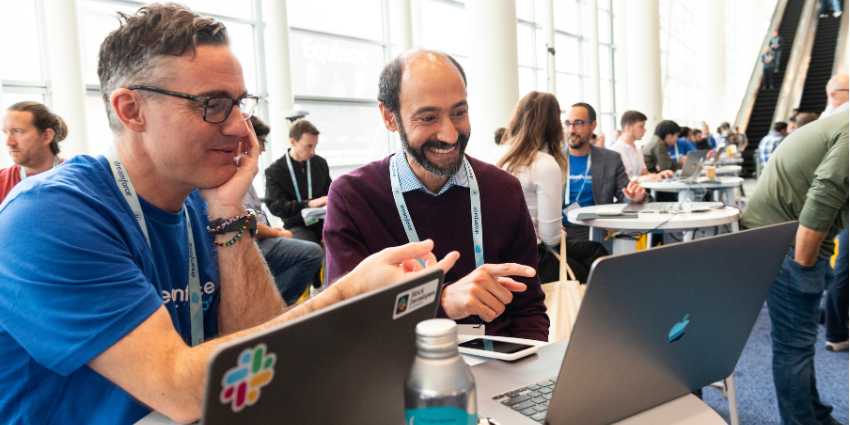
Images from Dreamforce 2025, courtesy of Salesforce.