Microsoft Kills Its Surface Hub Collaboration Displays: Key Takeaways for IT Leaders

Microsoft is halting production of its flagship collaboration display. As the tech giant systematically streamlines its hardware portfolio, enterprise buyers must look to a maturing vendor ecosystem to outfit their meeting spaces

3
Microsoft Kills Its Surface Hub Collaboration Displays: Why and What Does it Mean?
Devices & Workspace Tech​Unified Communications & CollaborationNews

Published: April 15, 2026

Kieran Devlin

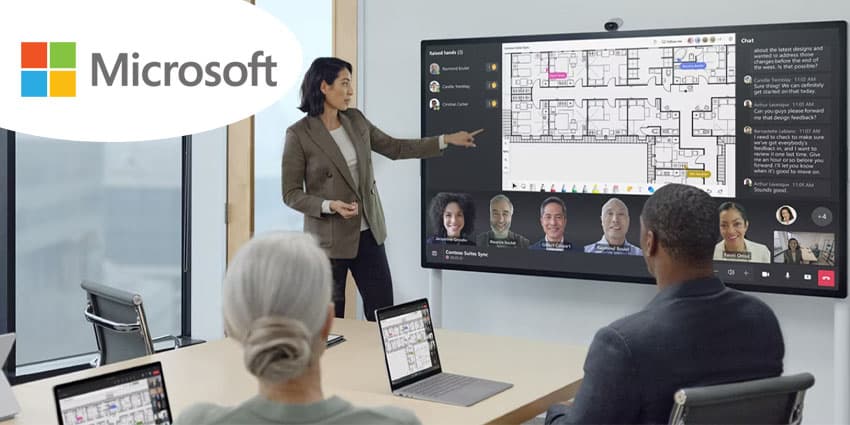
Microsoft has officially ended production of its landmark collaborative display line, ceasing manufacturing of the Surface Hub 3 and abandoning plans for any future iterations. The era of Microsoft’s first-party, large-format interactive screens has quietly but definitively come to a close.

Originally engineered exclusively for the commercial sector, these devices were designed to serve as the digital nucleus for hybrid workspaces. They represented a substantial capital expenditure for organizations aiming to seamlessly connect in-office and remote personnel through high-end digital whiteboarding and video conferencing.

The Surface Hub 3 was available in both 50- and 85-inch sizes, priced at $8,000 for the smaller version and $20,000 for the larger.

Despite the formidable price point, the product line introduced distinct architectural innovations aimed at long-term enterprise utility. The structural separation of the display panel from the internal computing components was a deliberate design choice. This modularity allowed organizations to upgrade the underlying processing power via a swappable compute cartridge, theoretically preserving the lifespan of the expensive glass.

Furthermore, the most recent iteration featured a dynamic rotating chassis that seamlessly transitioned between portrait and landscape orientations to accommodate diverse content layouts.

However, these sophisticated engineering feats proved insufficient to sustain the hardware’s viability. While Microsoft and its authorized distribution partners will continue to fulfill orders using existing inventory, the manufacturing lines have been permanently shut down. Once the current warehouse stockpiles are exhausted, the product line will officially exit the primary market.

The Hardware Strategy Pivot With Microsoft Sunsetting the Surface Hub Series

Arguably, this discontinuation is less of a sudden shock and more of a logical progression within Microsoft’s broader enterprise strategy. Over the preceding two years, the tech giant has systematically divested from low-volume, experimental form factors. The cancellation of these large-format displays follows the recent retirements of the dual-screen Surface Duo smartphone, the 32-inch Surface Studio desktop, and the 14-inch Surface Laptop Studio.


Microsoft appears to be consolidating its hardware investments. Rather than allocating research and development capital toward specialized, niche devices, the company is doubling down on high-volume commercial computing. By prioritizing the Surface Pro and Surface Laptop lines, Microsoft apparently aims to aggressively rival Apple in the core enterprise mobility sector, while simultaneously pivoting its overarching corporate focus toward high-margin AI and Copilot software integration.

Additionally, stepping away from the large-format display market serves as a calculated acknowledgment of a highly capable original equipment manufacturer (OEM) ecosystem. Microsoft no longer needs to manufacture the glass itself. By vacating the hardware spotlight, the company clears the lane for dedicated AV vendors to innovate, confident that these third-party screens will continue to run Microsoft Teams and drive the company’s lucrative software licensing revenues.

Navigating the Procurement Roadmap

For tech buying committees, including CIOs and procurement officers, the strategic pivot naturally influences hardware lifecycle management and future real estate planning.

However, if your organization recently executed a large-scale deployment of these displays, the immediate financial directive is to maintain the course. There is no need for premature hardware replacements that would disrupt your depreciation schedules or return on investment. Microsoft affirms that for customers who own a Surface Hub 3, the solution will remain supported with OS and firmware updates until the end of 2030.

This guarantee provides IT teams with a robust five-year runway to fully utilize their assets before the devices risk becoming operational liabilities. Existing meeting room investments remain highly secure.

For businesses currently budgeting for office redesigns or expanding their real estate footprint, the discontinuation of the Hub necessitates a recalibration in procurement. The void left by Microsoft invites buyers to audit third-party, Microsoft Teams Rooms-certified hardware from ecosystem partners such as Neat, Yealink, and Poly. These vendors frequently provide highly competitive collaborative whiteboarding and video conferencing experiences at more accessible price points.

Collaboration DisplaysIntelligent Meeting Rooms​
Featured

Share This Post