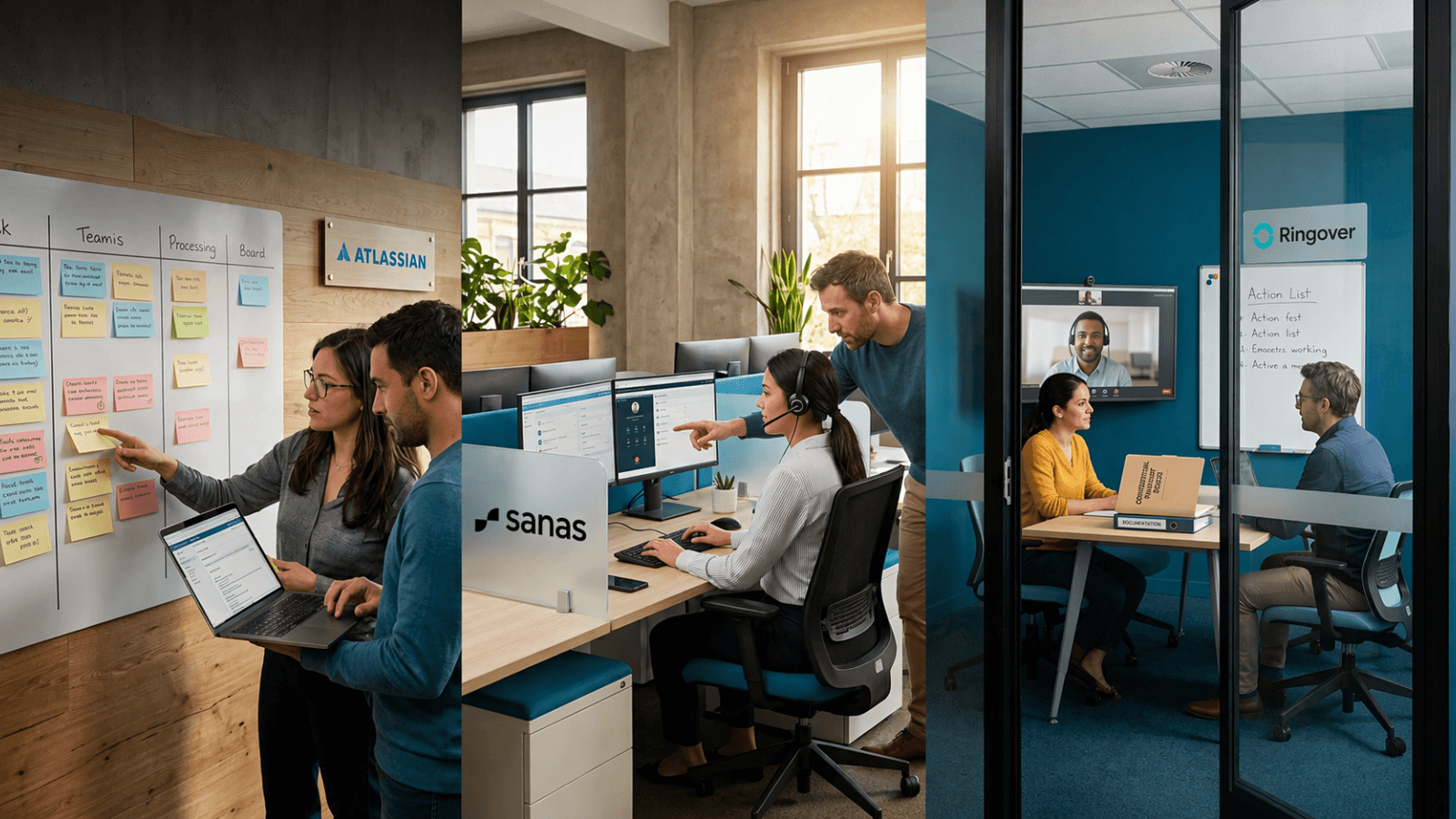
For two decades, workplace technology promised to unlock time. Email made messages instant. Collaboration platforms reduced meeting friction. Workflow tools improved visibility. Yet many organisations still feel ‘busy’, not productive. Now, AI changes the equation. It does not just accelerate tasks. It can reshape how work gets done, who does it, and what organisations expect from a single employee.
Direct Takeaway: AI will not replace most people. But it will reorder who produces outcomes fastest, who earns trust, and who gets promoted.
The core shift is this. In the AI era, productivity itself becomes a competitive weapon. Employees who learn to orchestrate AI agents, automate workflows, and deliver higher-quality output with fewer steps become dramatically more valuable. Meanwhile, employees who treat AI like a shortcut risk a different problem. They move faster today, but they may weaken the underlying skills that keep them effective when the tool fails, changes, or produces the wrong answer.
That is why ‘AI literacy’ is no longer a nice-to-have. It is a career differentiator. In the same way that spreadsheet fluency separated high-impact operators from average ones, and digital collaboration fluency separated effective hybrid teams from chaotic ones, AI mastery will separate high-leverage employees from high-effort employees.
Satya Nadella, CEO of Microsoft emphasises the increasing monopoly of AI use and calls for the sector to be broader:
“It can’t be a few companies in one sector, in one continent having all the returns, it has to be a much broader phenomenon.”
Related Articles
- Why Poor AI Use Could Make Performance Management Worse
- Allianz: AI Will Reorganize Work Faster Than It Eliminates Jobs
- How AI Is Rewriting Management Roles
The New Advantage Is Not Using AI. It Is Directing It.
Most people will ‘use AI’ in the way they use any other software. They will ask it to draft a message, summarise a document, or generate ideas. That helps, but it is not the differentiator. The differentiator is orchestration: turning AI into repeatable workflows that create outcomes with consistency.
That means developing three capabilities that organisations can trust:
- Workflow thinking: breaking work into steps, inputs, decisions, and outputs.
- Quality control: spotting errors, gaps, hallucinations, and risky assumptions quickly.
- Governance instincts: knowing what data is safe to use, where risk lives, and when human judgment must stay in the loop.
In practical terms, the highest-leverage employees will not only generate content faster. They will reduce rework. They will prevent errors before they spread. They will build repeatable systems that scale their impact beyond their own hours.
AI Creates Two Productivity Paths, and One of Them Is a Trap
AI offers immediate gains. It can reduce time spent on drafting, analysis, and routine coordination. That is real value. But there is also a trap. If employees offload thinking indiscriminately, they may lose the mental ‘muscle’ for critical reasoning, deep understanding, and independent problem solving.
In the workplace, this shows up as a pattern. People move faster, but they understand less. They ship more, but with more mistakes. They produce outputs, but struggle to explain the logic behind them. When a leader asks, ‘Why did we do this?’, the answer becomes, ‘Because the tool suggested it.’ That is not mastery. That is dependency.
The employees who win will treat AI like a co-pilot, not an autopilot. They will use it to expand thinking, test alternatives, and pressure-test assumptions. They will keep their own reasoning engaged, so they can validate outputs and make decisions with confidence.
Why This Changes Career Value Faster Than Most People Expect
Every major technology wave created a new ‘value curve’ inside organisations. The people who learned early got disproportionate leverage. AI accelerates that effect because it touches so many knowledge workflows at once. It compresses time between effort and output.
That creates a new internal market for talent. Leaders will gravitate toward employees who can do three things reliably: