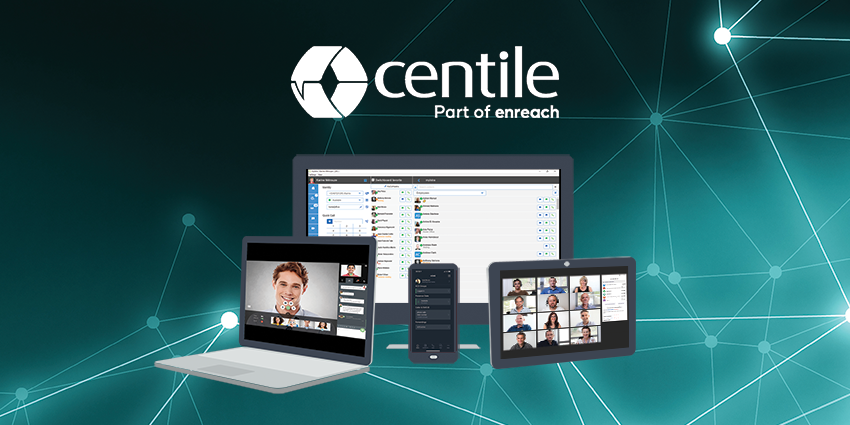

Centile’s one of the numerous organizations responding to COVID-19 pandemic seeking to relieve the burden felt by the service providers and the countless contact centers the French UC company powers. While a portion of Centile users have some work-from-home experience, many of them have no such experience predating COVID-19.
This in itself is a challenge, but, Centile Head of Product Sales Experts, Jean-Charles Collin, told me, the company wants to make the transition to the newfound home working environment thousands of its customers now find themselves in, a lot smoother. Collin added, “This is why Centile now offers its customers free softphones until the end of June and collaboration tools until the end of August at no added cost.”

Enreach Group, the organization that maintains Centile, Swyx, and other UC companies has a similar promotion. The European UC tools developer said it would extend the use of its ‘Meetings’ offering. The software supports video collaboration, up to ten concurrent users, whiteboards, recordings, video/audio as well as chat, known at Centile as ISTRA Collab Business. Collin told me, the company’s seen ‘Massive adoption already.’
Centile can support up to 25,000 contact center agents on its enterprise platform, but Centile’s free proposition is better suited for smaller contact centers. Collin said Centile wants customers to navigate its software with ease and to take the stress away from learning new software. As such, the company’s put together a host of webinars two-to-three times per week in English and French.
“We take users step-by-step through our tools in a one-hour webinar on installation, automatic call distribution (ACD) transitioning, working without a desk phone, collaboration, and more”
While the idea of working from home can seem overwhelming because of the initial setup of new systems, a home office, and other variables like distractions, Centile believes it is possible to overcome these challenges. “One thing we have seen is the feat of staying focused along with making the separation between work and family time.”
This can be difficult if you feel you’re in isolation, Collin said this is where video comes into the equation. “We spend so much time collaborating via video and this keeps us connected, and I have worked from home for years so I know this will be a great long-term approach for many.”
On a more personal level, I’ve also worked from home for a few years, and I have always felt that video calls were more beneficial to me, so I understand Collin’s point. “Video changes the way you interact with people compared to audio-only calls because you see their reactions, kids, dogs, and can gain insight into your co-worker, which can often create a deeper relationship,” he shared.
As working from home could be the new norm, doing things like creating a ‘water cooler’ channel or even a weekly video call for a virtual ‘coffee break’ can mean the difference between an employee feeling like they’re a part of a team and them loathing the home working experience due to the feeling of seclusion.
Companies that want to thrive with employees working from home, can do so, Collin said. We have seen successful organizations creating concise work from home policies, ensuring employees know they have flexibility, are encouraged to take frequent breaks, and to take care of urgent matters when necessary. When this is the case, most employees tend to work harder than if they’d been in an office, a notion Colin agrees with.
“After all, reducing commuting time and benefiting from the freedom of working from home is valuable to some. We know that working from home won’t be for everyone, however, if you are going to do it, we believe that great unified communications tools will help lighten the load,” Collin concluded.