Salesforce Summer ’26: Slack Is Now the Default for Every New Customer. Here’s What That Changes.

From June 15, every new Salesforce Enterprise and Unlimited org ships with a fully provisioned Slack workspace, turning a separate procurement decision into a default that IT teams need a policy for before it arrives

4
Salesforce Summer 26 Slack default
Unified Communications & CollaborationNews

Published: June 10, 2026

Marcus Law

When Salesforce paid $27.7 billion for Slack in 2021, the bet was that enterprise collaboration would eventually consolidate around CRM data. Five years on, the Summer ’26 release marks the moment Salesforce stops waiting for customers to make that choice themselves.

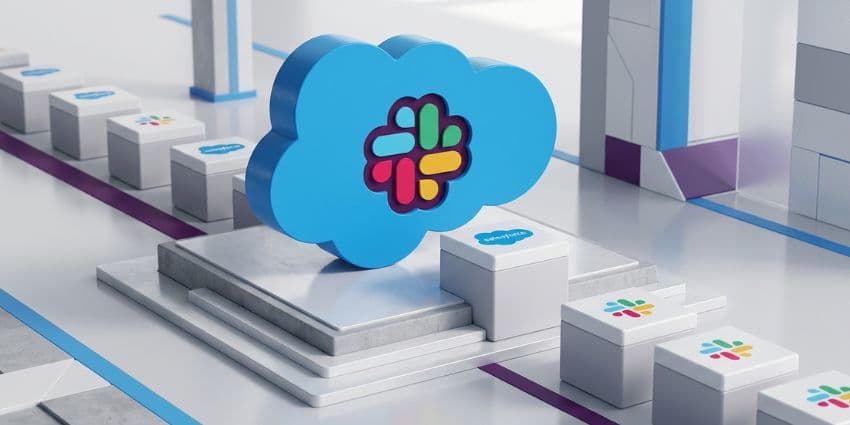
From June 15, a new Salesforce org in Enterprise or Unlimited edition comes with a Slack workspace already built and configured. No separate purchase or setup. The collaboration layer arrives with the CRM.

For IT buyers, the question is no longer whether to evaluate Slack. It is what to do with the workspace that just appeared in their environment.

What Has Changed in Salesforce Summer ’26 for Slack

Until now, Slack was a separate purchase decision. Salesforce customers could add it, integrate it, and pay for it independently. New customers started in Salesforce without a Slack workspace and configured one if they chose to.

From Summer ’26, any new org created in Enterprise and Unlimited editions gets a Slack workspace automatically created and configured alongside it. Salesforce channels connect CRM records directly to Slack conversations and come set up by default, with no manual configuration required.

Salesforce describes the change as the final piece needed to replace Chatter, the collaboration layer it launched in 2010, with Slack as the default. Chatter is not being removed, but new organisations will work from Slack first.

What It Means for UC and IT Buyers

The more immediate question for IT leaders is what this does to the competitive landscape for enterprise collaboration platforms.

The Summer ’26 release frames Slack as a workflow layer running across Agentforce, Sales Cloud, and Service Cloud. Multi-agent orchestration lets agents work together on end-to-end workflows, with shared context across channels so customers do not have to repeat themselves.

For organisations already running Microsoft Teams or Zoom as their primary UC platform, Salesforce is not asking them to switch. Slack’s open ecosystem approach via Model Context Protocol means it can sit alongside rather than replace existing tools, but that integration work needs resourcing. An organisation that buys Salesforce Enterprise from this month gets a fully provisioned Slack workspace whether or not they asked for one. That workspace needs an access policy, a governance decision, and a clear answer on whether it runs alongside Teams or replaces it.

For organisations evaluating Slack against Teams or Zoom for their primary collaboration platform, the bundling changes the cost calculation. The separate licensing decision disappears for new Salesforce customers in Enterprise and Unlimited editions.

Salesforce describes the change as the final piece needed to replace Chatter, the collaboration layer it launched in 2010, with Slack as the default. Chatter is not being removed, but new organisations will work from Slack first. Srini Tallapragada, President and Chief Engineering and Customer Success Officer at Salesforce, set out the underlying logic at Dreamforce 2025, as reported by CX Today:

“Agentforce 360 will help you connect with your customers, employees, and partners in a completely new, trusted way. It’s tightly integrated with Slack, where most of the work gets done.”

Slack First Sales and the IT Service Domain Pack

The default Slack bundling is the distribution story. The product story is Slack First Sales, which puts Agentforce directly into the Slack workflow for sales teams.

Slack First Sales brings CRM context to sellers inside Slack, with Agentforce agents that prospect, engage leads, and manage pipeline on their behalf. The pitch is that a single seller can operate with what Salesforce describes as a full revenue team behind them, scaling without adding headcount.

The broader Agentforce update in Summer ’26 also ships an IT Service Domain Pack. Salesforce positions it at IT departments dealing with rising support costs and fragmented ticketing, providing out-of-the-box AI agents to resolve tickets faster inside the Slack and Salesforce environment. For IT leaders who have followed Salesforce’s Agent Fabric expansion earlier this year, it is the next step in the same direction: pre-built agents for specific enterprise functions, governed from a central layer.

Tableau Next in Slack, available from June 13, brings live interactive dashboards and AI-powered metrics directly into Slack messages and canvases, enabling teams to make decisions without leaving the platform.

The Governance Questions That Come With Default Bundling

UC Today covered Salesforce’s Q4 earnings in February, when Slack was carrying one billion messages per day.

Agentforce in Slack had saved 500,000 hours internally across Salesforce’s 80,000-plus employees. At Q3 earnings in December 2025, Benioff told investors, as reported by CX Today:

“We’re delivering this capability to a global customer base, more than 150,000 Salesforce customers, and one million companies are now on Slack — now have the immediate opportunity to work side by side with agents and Agentforce. That’s why we’re uniquely positioned.”

The numbers underpinning Summer ’26 are consistent with that trajectory.

The harder question, as noted in our April analysis of Slack’s agentic positioning, is whether governance infrastructure is in place to support it. CRM integration is only as useful as the quality of the underlying data. Routing work through Slackbot’s orchestration layer adds complexity alongside the efficiency gains. Organisations running hundreds of agents across departments need clear ownership and auditing frameworks in place before they scale.

The default bundling accelerates adoption. It does not resolve those questions. For IT teams receiving a provisioned Slack workspace alongside their next Salesforce renewal, the time to work through them is before the workspace fills up with agents, not after.

Related reading:

Agentic AIAgentic AI in the Workplace​AI AgentsFuture of WorkUCaaSUCaaS & CCaaS Convergence​
Featured

Share This Post