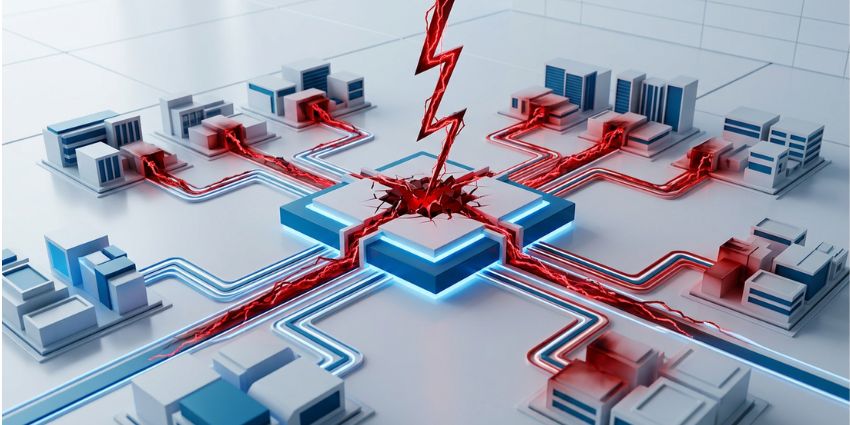

Adding backup systems does not automatically secure your business against outages. Many leaders mistake simple duplication for a true connectivity resilience strategy. This flawed approach actually introduces severe network redundancy risks.
Your enterprise connectivity design must actively address shared dependencies. Proper infrastructure risk management requires simplification and absolute control. Buying duplicate circuits just masks underlying architectural flaws temporarily.
A strong network architecture optimization plan reduces overall system fragility. Complex networks break much more often than simple ones do. Let us explore how to build genuinely resilient communication frameworks.
Related Articles
- Is Your ITSM AI Pilot Stuck? ServiceNow and Accenture’s New Program Can Scale It
- Ivanti’s Latest Release Puts Agentic AI ITSM Into Commercial Deployment
- How to Build a UC Stack That Survives Network Failure – UC Today
Why Does Redundancy Fail to Eliminate Connectivity Risk?
Redundancy merely copies existing systems without fixing their inherent vulnerabilities. This approach ignores proper infrastructure risk management principles. If your primary circuit fails, a cloned backup might fail too. This creates massive network redundancy risks during major outages. A smart connectivity resilience strategy requires diverse physical routing paths. True enterprise connectivity design separates critical traffic intelligently.
As Jon Lin, Chief Business Officer of Equinix wrote:
“In deeply interconnected environments, primary and backup systems often share the same hidden dependencies.”
You cannot achieve network architecture optimization by just buying duplicates. Leaders must evaluate how their systems actually behave under stress.
What Risks Are Introduced by Adding More Infrastructure Layers?
Adding layers introduces severe configuration challenges for your IT team. Every new device increases your overall network redundancy risks significantly. Technicians struggle to monitor overlapping systems during a crisis. This complexity destroys any hope of network architecture optimization.
A bloated enterprise connectivity design hides silent failures easily. Your infrastructure risk management protocol must prioritize visibility above all. A solid connectivity resilience strategy removes unnecessary hardware. Streamlined systems recover much faster than tangled webs do.
How Does Complexity Reduce Network Resilience?
Complexity breeds confusion when critical communication channels suddenly drop. Technicians waste hours untangling messy enterprise connectivity design choices. This delay ruins your overall connectivity resilience strategy.
Join the conversation and follow UC Today on LinkedIn for the latest enterprise technology insights.
Simplification is the ultimate goal of network architecture optimization. Clear pathways improve your infrastructure risk management instantly. Do not let network redundancy risks paralyze your support desk. Fewer moving parts mean fewer potential points of failure.
Where Do Connectivity Strategies Increase Fragility?
Fragility grows when companies rely on single carrier backbones secretly. Two different providers might share the exact same physical trench. This hidden overlap undermines your enterprise connectivity design immediately. It exposes you to massive network redundancy risks daily.
As Erik Irwin Director, Advanced Services, Global Network Services at HorizonIQ said:
“One can assume just because you have two different last mile providers for your redundancy that they use different paths.”
A proper connectivity resilience strategy uncovers these hidden physical dependencies. Thorough infrastructure risk management demands true vendor diversity. You achieve network architecture optimization by auditing these physical routes.
How Should Organizations Design for True Resilience?
Organizations must treat resilience as a fundamental system design challenge. Your enterprise connectivity design should minimize failure potential proactively. A modern connectivity resilience strategy focuses on architectural independence.
Effective infrastructure risk management requires deep application layer visibility. Teams must prioritize network architecture optimization over blind hardware purchases. Avoiding network redundancy risks means simplifying your entire stack. Resilient architectures keep customer experiences stable during unexpected crises. Smart CIOs build networks that anticipate and bypass errors automatically.
Final Takeaway
Adding backup systems does not automatically guarantee business continuity. True resilience requires simplification and proactive failure prevention.
Stop masking poor design with expensive duplicate hardware – and start building networks that are resilient by design, not by redundancy.
Ready to stop fighting IT fires and start preventing them entirely? Dive into our Service Management & Connectivity Guide to uncover the secrets.
FAQs
What is a connectivity resilience strategy?
A connectivity resilience strategy focuses on preventing failures through smart design. It prioritizes system simplification over adding unnecessary backup layers.
How do you improve enterprise connectivity design?
You improve enterprise connectivity design by eliminating hidden physical dependencies. True diversity ensures your communication channels remain perfectly stable.
What are common network redundancy risks?
Common network redundancy risks include overlapping carrier routes and configuration complexity. These issues cause backup systems to fail simultaneously.
Why is infrastructure risk management important?
Infrastructure risk management identifies vulnerabilities before they cause costly outages. It helps leaders build highly reliable communication frameworks.
How does network architecture optimization help?
Network architecture optimization streamlines your IT environment for faster recovery. It removes bloated hardware to improve overall system visibility.