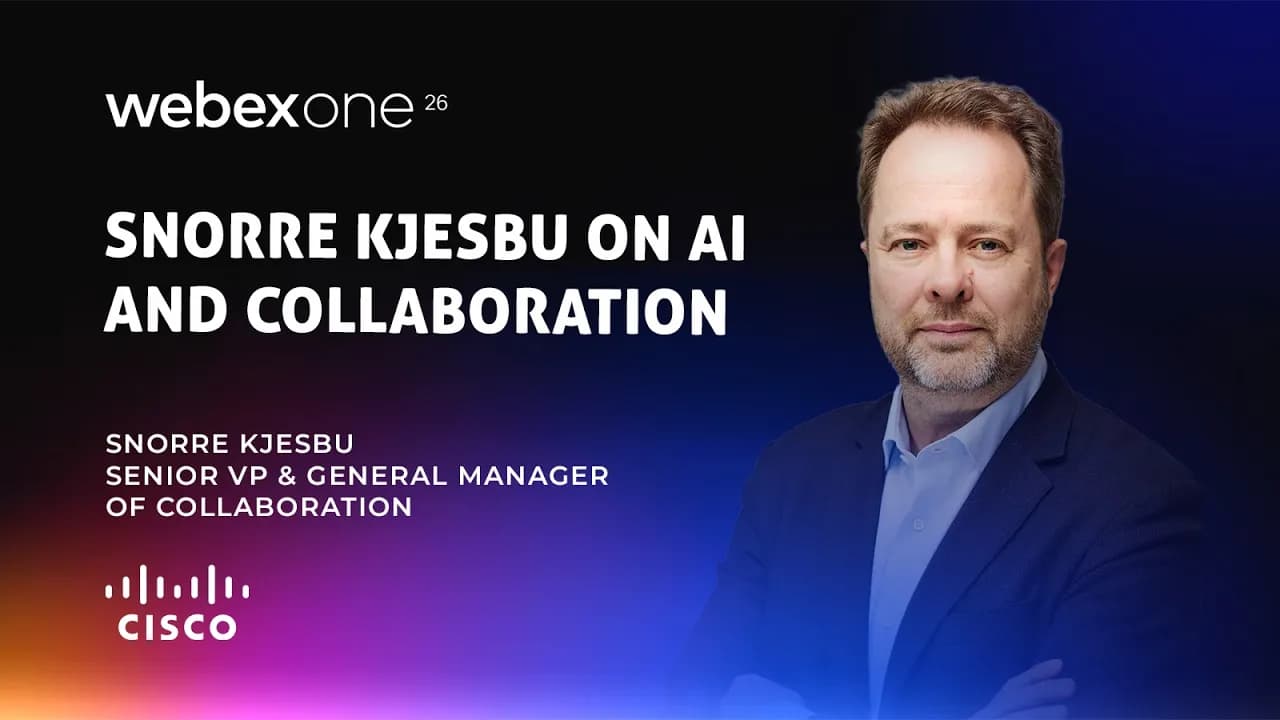
Artificial intelligence is quickly emerging as one of the most appealing technologies in the current contact centre. Capable of assisting customers with simple tasks, and supporting employees with more complicated projects, AI is becoming a common partner in our day-to-day interactions.
However, what does the rise of AI really mean to the contact centre of today and tomorrow? While many contact centre vendors are experimenting with the potential of AI, Cisco is one of the better-known brands currently exploring this landscape. Director of AI for Cisco, Mohamed El-Geish, recently spoke with me about the “hype cycle” surrounding AI, and what it means to the future of the contact centre.
El-Geish comes to Cisco from the company’s acquisition of Voicea, where he was a chief architect and co-founder. Before that, he worked with Microsoft and LinkedIn, and has also been a teaching assistant for Stanford University courses on Deep Learning and Machine Learning.
What is the State of AI in the Contact Centre?
Mohamed notes that like many disruptive technologies in the current landscape, AI “technologies” are moving through a hype cycle. There are many subfields and facets of AI that are evolving at their own pace. As El-Geish told me, AI isn’t just one technology, it has multiple themes and sub-themes to consider, for example, speech recognition, natural language understanding, virtual assistants, forecasting, video understanding, etc.
“Some aspects of the AI environment are further ahead than others. However, all of the different components of AI are rapidly evolving right now, growing out of an increasing demand for tools that can deliver true, information-based value.”
Mohamed and Cisco believe that AI has a lot to offer in many different domains. It could help to make our contact centres more secure with biometric scanning and fraud detection. AI could be the key to better customer service with sentiment analysis, and greater agent productivity thanks to virtual agent assistance. The past few decades have delivered an incredible amount of growth in computational power, digitization, and algorithms – all crucial to AI.
“Thanks to the increasingly available and innovative technology in the market, the opportunities for AI are growing all the time. The abundance of AI acceleration in data centres and personal devices, combined with the development of computational power and research means that AI has incredible potential”
How Long will Humans Manage the Majority of Interactions?
The accelerating growth of AI in the contact centre pulls up an old concern for many employees in the contact centre space. Namely, if AI is so effective, how long will humans continue to be a necessary part of the service experience. Mohamed told me that it’s important to remember the distinction between augmented and artificial intelligence.
“When we started Voicea, our goal wasn’t to replace humans with artificial intelligence; we wanted to augment the intelligence and creativity already available. Humans still need to be involved in this environment, but the AI can simply guide them to accomplish better results.”
El-Geish says that the main focus for AI right now is on automating and getting rid of repetitive tasks that don’t require human interaction. This increases the value for the customer, by allowing agents to focus more on the challenges that demand their creativity and supports the employee by reducing the amount of mundane tasks they have to face.
The rise of AI and the development of stronger opportunities in this technology landscape shouldn’t mean that an end is coming to human interactions in the contact centre. Instead, the aim is to improve the conversations we have by making AI a natural partner in the discussion.